The Story
Plant Bio
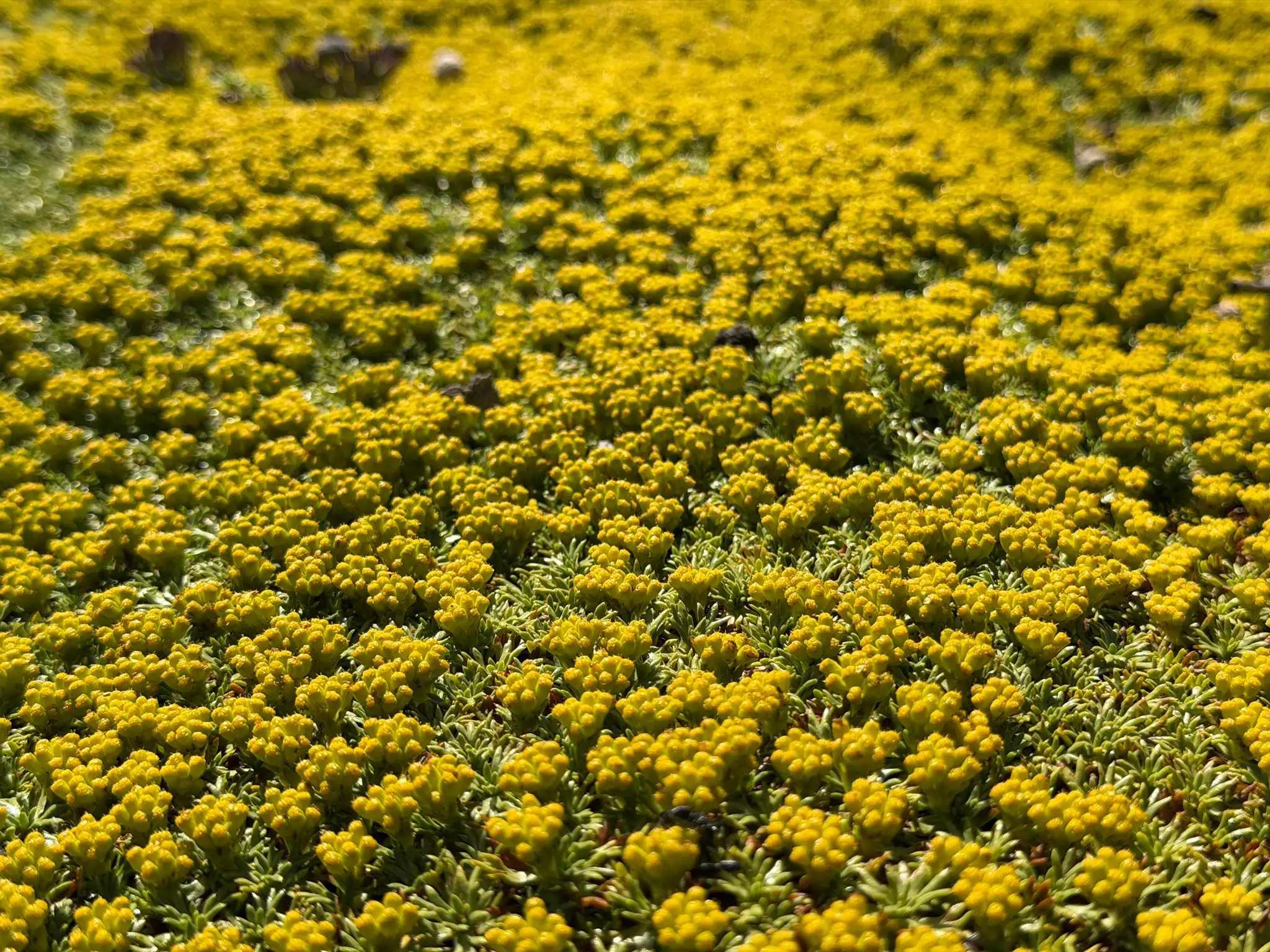
Azorella trifurcata is an evergreen cushion plant from southern South America that builds a dense mat of overlapping rosettes, rooting as it creeps to about 2 inches high and 24 inches across. The foliage is small, glossy dark green and deeply three-forked, brittle to the touch, with tiny yellow flowers in umbels held just above the mat in late spring to summer.
It differs from thyme and sedum mats by forming a firm, springy dome that knits weed-tight and never needs shearing. It survives cold to Zone 4 but fails in winter-wet soil, so sharp drainage in scree, a rock crevice or a trough determines success more than temperature.
Uses & Benefits:
Essentials
At a Glance
Plant Type
Groundcover
Height
2"
Width
24"
Light
Full Sun, Partial Sun
Zones
4, 5, 6, 7, 8, 9
Water
Low once established
Humidity
Low to moderate
Lifespan
Perennial
Native To
Chile, Argentina, Falkland Islands
Toxicity
Unknown
Bloom period
Late spring – Summer
In flower about 4 months of the year
Planting
How to Grow
- Choose full sun with open air and a slope, crevice, trough or raised bed that sheds water.
- Plant level in gritty sand-loam mixed with coarse gravel, firming rosettes against the soil without burying the crown.
- Water to settle, then keep just moist until knit; once rooted, water deeply but infrequently and let the surface dry.
- Top-dress with a thin gravel mulch to keep crowns dry and suppress weeds.
Pro Tip
Set the crown level in gritty scree and leave the cushion alone; standing water in the rosettes rots the mat, while cold alone does not.
Keep It Thriving
Care Guide
Do
- Plant in sharply drained gritty or sandy loam.
- Give full sun with good air circulation.
- Hand-weed until the mat knits closed.
Don't
- Do not plant in heavy clay or low spots that hold water.
- Do not cut back into old leafless wood; it does not regrow.
- Do not overwater or apply rich fertilizer to push growth.
Seasonal Care Calendar
| Task | Jan | Feb | Mar | Apr | May | Jun | Jul | Aug | Sep | Oct | Nov | Dec |
|---|---|---|---|---|---|---|---|---|---|---|---|---|
| Divide | ||||||||||||
| Pest Check | ||||||||||||
| Plant | ||||||||||||
| Propagate | ||||||||||||
| Winter Prep |
Watch Out For
Pests & Diseases
Common Pests
Common Diseases
In the Garden
Landscape Uses & Companions
Landscape Uses
Companion Plants
Multiply
Propagation Methods
Good to Know
Common Questions
Three-Forked Emerald Carpet questions
What zones can Three-Forked Emerald Carpet grow in?
Three-Forked Emerald Carpet is hardy in USDA Zones 4–9: in that range it survives winter in the ground. Warmer than Zone 9, winter isn't the problem: it prefers colder winters, and summer heat can shorten its life.
Is Three-Forked Emerald Carpet deer resistant?
Yes — Three-Forked Emerald Carpet is rated deer-resistant. Deer typically pass it over, though extreme hunger can override any plant's defenses.
When does Three-Forked Emerald Carpet bloom?
Three-Forked Emerald Carpet typically blooms from late spring to late summer. Exact timing shifts a week or two with your zone — Sow's bloom calendar maps it to your garden.
Does Three-Forked Emerald Carpet need full sun?
Three-Forked Emerald Carpet does best in full sun to part shade. In hot climates, afternoon shade keeps blooms fresher longer.
Is Three-Forked Emerald Carpet drought tolerant?
Yes — once established (usually after the first full season), Three-Forked Emerald Carpet handles dry spells with minimal watering. Water deeply its first year to build the root system that makes that possible.
Keep exploring
Explore the genus
Grow Three-Forked Emerald Carpet with confidence
See it in a design of your actual yard, get zone-matched care reminders, and track it season by season in your garden journal.