The Story
Plant Bio
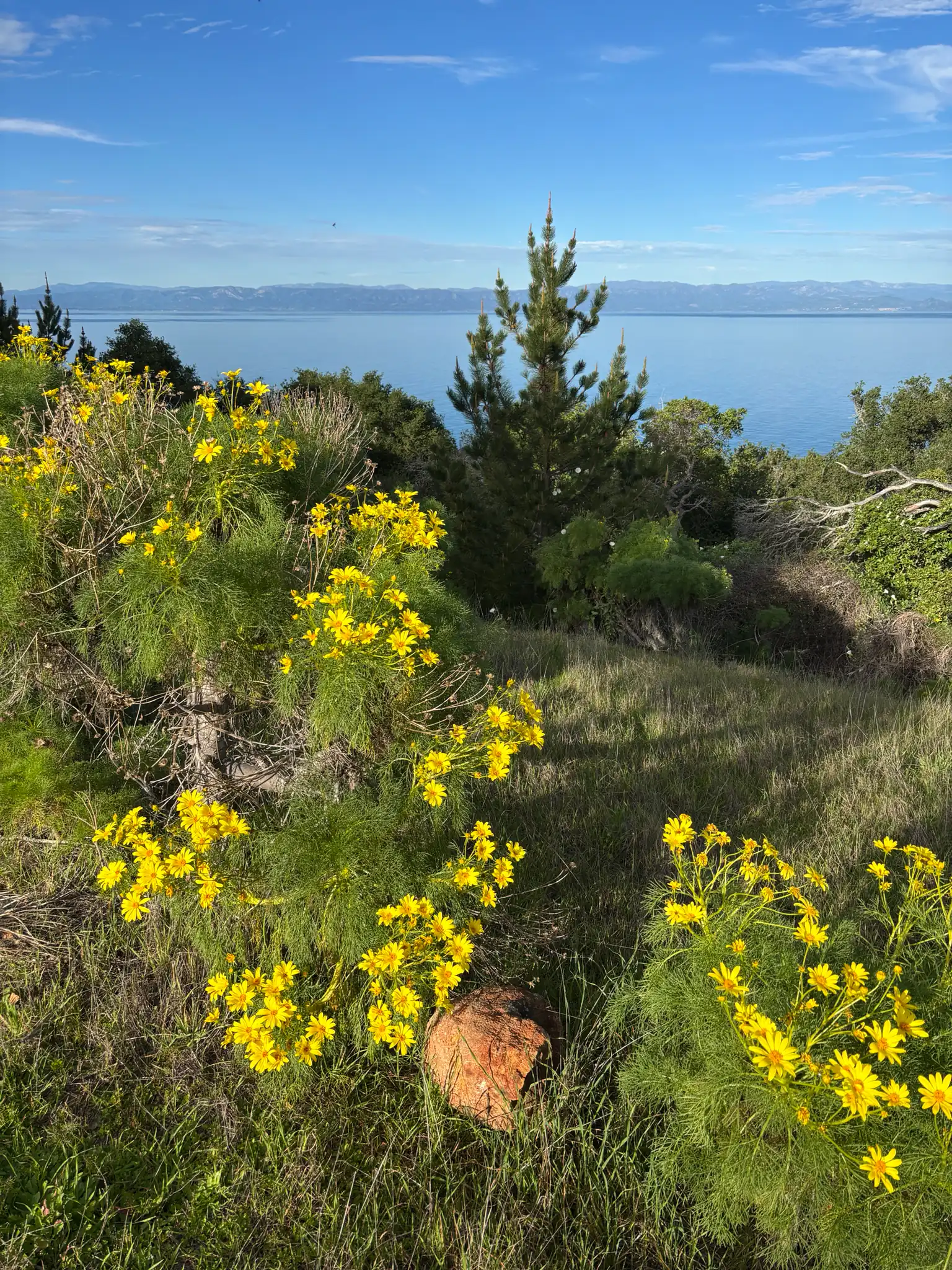
Leptosyne gigantea is a woody-trunked succulent subshrub native to coastal California and Baja California, reaching up to eight feet tall with finely dissected, fern-like leaves. Bright golden-yellow, daisy-like flower heads up to three inches across rise on long leafless stalks from winter into spring.
The species drops its bright green foliage during hot summer months, leaving a bare, sculptural trunk topped with stubby branches. Its thick, soft-woody trunk stores water, allowing established plants to survive extended coastal dry periods without supplemental irrigation.
Uses & Benefits:
Essentials
At a Glance
Plant Type
Shrub
Height
98"
Width
48"
Light
Full Sun
Zones
9, 10
Water
Low
Humidity
Low
Lifespan
Perennial
Native To
California, Mexico
Toxicity
Non-toxic
Bloom period
Winter – Spring
In flower about 6 months of the year
Planting
How to Grow
- Plant in light, sandy, or rocky soil in a site receiving full sun.
- Ensure exceptional drainage, setting the root crown slightly elevated above surrounding soil.
- Water moderately during winter and spring while active growth and flowering occur.
- Withhold all supplemental irrigation once the foliage begins to yellow and drop in early summer.
Pro Tip
Keep soil bone-dry during summer dormancy; applying water to bare trunks in warm weather triggers rapid, fatal stem and root rot.
Keep It Thriving
Care Guide
Do
- Provide full sun and sharp drainage at all times.
- Allow soil to dry out completely between winter waterings.
- Trim off spent, dry flower stalks cleanly at the base.
Don't
- Never water the plant during its summer dormant period.
- Do not prune into thick, old bare wood, as it will not resprout.
- Avoid planting in heavy clay or water-retentive soils.
Seasonal Care Calendar
| Task | Jan | Feb | Mar | Apr | May | Jun | Jul | Aug | Sep | Oct | Nov | Dec |
|---|---|---|---|---|---|---|---|---|---|---|---|---|
| Pest Check | ||||||||||||
| Prune | ||||||||||||
| Spring Cleanup | ||||||||||||
| Winter Prep |
Watch Out For
Pests & Diseases
Common Pests
Common Diseases
In the Garden
Landscape Uses & Companions
Landscape Uses
Multiply
Propagation Methods
Good to Know
Common Questions
Giant Coreopsis questions
What zones can Giant Coreopsis grow in?
Giant Coreopsis is hardy in USDA Zones 9–10: in that range it survives winter in the ground. Colder than Zone 9, grow it in a container you can move to shelter for the winter.
Is Giant Coreopsis deer resistant?
Not reliably. Deer may browse Giant Coreopsis, especially tender spring growth — plan on repellents or fencing where pressure is high.
When does Giant Coreopsis bloom?
Giant Coreopsis typically blooms from winter to spring. Exact timing shifts a week or two with your zone — Sow's bloom calendar maps it to your garden.
Does Giant Coreopsis need full sun?
Giant Coreopsis does best in full sun (6+ hours).
Is Giant Coreopsis drought tolerant?
Yes — once established (usually after the first full season), Giant Coreopsis handles dry spells with minimal watering. Water deeply its first year to build the root system that makes that possible.
More Leptosyne to compare
Keep exploring
Explore the genus
Hardy in your zone?
Grow Giant Coreopsis with confidence
See it in a design of your actual yard, get zone-matched care reminders, and track it season by season in your garden journal.