The Story
Plant Bio
Perennial flowering plant with palmate leaves and tall flower spikes.
Known for its attractive blue flowers and adaptability to various soil types.
Uses & Benefits:
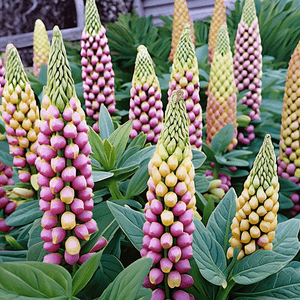
Lupinus polyphyllus 'West Country' offers stunning, tall spikes of vibrant purple flowers, perfect for adding vertical interest and color to gardens.
Its nitrogen-fixing ability enriches soil, benefiting neighboring plants.
Attracts bees, butterflies, and hummingbirds, supporting pollinator populations.
Essentials
At a Glance
Plant Type
Perennial
Height
36"
Width
24"
Light
Full Sun, Partial Sun
Zones
4, 5, 6, 7
Water
Moderate
Humidity
Average
Lifespan
Short-lived perennial
Native To
North America
Toxicity
All parts are toxic if ingested, especially seeds.
Bloom period
Late spring – Early summer
J
F
M
A
M
J
J
A
S
O
N
D
In flower about 2 months of the year
Planting
How to Grow
- Tuck seeds into well-draining soil in early spring.
- Mist cuttings regularly to maintain humidity and encourage rooting.
- Transplant seedlings after last frost when they are sturdy.
- Water consistently, especially during dry periods for healthy growth.
- Fertilize with a balanced organic fertilizer in early spring and mid-summer.
- Mulch around plants to retain moisture and suppress weeds.
Pro Tip
Soak seeds overnight before planting to improve germination rates.
Keep It Thriving
Care Guide
Do
- Water regularly to keep soil moist but not waterlogged 🌱
- Prune dead or damaged stems in late winter
- Fertilize annually with organic compost
Don't
- Avoid overwatering to prevent root rot ❌
- Don't disturb roots during flowering
- Refrain from using chemical pesticides without organic options
Seasonal Care Calendar
| Task | Jan | Feb | Mar | Apr | May | Jun | Jul | Aug | Sep | Oct | Nov | Dec |
|---|---|---|---|---|---|---|---|---|---|---|---|---|
| Deadhead | ||||||||||||
| Fertilize | ||||||||||||
| Plant | ||||||||||||
| Prune | ||||||||||||
| Spring Cleanup | ||||||||||||
| Stake |
Watch Out For
Pests & Diseases
Common Pests
Common Diseases
In the Garden
Landscape Uses & Companions
Landscape Uses
Vivid flower border with purple blossomsWildflower meadow for ecological benefitsColorful pollinator-friendly garden
Companion Plants
Multiply
Propagation Methods
Good to Know