The Story
Plant Bio
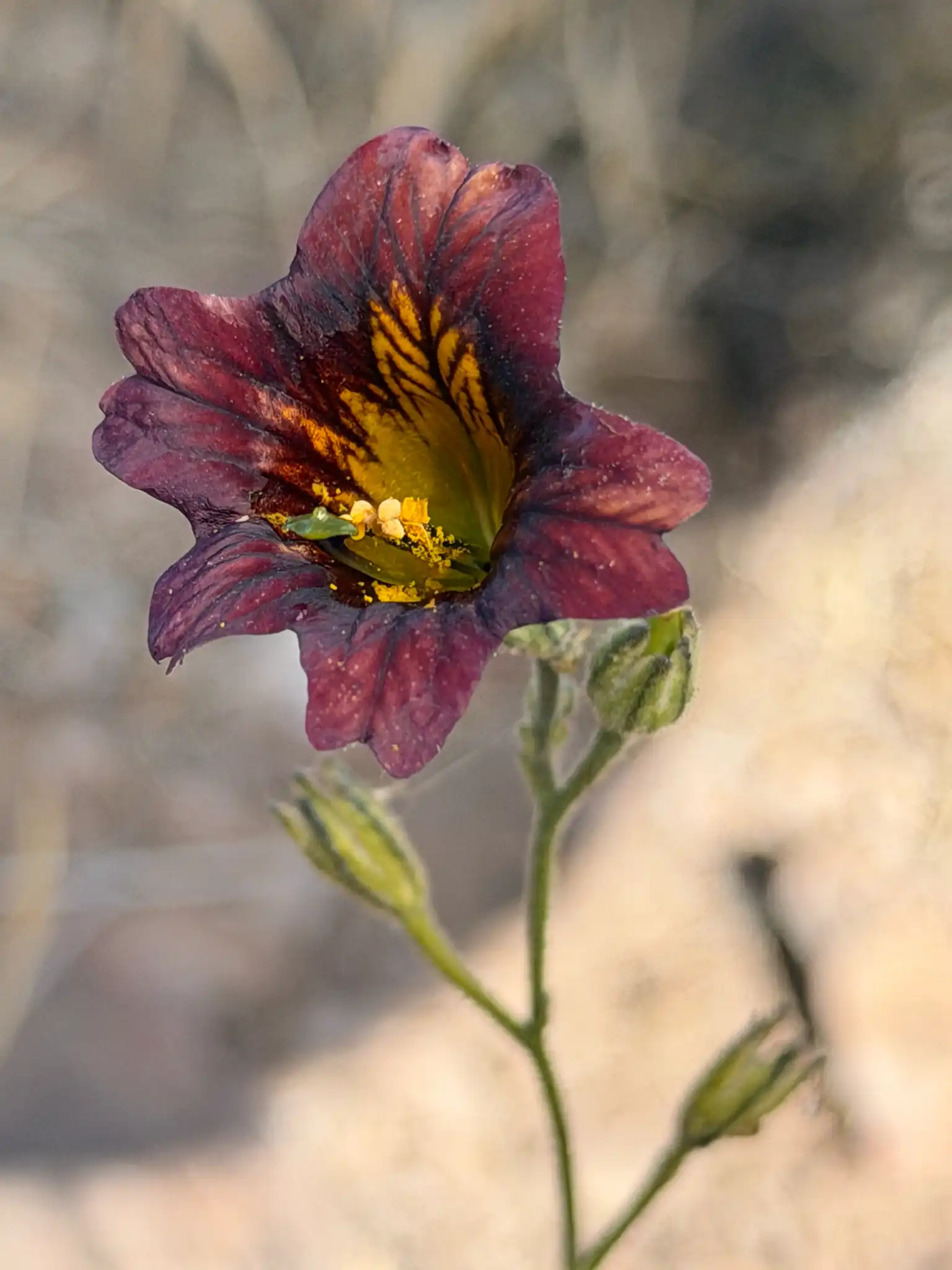
Salpiglossis sinuata, the painted tongue, is an erect cool-weather annual from Chile and Argentina reaching two to three feet in gardens, with lance-shaped green leaves with wavy margins on sticky hairy stems. The display comes from wide-throated funnel flowers to two inches across, five-lobed in clusters with contrasting veining and marbling.
The species is grown for velvety trumpet flowers in blue, purple, pink, red and gold, each throat netted with darker veins that sharpen in cool weather. It flowers summer to frost only where nights stay cool and drainage is sharp, and it stalls in very hot humid weather.
Uses & Benefits:
Essentials
At a Glance
Plant Type
Annual
Height
30"
Width
15"
Light
Full Sun, Partial Sun
Zones
4, 5, 6, 7, 8, 9, 10
Water
Medium
Humidity
Low to moderate; dislikes hot humid weather
Lifespan
Annual
Native To
Central and southern Chile to west-central Argentina
Toxicity
Potentially poisonous if ingested
Bloom period
Summer – Fall
In flower about 6 months of the year
Planting
How to Grow
- Start seed indoors 8 to 10 weeks before last frost, barely covering seed, at 70 to 73 degrees for 7 to 14 days.
- Set transplants out after frost danger in full sun, with afternoon shade in hot climates.
- Plant in moderately fertile soil high in organic matter that stays moist but drains freely.
- Mulch thinly to keep roots cool and water at soil level without letting plants dry out.
- Deadhead spent clusters to extend bloom to fall, then discard plants after frost.
Pro Tip
Grow it cool and lean; overwatering and heavy nitrogen kill more plants than neglect.
Keep It Thriving
Care Guide
Do
- Give 6 or more hours of sun with afternoon shade where summers are hot
- Keep soil evenly moist with good drainage and cool roots
- Feed lightly; avoid high-nitrogen fertilizer
Don't
- Do not overwater or use overhead watering that keeps crowns wet
- Do not let plants dry out completely or bake in hot humid weather
- Do not cut back hard; deadhead rather than shearing
Seasonal Care Calendar
| Task | Jan | Feb | Mar | Apr | May | Jun | Jul | Aug | Sep | Oct | Nov | Dec |
|---|---|---|---|---|---|---|---|---|---|---|---|---|
| Deadhead | ||||||||||||
| Fertilize | ||||||||||||
| Mulch | ||||||||||||
| Pest Check | ||||||||||||
| Plant |
Watch Out For
Pests & Diseases
Common Pests
Common Diseases
In the Garden
Landscape Uses & Companions
Landscape Uses
Companion Plants
Multiply
Propagation Methods
Good to Know
Common Questions
Painted Tongue questions
What zones can Painted Tongue grow in?
Painted Tongue is an annual: it grows, flowers and sets seed in one season, so winter cold doesn't limit where it grows. Gardeners in any zone can grow it by planting at the right time, usually after the last spring frost.
When does Painted Tongue bloom?
Painted Tongue typically blooms from summer to fall. Exact timing shifts a week or two with your zone — Sow's bloom calendar maps it to your garden.
Does Painted Tongue need full sun?
Painted Tongue does best in full sun to part shade. In hot climates, afternoon shade keeps blooms fresher longer.
Keep exploring
Explore the genus
Grow Painted Tongue with confidence
See it in a design of your actual yard, get zone-matched care reminders, and track it season by season in your garden journal.