The Story
Plant Bio
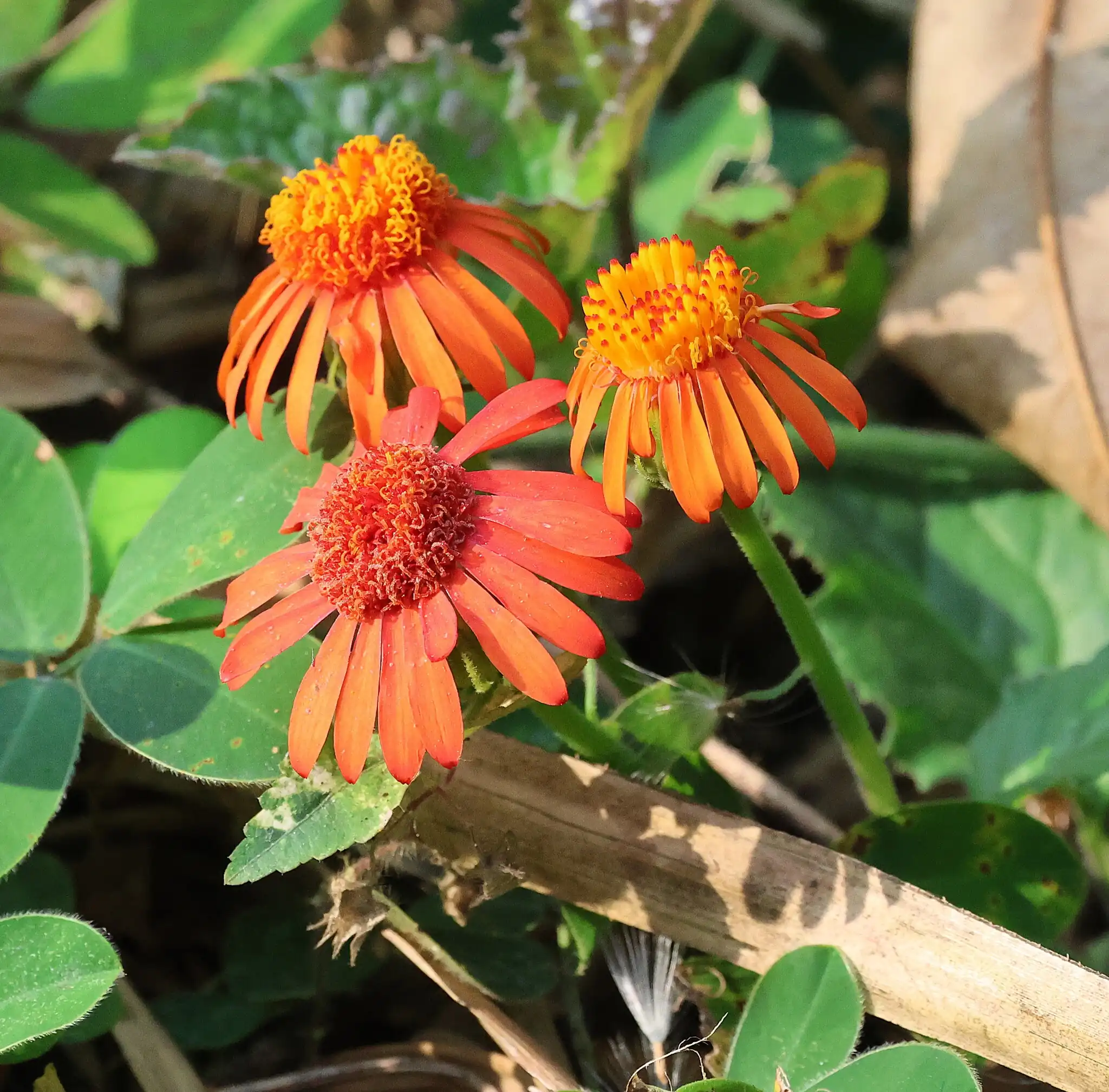
Pseudogynoxys chenopodioides, the Mexican flame vine, is an evergreen twining climber that turns woody at the base and reaches 13 to 20 feet in frost-free climates. It carries pointed green leaves on rambling stems and bears clusters of narrow-petalled daisy capitula in bright orange with a light scent.
It blooms heaviest from fall into winter in Zones 9-11, when few other vines flower, and blooms summer to fall when grown as an annual where winters freeze. Stems root where they rest on moist soil, so it covers a trellis fast but needs hard pruning and training to stay in bounds.
Uses & Benefits:
Essentials
At a Glance
Plant Type
Vine
Height
240"
Width
120"
Light
Full Sun
Zones
9, 10
Water
Medium
Humidity
Moderate-high
Lifespan
Perennial vine, annual in cold zones
Native To
Mexico to northern South America and West Indies
Toxicity
Uncertain - may be mildly toxic if ingested
Bloom period
Autumn – Winter
In flower about 6 months of the year
Planting
How to Grow
- Plant after last frost in full sun in average to organically rich, well-drained soil.
- Set a sturdy trellis, arbor, or fence at planting; tie stems up until they twine.
- Water weekly to moisten the top 6 inches, then let the surface dry; reduce water once established.
- Feed sparingly, if at all, with balanced 10-10-10 fertilizer every 4 to 6 weeks in the growing season.
- Prune after winter bloom to control spread and keep stems off moist soil.
Pro Tip
Give it 6 to 8 hours of direct sun on a frost-free trellis, and keep stems off moist soil where they root and spread.
Keep It Thriving
Care Guide
Do
- Do give 6 to 8 hours of direct sun for bloom.
- Do water evenly the first season, then water deeply but infrequently.
- Do prune to control a spreading vine.
Don't
- Do not plant where stems can lie on wet mulch or soil.
- Do not overwater or overfeed; soggy soil rots roots and excess nitrogen cuts bloom.
- Do not leave unprotected below about 45F.
Seasonal Care Calendar
| Task | Jan | Feb | Mar | Apr | May | Jun | Jul | Aug | Sep | Oct | Nov | Dec |
|---|---|---|---|---|---|---|---|---|---|---|---|---|
| Fertilize | ||||||||||||
| Pest Check | ||||||||||||
| Plant | ||||||||||||
| Prune | ||||||||||||
| Winter Prep |
Watch Out For
Pests & Diseases
Common Pests
Common Diseases
In the Garden
Landscape Uses & Companions
Landscape Uses
Multiply
Propagation Methods
Good to Know
Common Questions
Mexican Flame Vine questions
What zones can Mexican Flame Vine grow in?
Mexican Flame Vine is hardy in USDA Zones 9–10: in that range it survives winter in the ground. Colder than Zone 9, grow it in a container you can move to shelter for the winter, or as an annual.
When does Mexican Flame Vine bloom?
Mexican Flame Vine typically blooms from fall to winter. Exact timing shifts a week or two with your zone — Sow's bloom calendar maps it to your garden.
Does Mexican Flame Vine need full sun?
Mexican Flame Vine does best in full sun (6+ hours).
Is Mexican Flame Vine drought tolerant?
Yes — once established (usually after the first full season), Mexican Flame Vine handles dry spells with minimal watering. Water deeply its first year to build the root system that makes that possible.
Keep exploring
Explore the genus
Hardy in your zone?
Grow Mexican Flame Vine with confidence
See it in a design of your actual yard, get zone-matched care reminders, and track it season by season in your garden journal.