The Story
Plant Bio
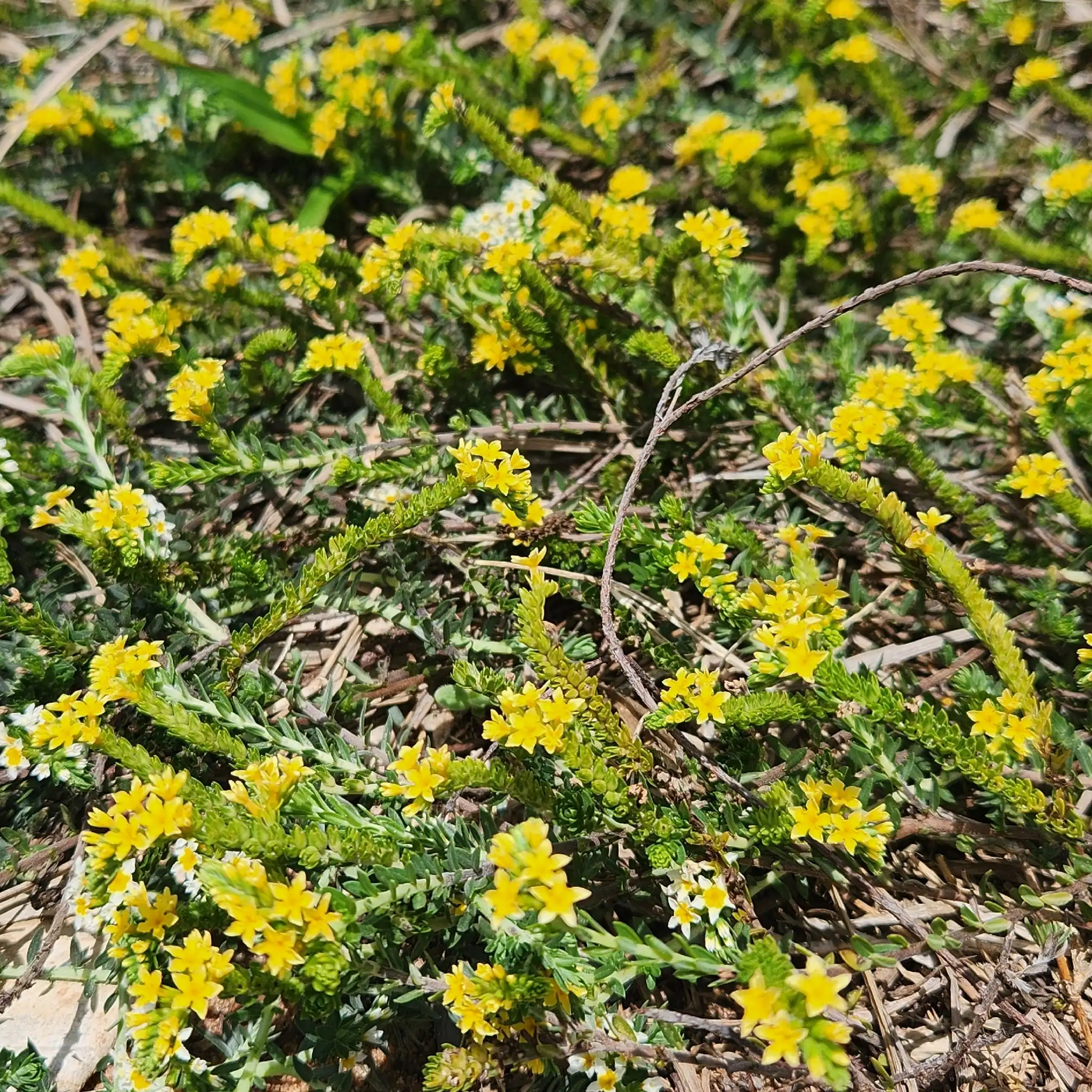
Euploca polyphylla, the pineland heliotrope, is a short-lived herbaceous perennial from Florida and the Caribbean with pubescent stems and a deep taproot that resprouts after freezing. It carries narrowly elliptic sessile leaves, smooth above and densely hairy beneath, on stems that sucker to form broad low patches.
The species grows as two regional forms of one plant: an erect yellow-flowered form and a prostrate white-flowered form with a yellow center. Flowers are small and borne in numbers along distinctly curved spikes that mature into schizocarps splitting into as many as four nutlets.
Uses & Benefits:
Essentials
At a Glance
Plant Type
Groundcover
Height
12"
Width
30"
Light
Full Sun, Partial Sun
Zones
8, 9, 10
Water
Low
Humidity
Average
Lifespan
Short-lived perennial
Native To
Florida, Caribbean, northern South America
Toxicity
Unknown
Bloom period
Spring – Fall
In flower about 9 months of the year
Planting
How to Grow
- Plant in full sun to light shade in moist to dry sandy soil that drains freely.
- Water to establish, then reduce watering; plants tolerate heat and drought once rooted.
- Allow suckers to spread into a low patch; do not disturb the deep taproot.
- Leave winter-damaged crowns in place; growth returns from the root after freezes.
Pro Tip
Propagate from cuttings rather than seed, which germinates poorly; leave the taproot undisturbed so frozen plants can resprout.
Keep It Thriving
Care Guide
Do
- Plant in full sun in poor sandy soil with sharp drainage.
- Take stem cuttings for new plants.
- Leave the taproot and crown after a freeze to allow resprouting.
Don't
- Do not plant in heavy clay or soggy ground.
- Do not rely on seed, which is slow and difficult to germinate.
- Do not discard the plant after top growth freezes back.
Seasonal Care Calendar
| Task | Jan | Feb | Mar | Apr | May | Jun | Jul | Aug | Sep | Oct | Nov | Dec |
|---|---|---|---|---|---|---|---|---|---|---|---|---|
| Mulch | ||||||||||||
| Pest Check | ||||||||||||
| Plant | ||||||||||||
| Propagate | ||||||||||||
| Winter Prep |
Watch Out For
Pests & Diseases
Common Pests
Common Diseases
In the Garden
Landscape Uses & Companions
Landscape Uses
Multiply
Propagation Methods
Good to Know
Common Questions
Pineland Heliotrope questions
What zones can Pineland Heliotrope grow in?
Pineland Heliotrope is hardy in USDA Zones 8–10: in that range it survives winter in the ground. Colder than Zone 8, grow it in a container you can move to shelter for the winter, or as an annual.
When does Pineland Heliotrope bloom?
Pineland Heliotrope typically blooms from spring to fall. Exact timing shifts a week or two with your zone — Sow's bloom calendar maps it to your garden.
Does Pineland Heliotrope need full sun?
Pineland Heliotrope does best in full sun to part shade. In hot climates, afternoon shade keeps blooms fresher longer.
Is Pineland Heliotrope drought tolerant?
Yes — once established (usually after the first full season), Pineland Heliotrope handles dry spells with minimal watering. Water deeply its first year to build the root system that makes that possible.
Keep exploring
Explore the genus
Hardy in your zone?
Grow Pineland Heliotrope with confidence
See it in a design of your actual yard, get zone-matched care reminders, and track it season by season in your garden journal.