The Story
Plant Bio
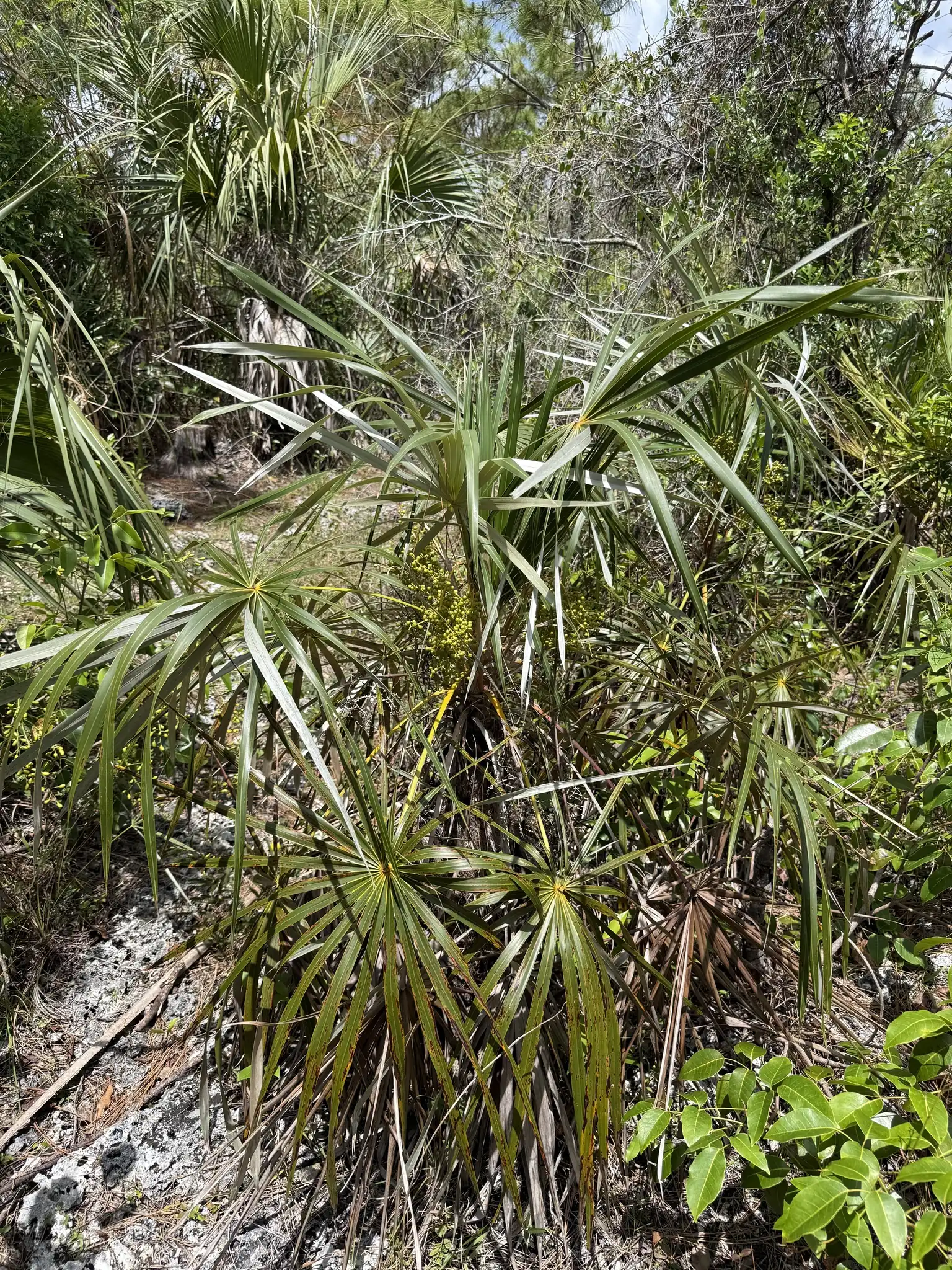
Coccothrinax argentata is a slow-growing single-stemmed fan palm reaching 6 to 15 feet with a 6 to 7 foot crown of stiff palmate fronds. The slender trunk holds smooth gray bark or old burlap-like fiber, and each 18 to 36 inch blade is dark blue-green above with a silver-white underside.
The silver-white leaf underside flashes in wind, separating it from other thatch palms with uniformly green blades. Cream-white flowers sit hidden among the leaves on 2-foot stalks in summer, followed by round purple-black fruits under one-half inch that ripen in late summer to fall.
Uses & Benefits:
Essentials
At a Glance
Plant Type
Tree
Height
180"
Width
84"
Light
Full Sun, Partial Sun, Shade
Zones
10
Water
Low
Humidity
Tolerant
Lifespan
Long-lived
Native To
South Florida, Caribbean and Yucatan
Toxicity
Unknown
Bloom period
Summer – Fall
In flower about 6 months of the year
Planting
How to Grow
- Plant in spring in full sun to light shade in well-drained sand, loam, or limestone clay.
- Set the root ball level with the soil surface and water deeply to settle, then water sparingly until established.
- Mulch 2 to 3 inches back from the trunk to hold moisture without trapping water at the stem.
- Feed lightly with palm fertilizer during the growing season on alkaline soils.
- Remove only fully brown fronds and never cut green leaves or the single growing tip.
Pro Tip
Buy the size you want and leave the crown alone; this palm adds inches per year and needs no routine pruning beyond removal of fully dead fronds.
Keep It Thriving
Care Guide
Do
- Plant in well-drained soil in full sun with room for a 7-foot crown
- Water deeply but infrequently once established to match its high drought tolerance
- Leave old trunk fiber intact unless fully loose
Don't
- Do not overwater or set in soil that stays wet
- Do not prune green fronds to shape the crown
- Do not collect plants from the wild in Florida
Seasonal Care Calendar
| Task | Jan | Feb | Mar | Apr | May | Jun | Jul | Aug | Sep | Oct | Nov | Dec |
|---|---|---|---|---|---|---|---|---|---|---|---|---|
| Fertilize | ||||||||||||
| Mulch | ||||||||||||
| Pest Check | ||||||||||||
| Plant | ||||||||||||
| Prune |
Watch Out For
Pests & Diseases
Common Pests
Common Diseases
In the Garden
Landscape Uses & Companions
Landscape Uses
Multiply
Propagation Methods
Good to Know
Common Questions
Florida Silver Palm questions
What zones can Florida Silver Palm grow in?
Florida Silver Palm is hardy in USDA Zone 10: in that range it survives winter in the ground. Colder than Zone 10, winters are too cold for it to survive outdoors.
When does Florida Silver Palm bloom?
Florida Silver Palm typically blooms from summer to fall. Exact timing shifts a week or two with your zone — Sow's bloom calendar maps it to your garden.
Does Florida Silver Palm need full sun?
Florida Silver Palm does best in full sun to part shade. In hot climates, afternoon shade keeps blooms fresher longer.
Is Florida Silver Palm drought tolerant?
Yes — once established (usually after the first full season), Florida Silver Palm handles dry spells with minimal watering. Water deeply its first year to build the root system that makes that possible.
Keep exploring
Explore the genus
Hardy in your zone?
Grow Florida Silver Palm with confidence
See it in a design of your actual yard, get zone-matched care reminders, and track it season by season in your garden journal.