The Story
Plant Bio
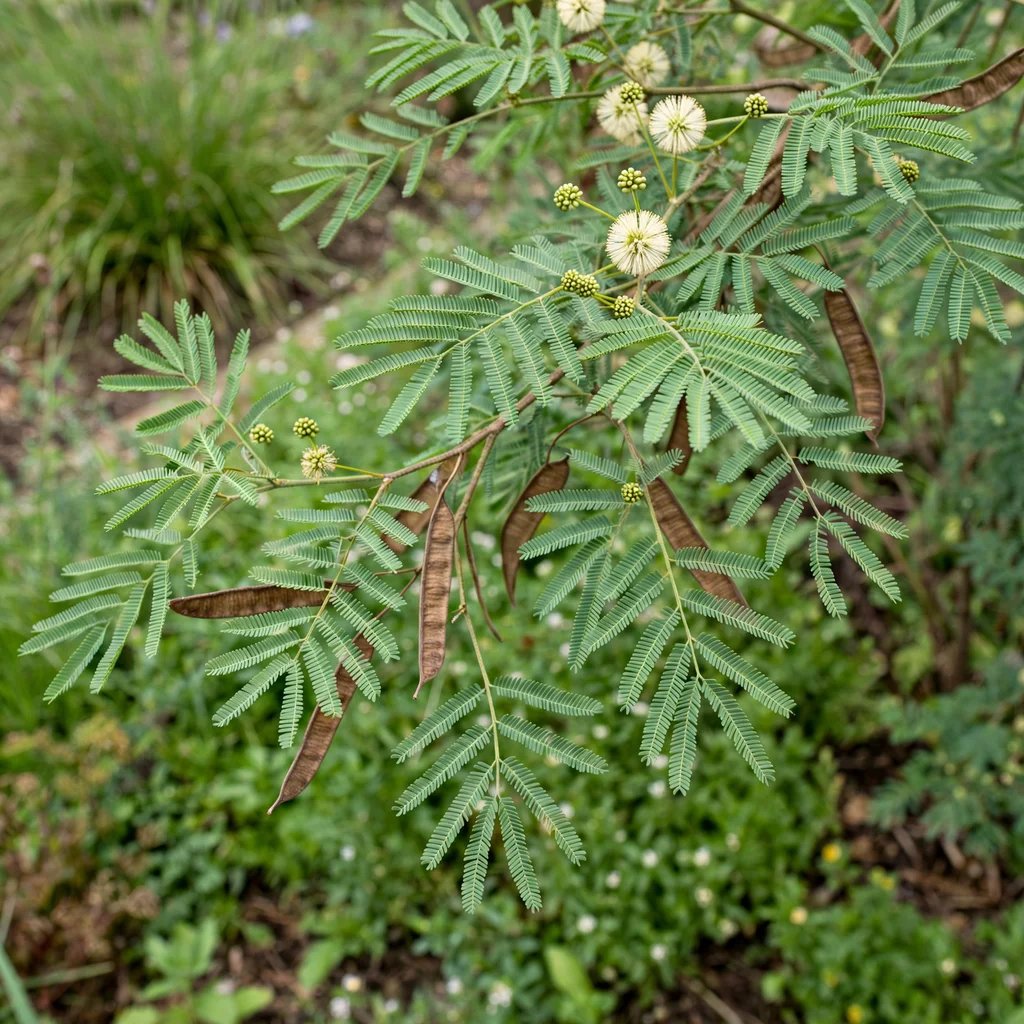
Acacia angustissima, the prairie acacia, is a thornless warm-season subshrub that spreads by woody rhizomes into a low rounded colony with thin ridged stems. The alternate leaves are bipinnate and fern-like with 3 to 12 pairs of pinnae, folding closed at night or when touched, while the flowers are packed into round white balls of exserted stamens on long stalks from the upper leaf axils.
It is set apart by the combination of fern-like foliage, lack of thorns and flat brown pods 1.5 to 2.75 inches long, which separate it from Illinois bundleflower with its different pods and leaflets. It is highly variable from the south-central United States to northern Argentina, with hairy and smooth regional forms that all bloom white to creamy yellow from summer to fall.
Uses & Benefits:
Essentials
At a Glance
Plant Type
Shrub
Height
36"
Width
35"
Light
Full Sun, Partial Sun
Zones
6, 7, 8, 9, 10
Water
Low
Humidity
Low to moderate
Lifespan
Perennial subshrub
Native To
South-central U.S. to northern Argentina
Toxicity
Toxic to livestock if eaten unadapted
Bloom period
Summer – Fall
In flower about 6 months of the year
Planting
How to Grow
- Plant in full sun to part shade in well-drained dry soil on a prairie, savanna or rocky slope site.
- Sow scarified seed in March to April about 0.75 inches deep in a firm seedbed inoculated for cowpea-type rhizobia.
- Water to establish, then withhold extra water; mature plants tolerate drought and need no rich fertilizer.
- Cut back winter-killed stems in early spring and thin rhizome edges to keep the colony in bounds.
Pro Tip
Sow scarified seed shallowly in a firm seedbed in early spring with cowpea inoculant, and give established colonies room to spread or a barrier to contain the rhizomes.
Keep It Thriving
Care Guide
Do
- Site in full sun with 6 or more hours of direct sun and well-drained soil.
- Inoculate seed with cowpea-type rhizobia at sowing.
- Contain rhizome spread with edging or careful siting.
Don't
- Do not overwater or plant in wet clay that stays saturated.
- Do not feed unadapted livestock large quantities of foliage.
- Do not cut back repeatedly under heavy grazing pressure; it declines with misuse.
Seasonal Care Calendar
| Task | Jan | Feb | Mar | Apr | May | Jun | Jul | Aug | Sep | Oct | Nov | Dec |
|---|---|---|---|---|---|---|---|---|---|---|---|---|
| Pest Check | ||||||||||||
| Plant | ||||||||||||
| Propagate | ||||||||||||
| Prune |
Watch Out For
Pests & Diseases
Common Pests
Common Diseases
In the Garden
Landscape Uses & Companions
Landscape Uses
Multiply
Propagation Methods
Good to Know
Common Questions
Prairie Acacia questions
What zones can Prairie Acacia grow in?
Prairie Acacia is hardy in USDA Zones 6–10: in that range it survives winter in the ground. Colder than Zone 6, grow it in a container you can move to shelter for the winter.
Is Prairie Acacia deer resistant?
Not reliably. Deer may browse Prairie Acacia, especially tender spring growth — plan on repellents or fencing where pressure is high.
When does Prairie Acacia bloom?
Prairie Acacia typically blooms from summer to fall. Exact timing shifts a week or two with your zone — Sow's bloom calendar maps it to your garden.
Does Prairie Acacia need full sun?
Prairie Acacia does best in full sun to part shade. In hot climates, afternoon shade keeps blooms fresher longer.
Is Prairie Acacia drought tolerant?
Yes — once established (usually after the first full season), Prairie Acacia handles dry spells with minimal watering. Water deeply its first year to build the root system that makes that possible.
More Acacia to compare
Silver wattle
Acacia dealbata
Cootamundra Wattle 'Purpurea'
Acacia baileyana 'Purpurea'
Pearl Acacia
Acacia podalyriifolia
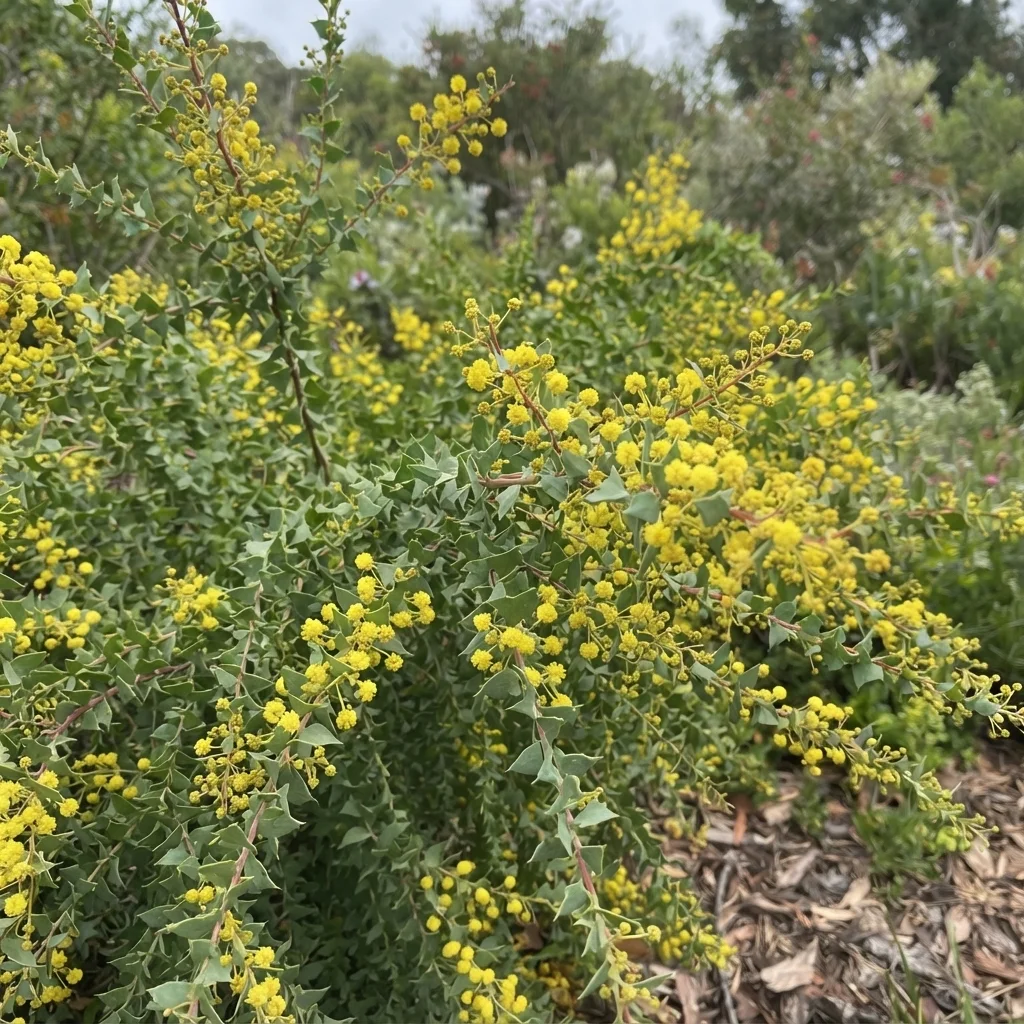
Ovens Wattle
Acacia pravissima
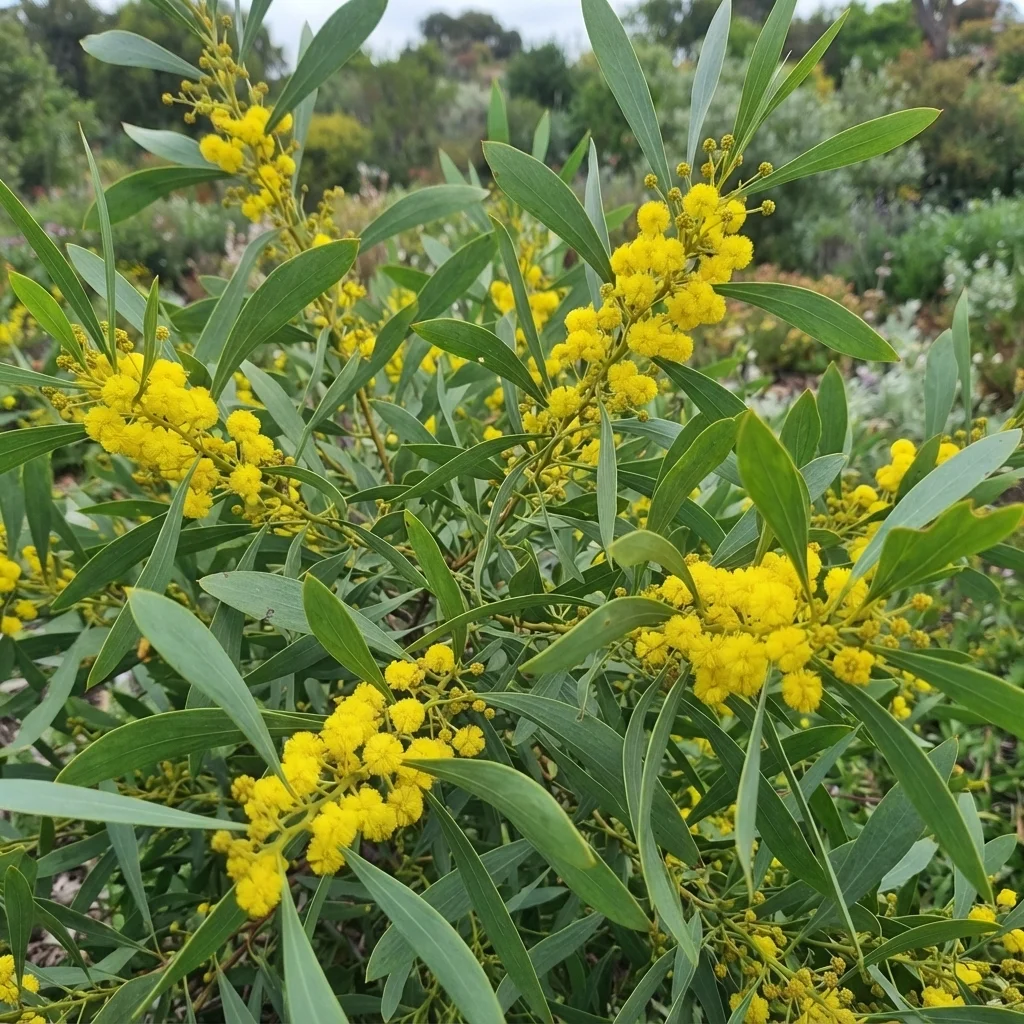
Golden Wreath Wattle
Acacia saligna
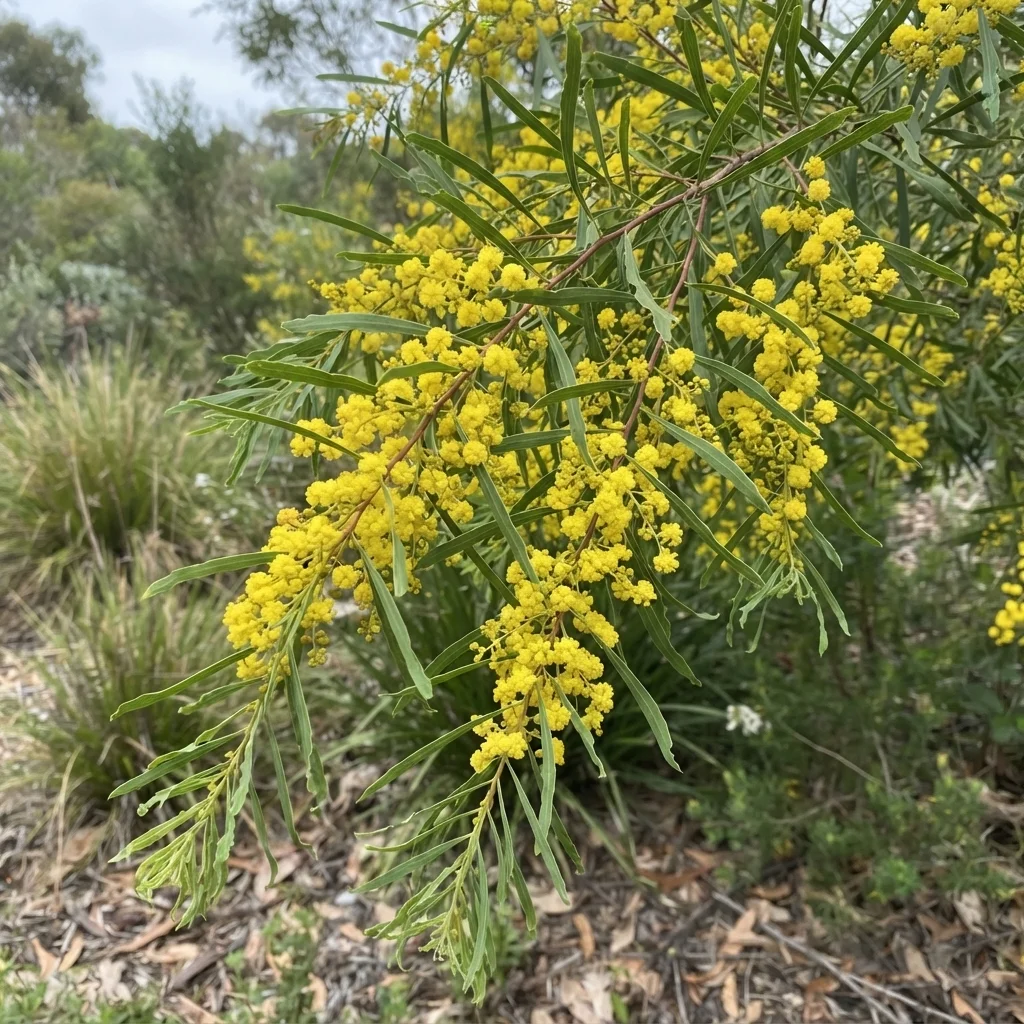
Fringed Wattle
Acacia fimbriata
Keep exploring
Explore the genus
Hardy in your zone?
Grow Prairie Acacia with confidence
See it in a design of your actual yard, get zone-matched care reminders, and track it season by season in your garden journal.