The Story
Plant Bio
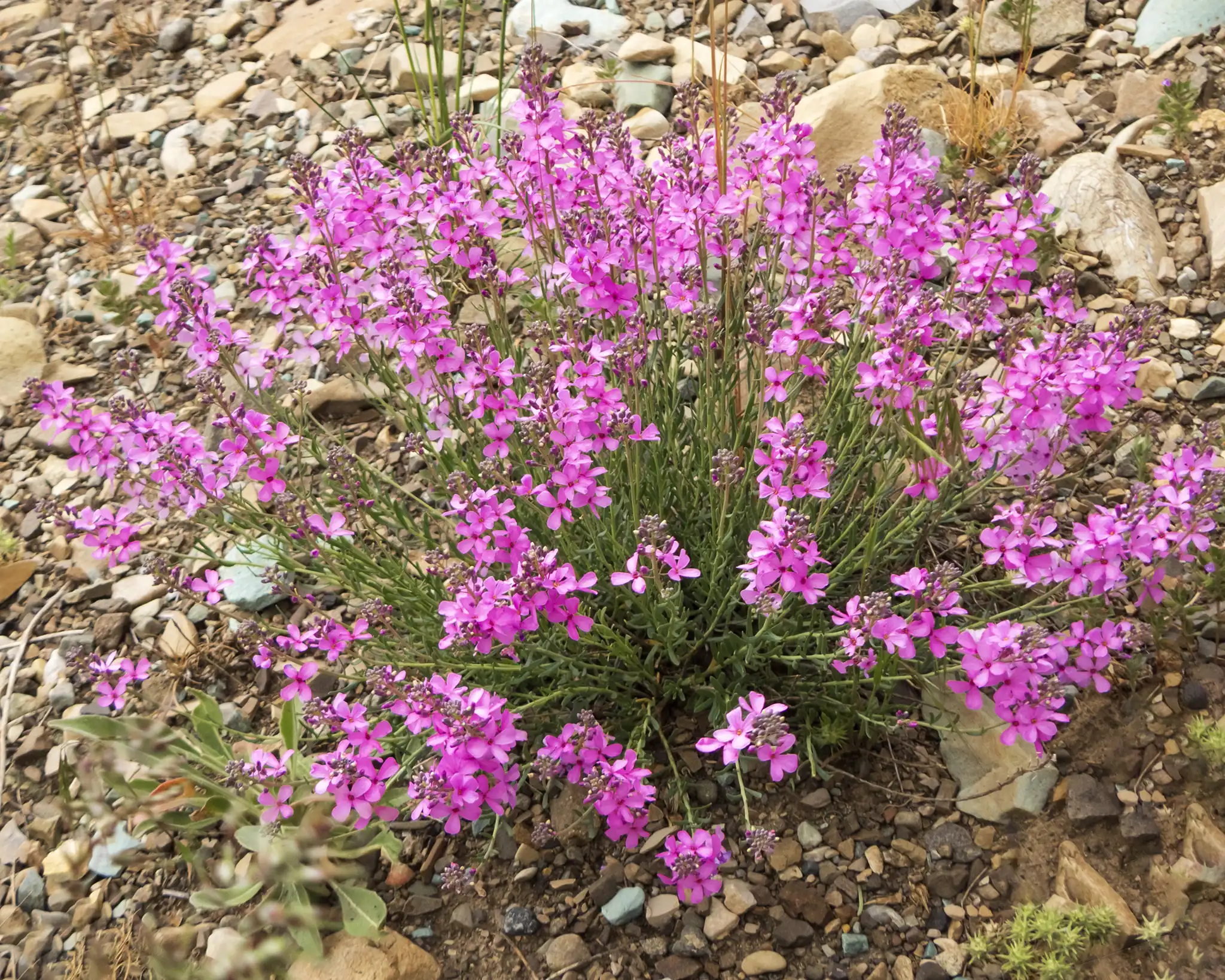
Aethionema grandiflorum is a low evergreen subshrub in the mustard family, forming a spreading mound of dense, waxy blue-grey foliage on branched stems. In spring it carries loose terminal racemes of small four-petalled flowers that elongate as they open.
This species is distinguished by comparatively large rose-pink to mauve flowers, about 0.6 cm across, with a pale center and sweet scent. It holds a tight cushion to about a foot high and a foot and a half wide, and plants are short-lived, flowering most strongly in their second and third years.
Uses & Benefits:
Essentials
At a Glance
Plant Type
Perennial
Height
12"
Width
15"
Light
Full Sun, Partial Sun
Zones
4, 5, 6, 7, 8, 9
Water
Low
Humidity
Low - needs dry air
Lifespan
Short-lived perennial
Native To
Eastern Turkey, Caucasus, Northern Iran
Toxicity
Unknown - treat with caution
Bloom period
Spring – Early summer
In flower about 4 months of the year
Planting
How to Grow
- Set in full sun with 6 or more hours of direct light on a slope, wall top or raised rockery.
- Plant in poor, gritty, sharply drained soil with limestone chips; aim for pH 6.0-7.5.
- Water thoroughly at planting, then keep dryish and never let the crown sit wet.
- Deadhead spent racemes to prolong bloom; limit shaping to a light trim after flowering.
- Take softwood cuttings each late spring to replace stock, as plants are short-lived.
Pro Tip
Plant it lean and dry in full sun and take softwood cuttings each year; rich soil and extra water rot the crown.
Keep It Thriving
Care Guide
Do
- Give full sun and sharp drainage with limey grit in the mix.
- Water deeply at planting then sparingly once established.
- Deadhead after the main flush and renew from cuttings.
Don't
- Do not plant in rich, acidic or waterlogged soil.
- Do not overwater or site in humid shade.
- Do not shear hard into old bare wood each year.
Seasonal Care Calendar
| Task | Jan | Feb | Mar | Apr | May | Jun | Jul | Aug | Sep | Oct | Nov | Dec |
|---|---|---|---|---|---|---|---|---|---|---|---|---|
| Deadhead | ||||||||||||
| Pest Check | ||||||||||||
| Plant | ||||||||||||
| Propagate | ||||||||||||
| Prune |
Watch Out For
Pests & Diseases
Common Pests
Common Diseases
In the Garden
Landscape Uses & Companions
Landscape Uses
Multiply
Propagation Methods
Good to Know
Common Questions
Persian Stonecress questions
What zones can Persian Stonecress grow in?
Persian Stonecress is hardy in USDA Zones 4–9: in that range it survives winter in the ground. Warmer than Zone 9, winter isn't the problem: it prefers colder winters, and summer heat can shorten its life.
Is Persian Stonecress deer resistant?
Yes — Persian Stonecress is rated deer-resistant. Deer typically pass it over, though extreme hunger can override any plant's defenses.
When does Persian Stonecress bloom?
Persian Stonecress typically blooms from early spring to early summer. Exact timing shifts a week or two with your zone — Sow's bloom calendar maps it to your garden.
Does Persian Stonecress need full sun?
Persian Stonecress does best in full sun to part shade. In hot climates, afternoon shade keeps blooms fresher longer.
Is Persian Stonecress drought tolerant?
Yes — once established (usually after the first full season), Persian Stonecress handles dry spells with minimal watering. Water deeply its first year to build the root system that makes that possible.
Keep exploring
Explore the genus
Grow Persian Stonecress with confidence
See it in a design of your actual yard, get zone-matched care reminders, and track it season by season in your garden journal.