The Story
Plant Bio
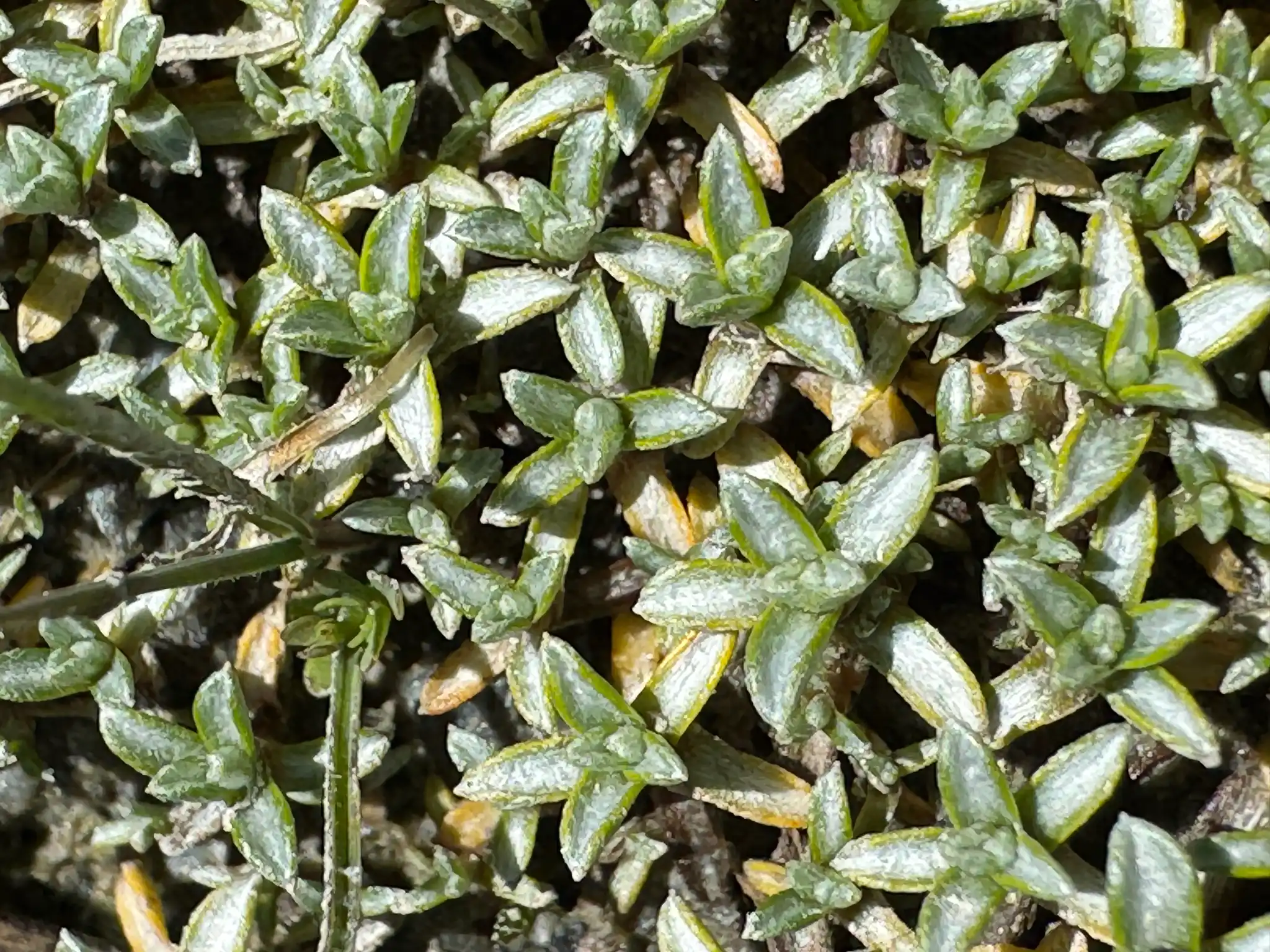
Raoulia tenuicaulis is an evergreen New Zealand perennial that roots along prostrate stems to build flat moss-like mats to 3 feet across and 1 inch tall. Leaves are minute to one-fifth of an inch long, bright-green to gray-green and coated in appressed whitish hairs that give the mat a silvery cast.
This species forms a flat spreading mat that knits between stones, not the hard domed cushion of vegetable-sheep Raoulia bryoides and Raoulia haastii. In spring solitary daisy heads to one-quarter inch across dust the mat white to pale yellow, honey-scented in cultivation.
Uses & Benefits:
Essentials
At a Glance
Plant Type
Groundcover
Height
1"
Width
37"
Light
Full Sun, Partial Sun
Zones
5, 6, 7, 8, 9
Water
Medium
Humidity
Unknown
Lifespan
Perennial
Native To
New Zealand
Toxicity
Non-toxic
Bloom period
Spring – Late spring
In flower about 3 months of the year
Planting
How to Grow
- Set plants 12 inches apart in full sun in gritty sandy scree that drains in seconds.
- Water to settle, then keep evenly moist through the first growing season.
- Top-dress with 1 inch of coarse grit to keep crowns dry.
- Shear spent heads after bloom to keep the mat tight.
- Give extra water in dry summer spells; do not feed heavily.
Pro Tip
Plant it in a scree pocket or trough with sharp drainage and lean gritty soil; winter wet kills it faster than cold, and rich borders stay too wet in summer.
Keep It Thriving
Care Guide
Do
- Plant in full sun with 6 to 8 hours of direct sun.
- Provide sharp drainage with sandy gritty soil pH 6.0 to 7.0.
- Water regularly in growth and in dry summer heat.
Don't
- Do not plant in heavy clay or low spots that stay wet in winter.
- Do not overwater, overfeed, or cut back into old bare stems.
- Do not expect bloom in shade or in hot humid summers.
Seasonal Care Calendar
| Task | Jan | Feb | Mar | Apr | May | Jun | Jul | Aug | Sep | Oct | Nov | Dec |
|---|---|---|---|---|---|---|---|---|---|---|---|---|
| Deadhead | ||||||||||||
| Pest Check | ||||||||||||
| Plant | ||||||||||||
| Propagate | ||||||||||||
| Winter Prep |
Watch Out For
Pests & Diseases
Common Pests
Common Diseases
In the Garden
Landscape Uses & Companions
Landscape Uses
Companion Plants
Multiply
Propagation Methods
Good to Know
Common Questions
Mat Daisy questions
What zones can Mat Daisy grow in?
Mat Daisy is hardy in USDA Zones 5–9: in that range it survives winter in the ground. Colder than Zone 5, grow it in a container you can move to shelter for the winter, or as an annual. Warmer than Zone 9, winter isn't the problem: it prefers colder winters, and summer heat can shorten its life.
When does Mat Daisy bloom?
Mat Daisy typically blooms in spring. Exact timing shifts a week or two with your zone — Sow's bloom calendar maps it to your garden.
Does Mat Daisy need full sun?
Mat Daisy does best in full sun to part shade. In hot climates, afternoon shade keeps blooms fresher longer.
Keep exploring
Explore the genus
Hardy in your zone?
Grow Mat Daisy with confidence
See it in a design of your actual yard, get zone-matched care reminders, and track it season by season in your garden journal.