The Story
Plant Bio
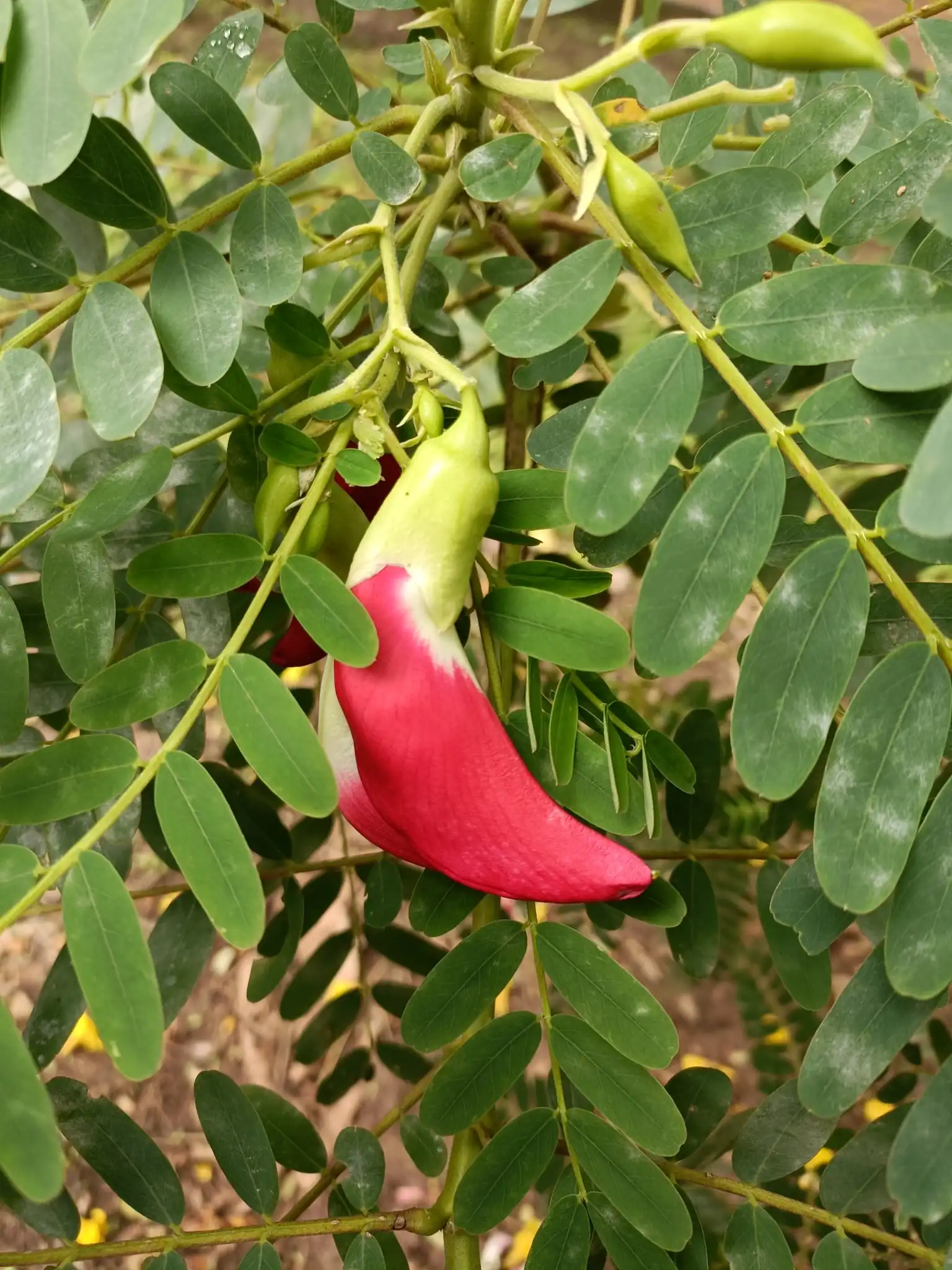
Sesbania grandiflora is a fast-growing, short-lived tree from maritime Southeast Asia, reaching 10 to 20 feet in gardens with light gray corky bark and an open, loose-branching crown. Its alternate leaves are paripinnate and 6 to 12 inches long with many small leaflets, and its large pea-like flowers hang in short axillary racemes followed by slender pods 12 to 20 inches long.
Unlike the Australian corkwood it is often confused with, this is the true Asian species grown for food and ornament, living only about 20 years and adding up to 14 to 18 feet in its first year on heavy clay. White-flowered forms are mild and eaten raw or cooked, while pink to crimson forms are bitter and grown for display rather than eating.
Uses & Benefits:
Essentials
At a Glance
Plant Type
Tree
Height
240"
Width
144"
Light
Full Sun
Zones
9, 10
Water
High
Humidity
High
Lifespan
Short-lived, about 20 years
Native To
Tropical Southeast Asia to New Guinea
Toxicity
White flowers and young pods edible; red forms bitter, seeds fatal to chickens, foliage toxic to cattle
Bloom period
Year round
In flower about 12 months of the year
Marketplace
Where to Buy
Shipping costs Year-round shipping Free shipping
Planting
How to Grow
- Plant in full sun in warm soil after all frost danger has passed, in Zone 9 to 11 only.
- Sow seed shallowly where the tree is to grow, keeping the seedbed evenly moist until emergence.
- Thin to one strong stem and stake briefly if exposed, allowing the open, loose crown to form.
- Harvest white flowers and young pods regularly and remove spent pods to keep the short-lived tree productive.
Pro Tip
Grow the white-flowered form if you want to eat the flowers, and replant on cycle — this is a 20-year pioneer, not a permanent shade tree.
Keep It Thriving
Care Guide
Do
- Do give it full sun, heat, and humidity in a frost-free spot.
- Do grow it on for fast biomass and food, accepting a lifespan near 20 years.
- Do choose the white-flowered form for eating.
Don't
- Do not plant in the ground where frost occurs — it is frost-tender.
- Do not eat pink to red flowers, mature seed, or foliage fed to livestock.
- Do not expect a long-lived shade tree that tolerates hard pruning into old wood.
Seasonal Care Calendar
| Task | Jan | Feb | Mar | Apr | May | Jun | Jul | Aug | Sep | Oct | Nov | Dec |
|---|---|---|---|---|---|---|---|---|---|---|---|---|
| Harvest | ||||||||||||
| Pest Check | ||||||||||||
| Plant | ||||||||||||
| Propagate | ||||||||||||
| Prune |
Watch Out For
Pests & Diseases
Common Pests
In the Garden
Landscape Uses & Companions
Landscape Uses
Companion Plants
Multiply
Propagation Methods
Good to Know
Common Questions
Hummingbird Tree questions
What zones can Hummingbird Tree grow in?
Hummingbird Tree is hardy in USDA Zones 9–10: in that range it survives winter in the ground. Colder than Zone 9, winters are too cold for it to survive outdoors.
When does Hummingbird Tree bloom?
Hummingbird Tree typically blooms year-round. Exact timing shifts a week or two with your zone — Sow's bloom calendar maps it to your garden.
Does Hummingbird Tree need full sun?
Hummingbird Tree does best in full sun (6+ hours).
Keep exploring
Explore the genus
Hardy in your zone?
Grow Hummingbird Tree with confidence
See it in a design of your actual yard, get zone-matched care reminders, and track it season by season in your garden journal.