The Story
Plant Bio
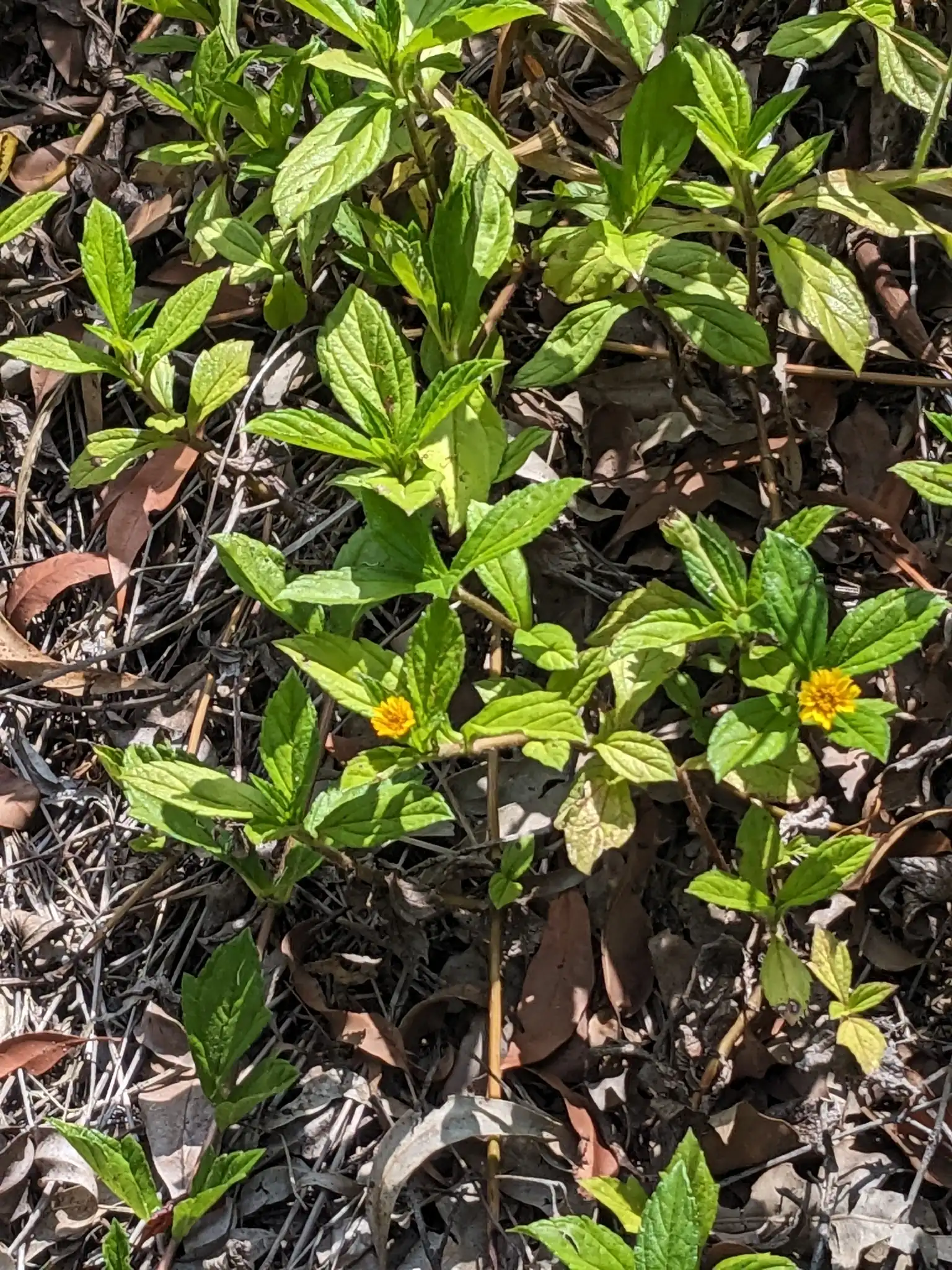
Sphagneticola trilobata is an evergreen perennial herb that roots where its trailing stems touch soil, forming a dense mat 6 to 12 inches high and spreading indefinitely. The opposite leaves are glossy dark green, obovate with toothed margins and usually three lobes, carried on green stems.
Flowers are solitary bright yellow daisy heads 20 to 30 millimeters across with 8 to 13 ray petals, borne singly on stalks with heaviest bloom in full sun and repeat through the year where frost-free. Stems root quickly from fragments and climb into shrubs, so patches smother neighboring plants and resprout from the base after frost to 25F.
Uses & Benefits:
Essentials
At a Glance
Plant Type
Groundcover
Height
12"
Width
24"
Light
Full Sun, Partial Sun
Zones
8, 9, 10
Water
Medium
Humidity
Tolerant
Lifespan
Perennial
Native To
Mexico, Central America, Caribbean, South America
Toxicity
Unknown
Bloom period
Year round
In flower about 12 months of the year
Planting
How to Grow
- Plant after last frost in full sun to part shade; heaviest bloom is in full sun.
- Set plants 18 to 24 inches apart in sand, loam, or clay that tolerates seasonal wet and extended flooding.
- Water to establish, then water only in extended dry spells; established mats handle wet ditches and hot dry spells.
- Trim bed edges regularly to keep stems from rooting outward; shear or mow high only to rejuvenate overgrowth.
- In Zone 8B move pots to shelter before hard freeze; tops die back below freezing and resprout from the base in spring.
Pro Tip
Keep it in a pot, not in the ground in Florida and the Gulf Coast — any stem touching soil roots, and dumped clippings start a new patch.
Keep It Thriving
Care Guide
Do
- Grow in a container or hanging basket where spread is contained
- Trim bed edges to prevent stems rooting into soil
- Give full sun for continuous bloom
Don't
- Do not plant in the ground in Florida or near wetlands
- Do not dump clippings where fragments can root
- Do not expect bloom in deep shade
Seasonal Care Calendar
| Task | Jan | Feb | Mar | Apr | May | Jun | Jul | Aug | Sep | Oct | Nov | Dec |
|---|---|---|---|---|---|---|---|---|---|---|---|---|
| Pest Check | ||||||||||||
| Plant | ||||||||||||
| Propagate | ||||||||||||
| Prune | ||||||||||||
| Winter Prep |
Watch Out For
Pests & Diseases
Common Pests
Common Diseases
In the Garden
Landscape Uses & Companions
Landscape Uses
Multiply
Propagation Methods
Good to Know
Common Questions
Wedelia questions
What zones can Wedelia grow in?
Wedelia is hardy in USDA Zones 8–10: in that range it survives winter in the ground. Colder than Zone 8, grow it in a container you can move to shelter for the winter, or as an annual.
When does Wedelia bloom?
Wedelia typically blooms year-round. Exact timing shifts a week or two with your zone — Sow's bloom calendar maps it to your garden.
Does Wedelia need full sun?
Wedelia does best in full sun to part shade. In hot climates, afternoon shade keeps blooms fresher longer.
Is Wedelia drought tolerant?
Yes — once established (usually after the first full season), Wedelia handles dry spells with minimal watering. Water deeply its first year to build the root system that makes that possible.
Keep exploring
Explore the genus
Hardy in your zone?
Grow Wedelia with confidence
See it in a design of your actual yard, get zone-matched care reminders, and track it season by season in your garden journal.