The Story
Plant Bio
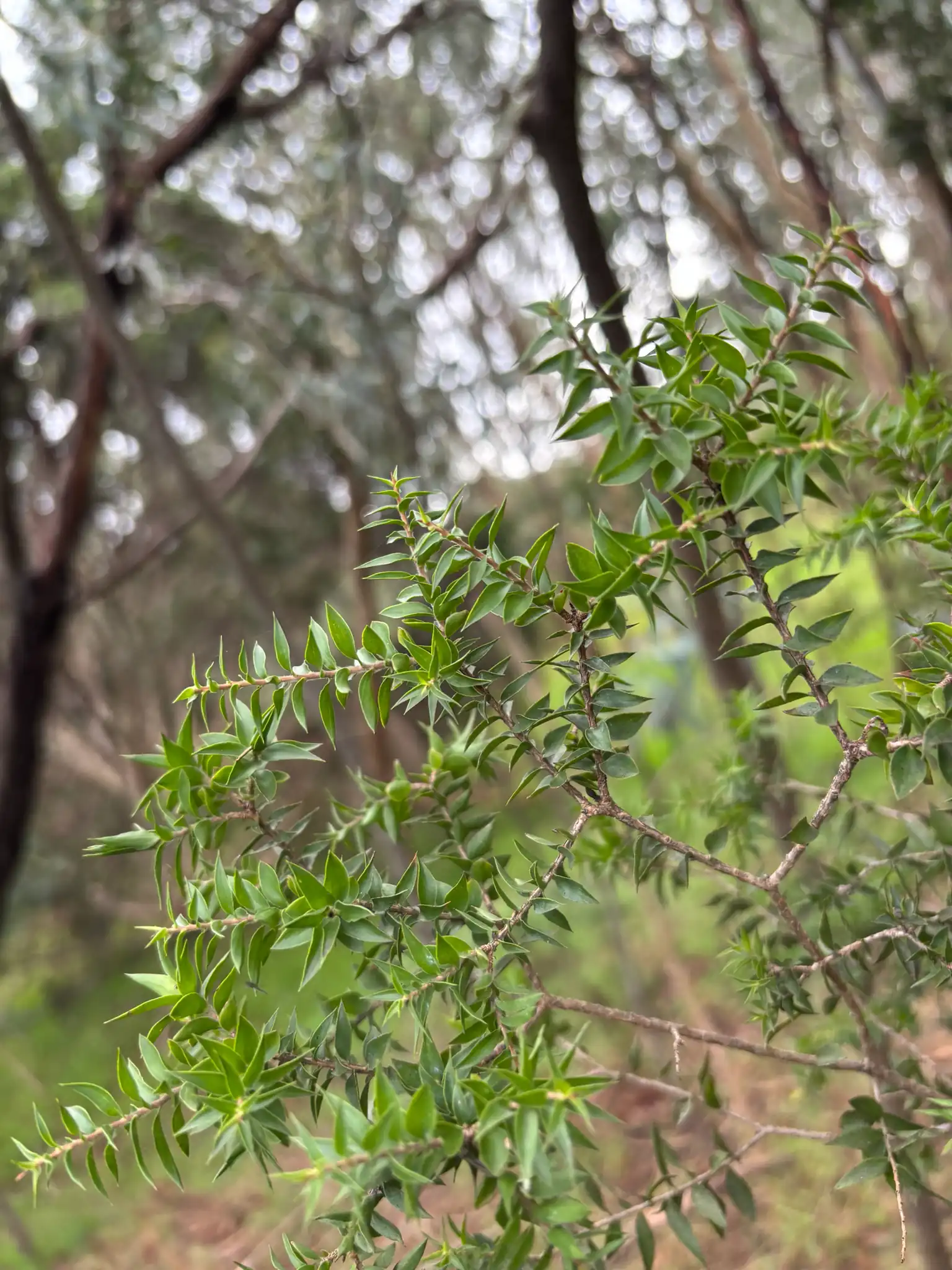
Melaleuca styphelioides, the prickly-leaved paperbark, is an upright evergreen tree native to eastern Australia that reaches up to fifty feet in height, distinguished by its thick, shaggy, whitish-grey papery bark. The dense, weeping canopy is composed of small, rigid, sharply pointed leaves that are highly prickly to the touch.
In late spring and summer, the branches are covered in cylindrical, bottlebrush-like spikes of creamy-white flowers that attract generalist pollinators. The species is exceptionally resilient, adapting to both swampy, poorly drained soils and prolonged dry spells once established.
Uses & Benefits:
Essentials
At a Glance
Plant Type
Tree
Height
590"
Width
393"
Light
Full Sun, Partial Sun
Zones
9, 10
Water
Low to high
Humidity
High
Lifespan
Long-lived
Native To
Eastern Australia
Toxicity
Non-toxic
Bloom period
Late spring – Summer
In flower about 4 months of the year
Planting
How to Grow
- Select a planting site in full sun to partial shade with ample clearance from underground pipes and sewer lines.
- Dig a hole twice as wide as the root ball and of equal depth, ensuring the soil is loosened to encourage root spread.
- Backfill with the native soil without adding soil amendments, as this species is highly adaptable to clay, loam, or sand.
- Water deeply and regularly during the first growing season to establish a deep, drought-tolerant root system.
Pro Tip
Never prune hard into old, leafless wood, as the bare timber lacks active buds and will fail to shoot back reliably.
Keep It Thriving
Care Guide
Do
- Plant at least thirty feet away from underground drainage and utility lines to prevent root infiltration.
- Wear thick leather gloves when handling the foliage to protect hands from the sharp, prickly leaf tips.
- Mulch the root zone to retain moisture during dry spells while the tree is establishing.
Don't
- Do not plant this tree near walkways or high-traffic areas where the sharp foliage can scratch passersby.
- Do not apply heavy synthetic fertilizers, as this species has low nutrient requirements and thrives without regular feeding.
- Do not prune heavily into bare, old wood that lacks green foliage.
Seasonal Care Calendar
| Task | Jan | Feb | Mar | Apr | May | Jun | Jul | Aug | Sep | Oct | Nov | Dec |
|---|---|---|---|---|---|---|---|---|---|---|---|---|
| Fertilize | ||||||||||||
| Pest Check | ||||||||||||
| Plant | ||||||||||||
| Prune |
Watch Out For
Pests & Diseases
Common Pests
Common Diseases
In the Garden
Landscape Uses & Companions
Landscape Uses
Companion Plants
Multiply
Propagation Methods
Good to Know
Common Questions
Prickly-leaved Paperbark questions
What zones can Prickly-leaved Paperbark grow in?
Prickly-leaved Paperbark is hardy in USDA Zones 9–10. Inside that range it survives winter in the ground; outside it, grow it as an annual or a container plant you protect.
When does Prickly-leaved Paperbark bloom?
Prickly-leaved Paperbark typically blooms in late spring through summer. Exact timing shifts a week or two with your zone — Sow's bloom calendar maps it to your garden.
Does Prickly-leaved Paperbark need full sun?
Prickly-leaved Paperbark does best in full sun to part shade. In hot climates, afternoon shade keeps blooms fresher longer.
Is Prickly-leaved Paperbark drought tolerant?
Yes — once established (usually after the first full season), Prickly-leaved Paperbark handles dry spells with minimal watering. Water deeply its first year to build the root system that makes that possible.
More Melaleuca to compare
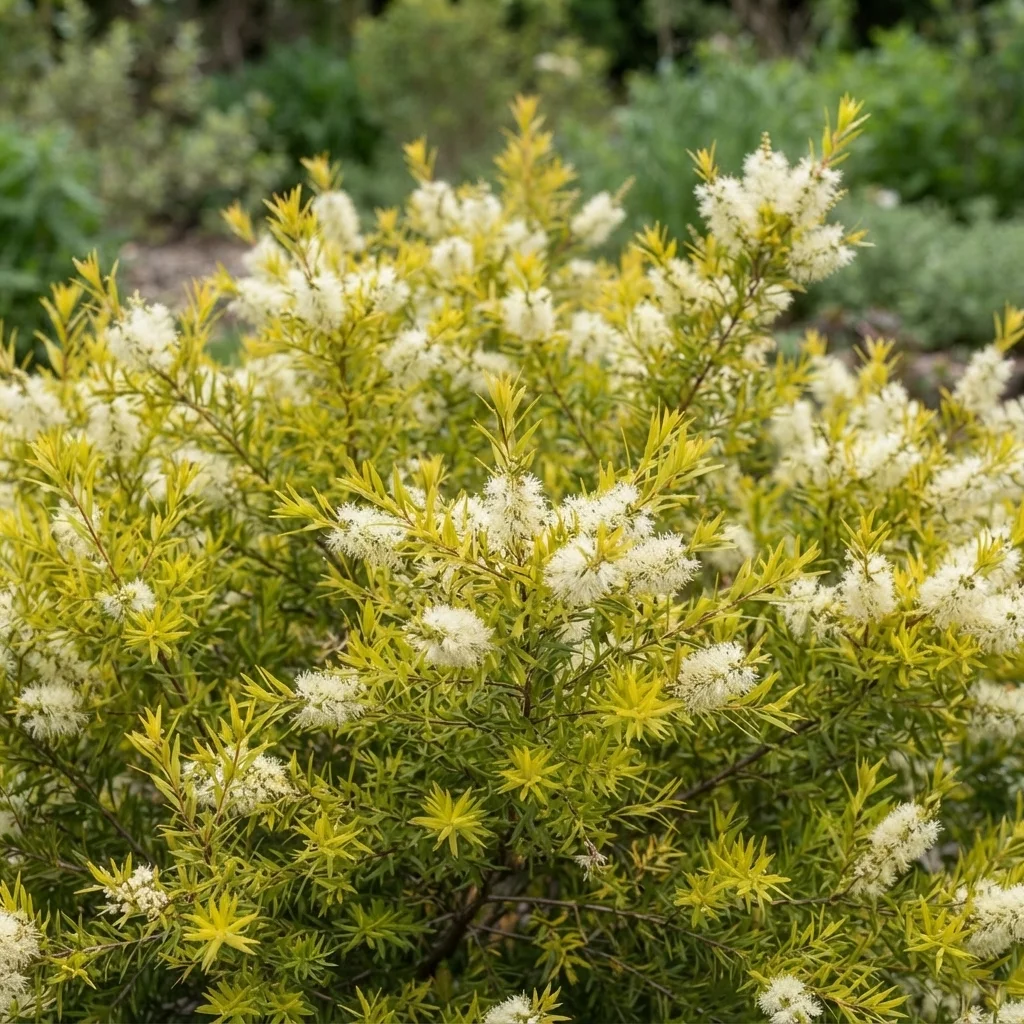
Golden Melaleuca
Melaleuca bracteata 'Golden Gem'
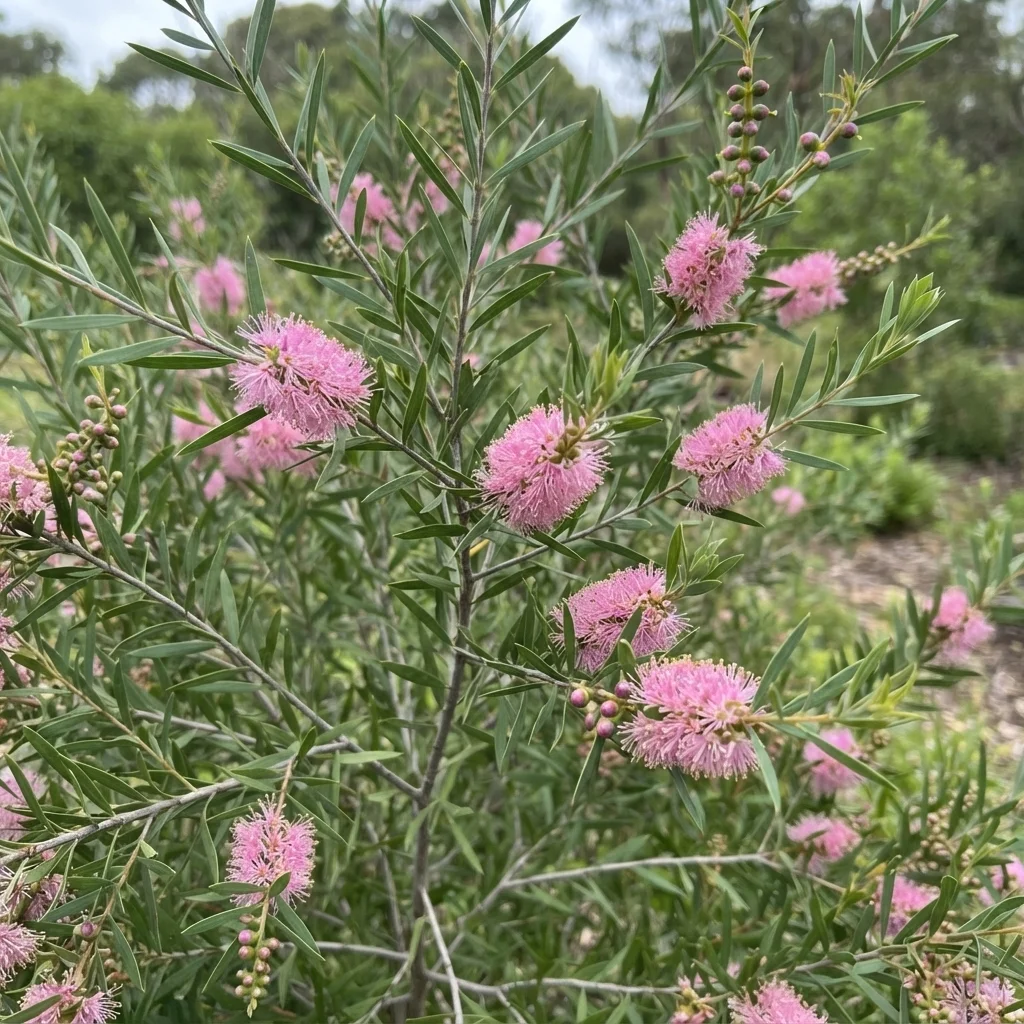
Graceful Honey-myrtle
Melaleuca radula
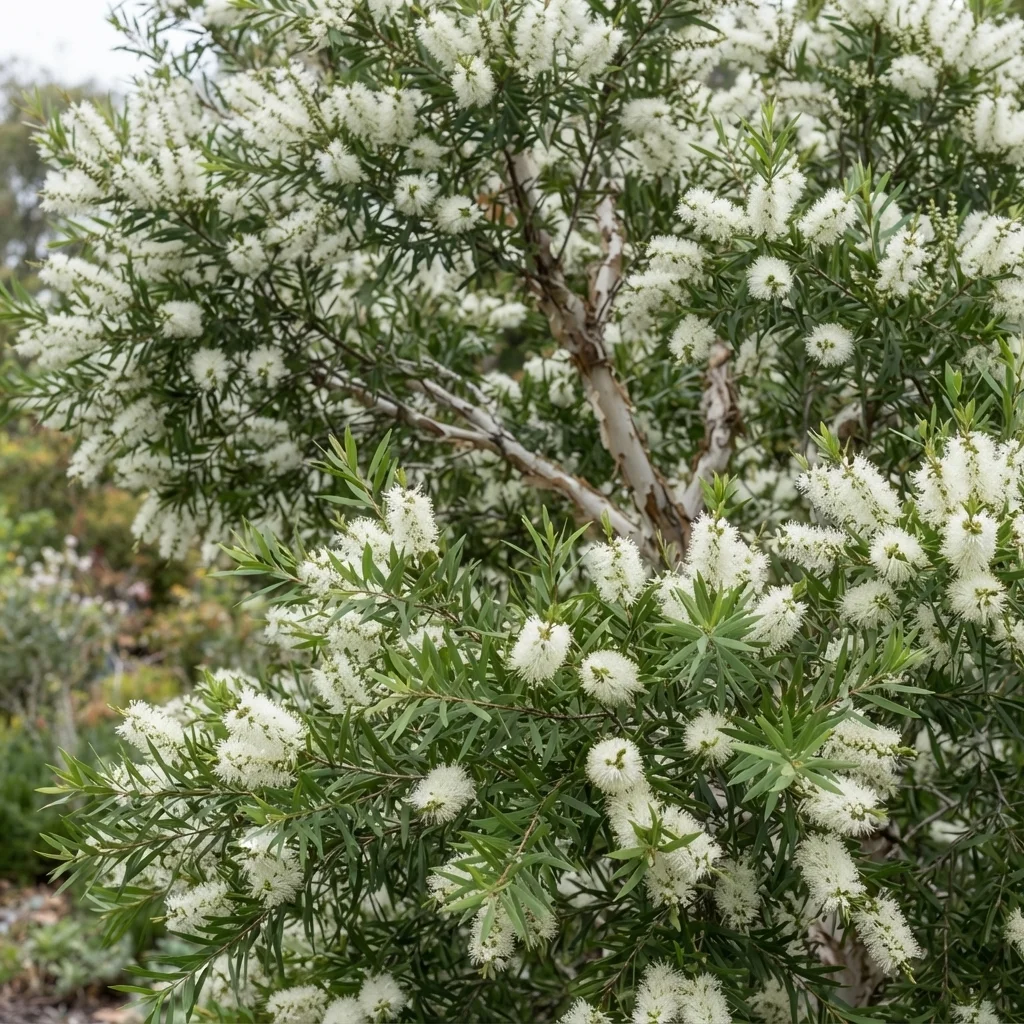
Snow-in-summer
Melaleuca linariifolia
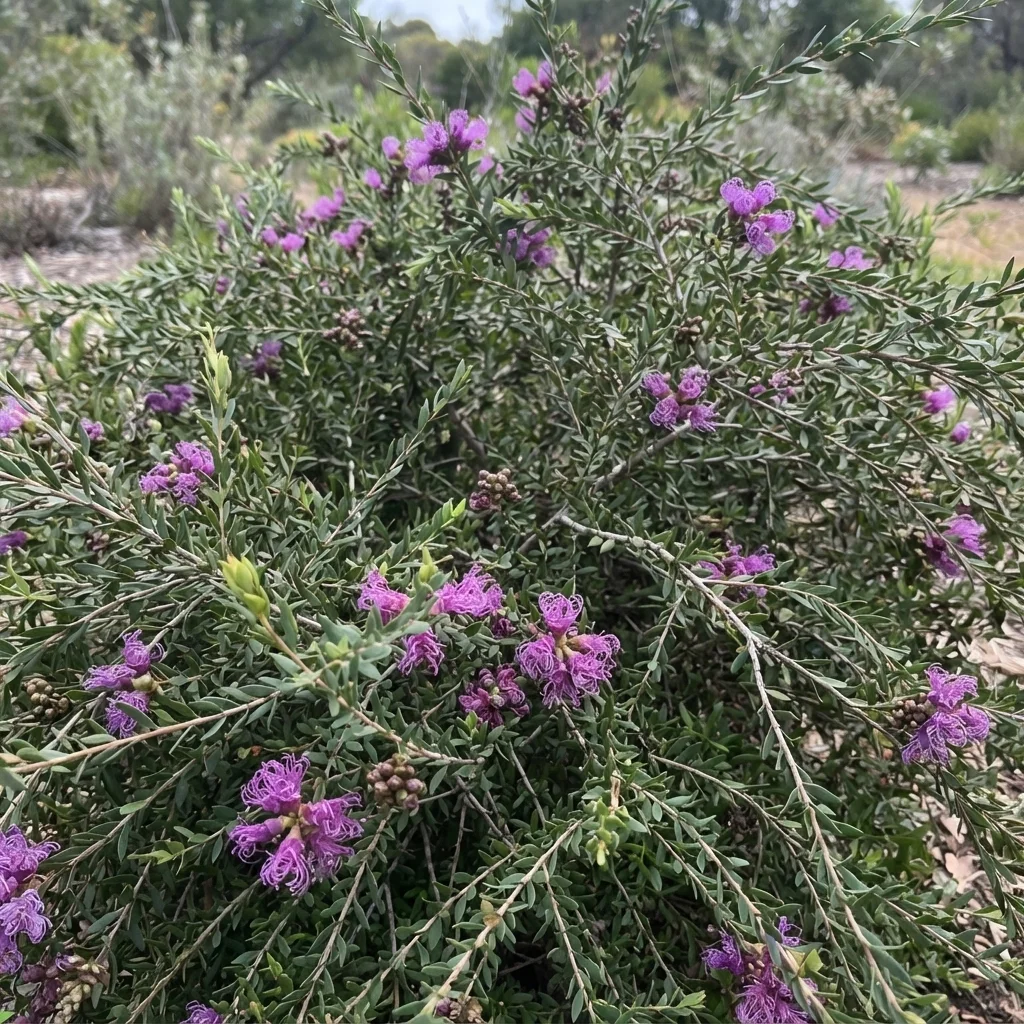
Thymeleaf Melaleuca
Melaleuca thymifolia
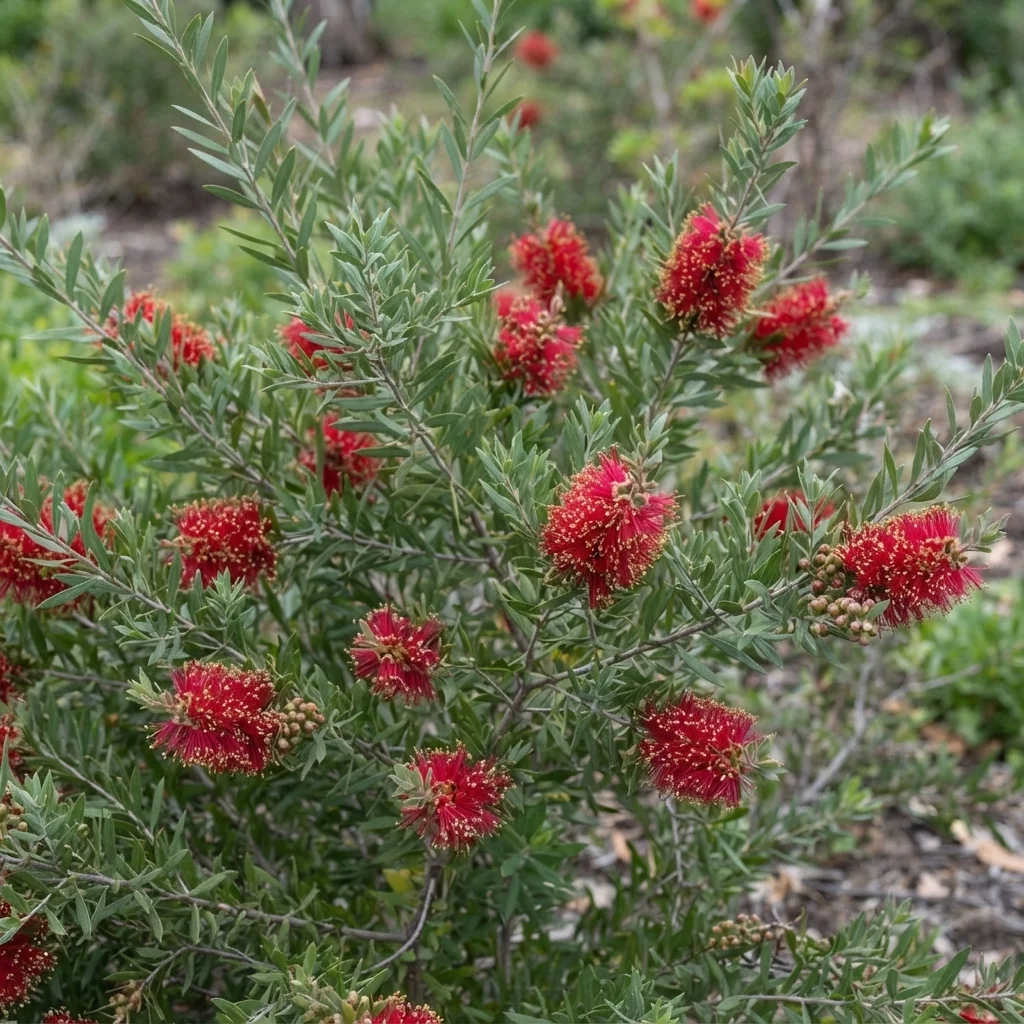
Scarlet Honey Myrtle
Melaleuca fulgens
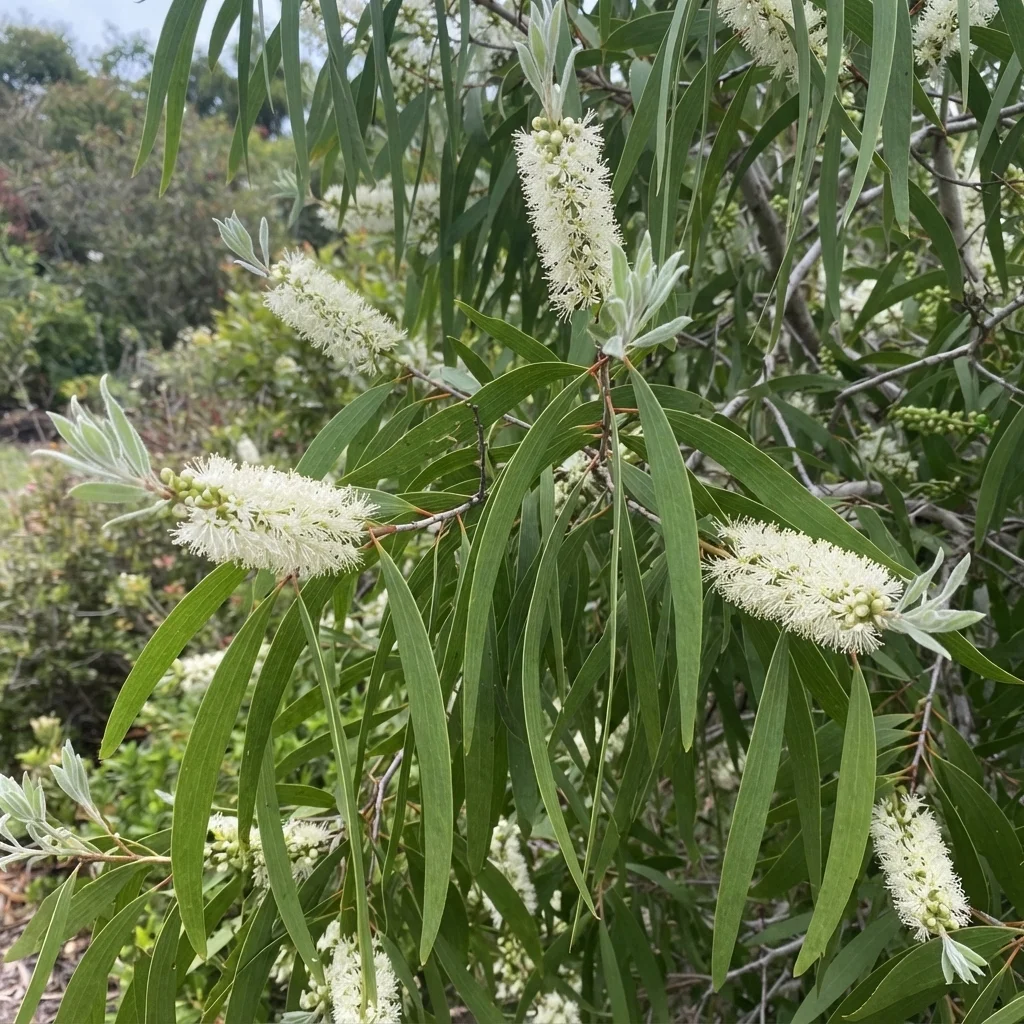
Weeping Paperbark
Melaleuca leucadendra
Keep exploring
Explore the genus
Hardy in your zone?
Grow Prickly-leaved Paperbark with confidence
See it in a design of your actual yard, get zone-matched care reminders, and track it season by season in your garden journal.