The Story
Plant Bio
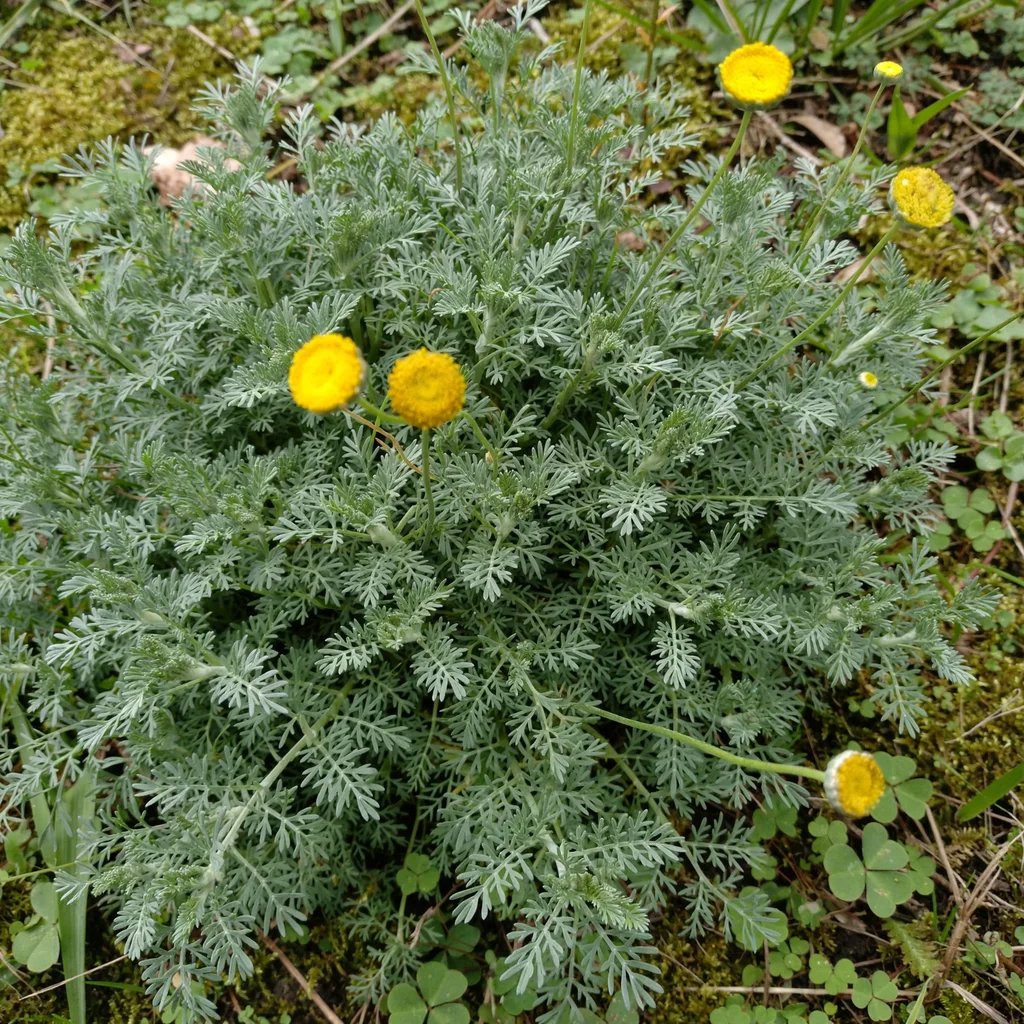
Cotula lineariloba is a low evergreen perennial from the high Drakensberg in South Africa, forming a dense mat of soft finely divided grey-green foliage. The bloom is a solitary golden button head about 1 inch across, held on a thin wiry stem above the leaves from spring to fall.
It spreads into a touchable ferny carpet 2 to 6 inches high and 24 to 36 inches wide, rooting along the stems to close as living mulch. Frost can cut the top back in zone 7, but the crown returns in spring, and plants in too much shade stretch lanky and flower poorly.
Uses & Benefits:
Essentials
At a Glance
Plant Type
Groundcover
Height
6"
Width
24"
Light
Full Sun, Partial Sun
Zones
7, 8, 9, 10
Water
Medium
Humidity
Unknown
Lifespan
Perennial
Native To
South Africa
Toxicity
Unknown
Bloom period
Spring – Fall
In flower about 9 months of the year
Planting
How to Grow
- Set out after last frost in full sun to part shade in average well-drained soil.
- Space starts 12 to 18 inches apart to let the mat close without crowding.
- Water regularly the first season, then ease back to occasional deep soakings once rooted.
- Deadhead through bloom or shear to 3 inches after the main flush to renew foliage.
Pro Tip
Shear the mat back to 3 inches after the main flush to force fresh ferny growth and a second round of buttons.
Keep It Thriving
Care Guide
Do
- Plant in well-drained soil where air moves freely.
- Deadhead routinely to keep buttons coming to frost.
- Trim lightly to refresh the mat after heavy bloom.
Don't
- Do not plant in soggy soil or deep shade.
- Do not let new transplants dry out before they root.
- Do not leave spent flower stems to mat down over the foliage.
Seasonal Care Calendar
| Task | Jan | Feb | Mar | Apr | May | Jun | Jul | Aug | Sep | Oct | Nov | Dec |
|---|---|---|---|---|---|---|---|---|---|---|---|---|
| Deadhead | ||||||||||||
| Plant | ||||||||||||
| Prune | ||||||||||||
| Winter Prep |
Watch Out For
Pests & Diseases
Common Pests
Common Diseases
In the Garden
Landscape Uses & Companions
Landscape Uses
Companion Plants
Multiply
Propagation Methods
Good to Know
Common Questions
Brass Buttons questions
What zones can Brass Buttons grow in?
Brass Buttons is hardy in USDA Zones 7–10: in that range it survives winter in the ground. Colder than Zone 7, grow it in a container you can move to shelter for the winter, or as an annual.
Is Brass Buttons deer resistant?
Yes — Brass Buttons is rated deer-resistant. Deer typically pass it over, though extreme hunger can override any plant's defenses.
When does Brass Buttons bloom?
Brass Buttons typically blooms from spring to fall. Exact timing shifts a week or two with your zone — Sow's bloom calendar maps it to your garden.
Does Brass Buttons need full sun?
Brass Buttons does best in full sun to part shade. In hot climates, afternoon shade keeps blooms fresher longer.
Is Brass Buttons drought tolerant?
Yes — once established (usually after the first full season), Brass Buttons handles dry spells with minimal watering. Water deeply its first year to build the root system that makes that possible.
More Cotula to compare
Keep exploring
Explore the genus
Hardy in your zone?
Grow Brass Buttons with confidence
See it in a design of your actual yard, get zone-matched care reminders, and track it season by season in your garden journal.