The Story
Plant Bio
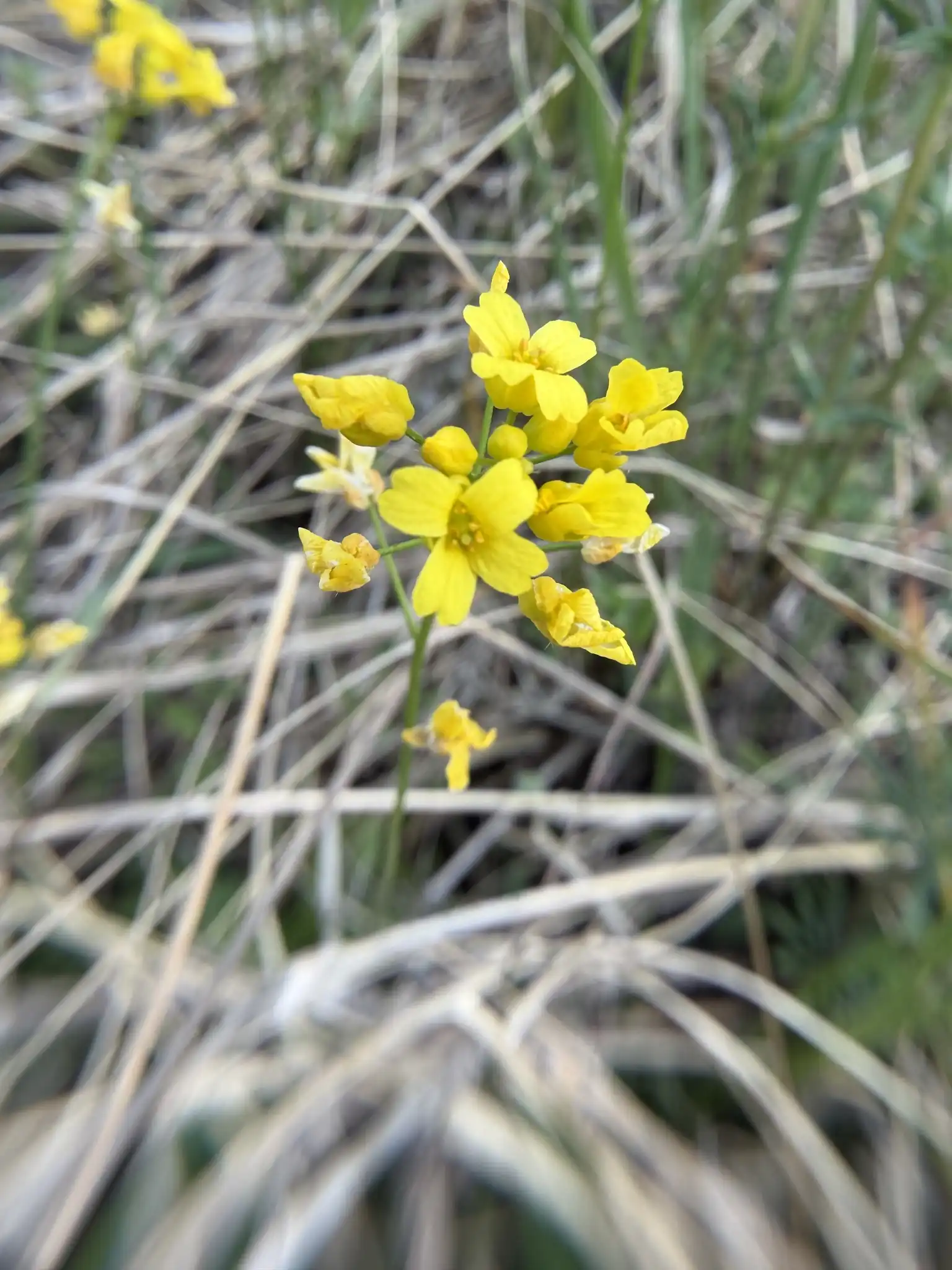
Draba sibirica is an evergreen perennial in the mustard family forming a low mat of gray-green rosettes linked by creeping stolons. Wild plants reach 5 to 25 cm tall, with leafless flowering stems rising above fernlike basal foliage.
Garden plants stay about 4 inches high in leaf and 6 inches in flower, spreading to about 8 inches wide. In early to mid-spring each scape ends in a raceme of small sunshine-yellow flowers with four notched petals 4 to 6 mm long.
Uses & Benefits:
Essentials
At a Glance
Plant Type
Perennial
Height
4"
Width
8"
Light
Full Sun
Zones
4
Water
Moderate
Humidity
Low
Lifespan
Perennial
Native To
Northern Asia, Eastern Europe to Siberia and Greenland
Toxicity
Non-toxic
Bloom period
Early spring – Late spring
In flower about 3 months of the year
Planting
How to Grow
- Plant in spring in full sun in rocky, sharply drained soil with the crown at soil level.
- Space plants 8 inches apart to allow stolons to root and knit into a mat.
- Water in once to settle soil around roots, then water only during extended dry spells.
- Top-dress with grit around rosettes to keep foliage dry and prevent crown rot.
Pro Tip
Plant it in full sun in lean, sharply drained rock or scree and leave the evergreen mat undisturbed; it is sold as Draba repens and spelled sibirica, not siberica.
Keep It Thriving
Care Guide
Do
- Grow in full sun with excellent drainage.
- Keep the mat lean and gritty as in a rock garden.
- Remove spent flower stems after bloom to keep the mat tight.
Don't
- Do not plant in rich, moisture-holding soil that stays wet in winter.
- Do not bury the basal rosettes under mulch or heavy compost.
- Do not confuse it with North American Draba juvenilis or Draba ogilviensis.
Seasonal Care Calendar
| Task | Jan | Feb | Mar | Apr | May | Jun | Jul | Aug | Sep | Oct | Nov | Dec |
|---|---|---|---|---|---|---|---|---|---|---|---|---|
| Deadhead | ||||||||||||
| Mulch | ||||||||||||
| Pest Check | ||||||||||||
| Plant | ||||||||||||
| Spring Cleanup |
Watch Out For
Pests & Diseases
Common Pests
Common Diseases
In the Garden
Landscape Uses & Companions
Landscape Uses
Companion Plants
Multiply
Propagation Methods
Good to Know
Common Questions
Siberian Whitlowgrass questions
What zones can Siberian Whitlowgrass grow in?
Siberian Whitlowgrass is hardy in USDA Zone 4: in that range it survives winter in the ground. Warmer than Zone 4, winter isn't the problem: it prefers colder winters, and summer heat can shorten its life.
When does Siberian Whitlowgrass bloom?
Siberian Whitlowgrass typically blooms in spring. Exact timing shifts a week or two with your zone — Sow's bloom calendar maps it to your garden.
Does Siberian Whitlowgrass need full sun?
Siberian Whitlowgrass does best in full sun (6+ hours).
More Draba to compare
Keep exploring
Explore the genus
Hardy in your zone?
Grow Siberian Whitlowgrass with confidence
See it in a design of your actual yard, get zone-matched care reminders, and track it season by season in your garden journal.