The Story
Plant Bio
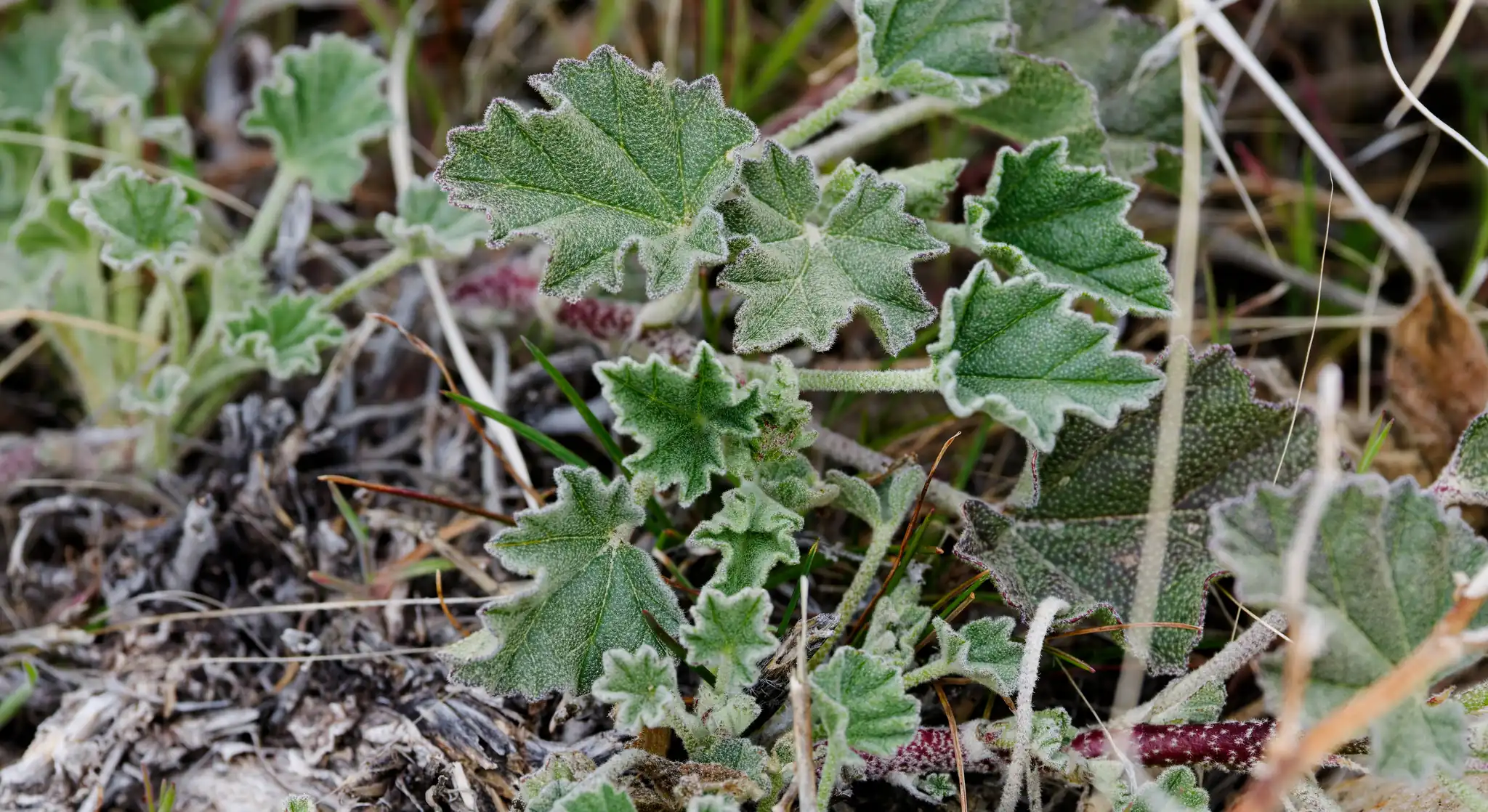
Sphaeralcea munroana is a western North American perennial subshrub that forms an open, sprawling mound from a deep woody taproot. The pale gray-green leaves are shallowly lobed and covered in fine white star-shaped hairs that create a rough texture.
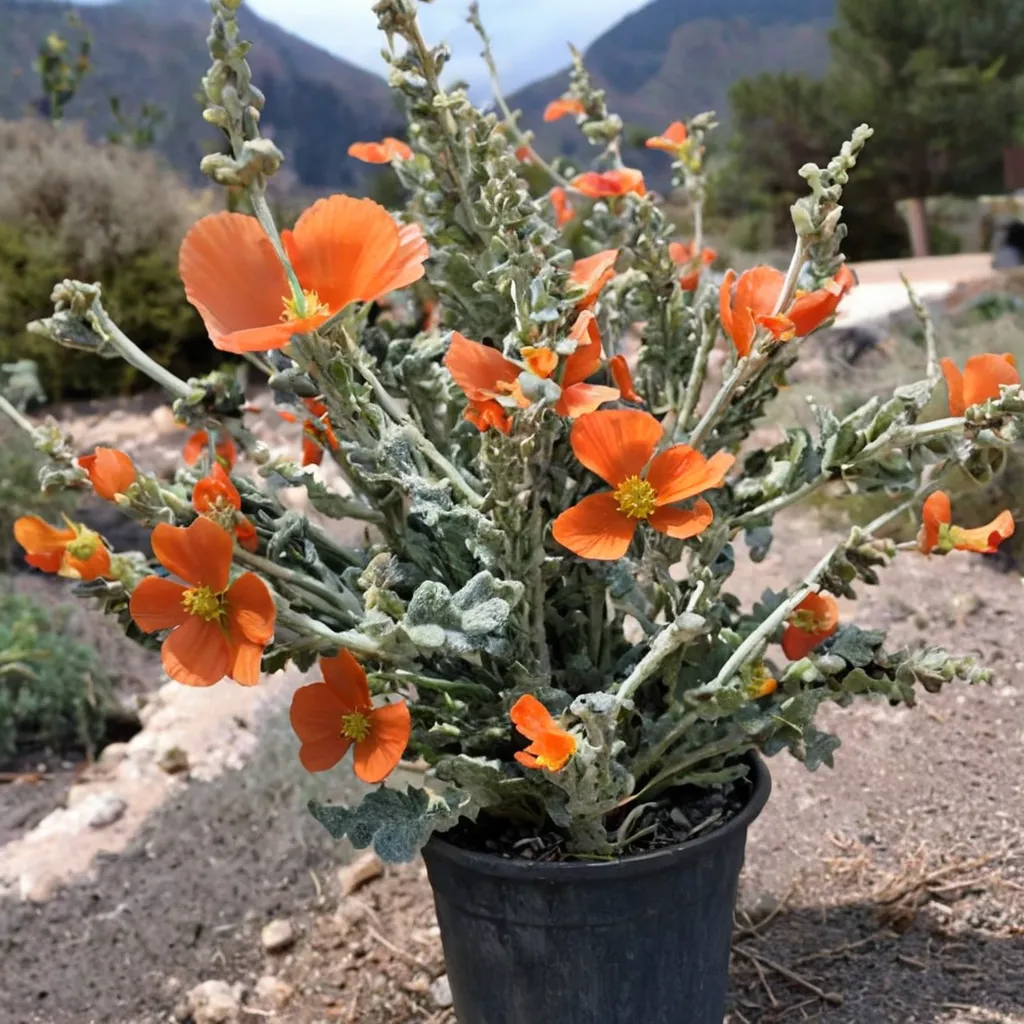
In late spring and summer, terminal racemes produce five-petaled, bowl-shaped orange flowers up to two centimeters across. The blooms display dense central clusters of yellow stamens and stand out sharply against the silver-tinted foliage.
Uses & Benefits:
Essentials
At a Glance
Plant Type
Perennial
Height
39"
Width
24"
Light
Full Sun
Zones
4, 5, 6, 7, 8, 9
Water
Low
Humidity
Low
Lifespan
Perennial
Native To
Western North America
Toxicity
Non-toxic
Bloom period
Late spring – Late summer
In flower about 4 months of the year
Marketplace
Where to Buy
Shipping costs Year-round shipping Free shipping
Planting
How to Grow
- Select a fully exposed site in poor, well-draining sandy, rocky, or gravelly soil with neutral to alkaline pH.
- Dig a hole as deep as the taproot and twice as wide, keeping the crown level with the surrounding soil surface.
- Water deeply at planting to settle the soil around the root zone, then withhold supplemental water once established.
- Trim back dead flowering stalks in late summer to maintain a compact shape without cutting into old woody bases.
Pro Tip
Prune lightly behind spent flower clusters after blooming finishes, avoiding hard cuts into leafless woody stems which fail to regenerate.
Keep It Thriving
Care Guide
Do
- Plant in full sun in gritty, sharply draining soils.
- Allow the soil to dry completely between light establishment waterings.
- Prune spent flower stems back to fresh green foliage.
Don't
- Do not cut back into old leafless woody stems.
- Do not overwater or plant in heavy, moisture-retentive clay.
- Do not apply rich organic compost or high-nitrogen fertilizers.
Seasonal Care Calendar
| Task | Jan | Feb | Mar | Apr | May | Jun | Jul | Aug | Sep | Oct | Nov | Dec |
|---|---|---|---|---|---|---|---|---|---|---|---|---|
| Pest Check | ||||||||||||
| Plant | ||||||||||||
| Prune | ||||||||||||
| Spring Cleanup |
Watch Out For
Pests & Diseases
Common Pests
Common Diseases
In the Garden
Landscape Uses & Companions
Landscape Uses
Companion Plants
Multiply
Propagation Methods
Good to Know
Common Questions
Munro's Globemallow questions
What zones can Munro's Globemallow grow in?
Munro's Globemallow is hardy in USDA Zones 4–9: in that range it survives winter in the ground. Warmer than Zone 9, winter isn't the problem: it prefers colder winters, and summer heat can shorten its life.
Is Munro's Globemallow deer resistant?
Yes — Munro's Globemallow is rated deer-resistant. Deer typically pass it over, though extreme hunger can override any plant's defenses.
When does Munro's Globemallow bloom?
Munro's Globemallow typically blooms from late spring to late summer. Exact timing shifts a week or two with your zone — Sow's bloom calendar maps it to your garden.
Does Munro's Globemallow need full sun?
Munro's Globemallow does best in full sun (6+ hours).
Is Munro's Globemallow drought tolerant?
Yes — once established (usually after the first full season), Munro's Globemallow handles dry spells with minimal watering. Water deeply its first year to build the root system that makes that possible.
More Sphaeralcea to compare
Keep exploring
Explore the genus
Grow Munro's Globemallow with confidence
See it in a design of your actual yard, get zone-matched care reminders, and track it season by season in your garden journal.