The Story
Plant Bio
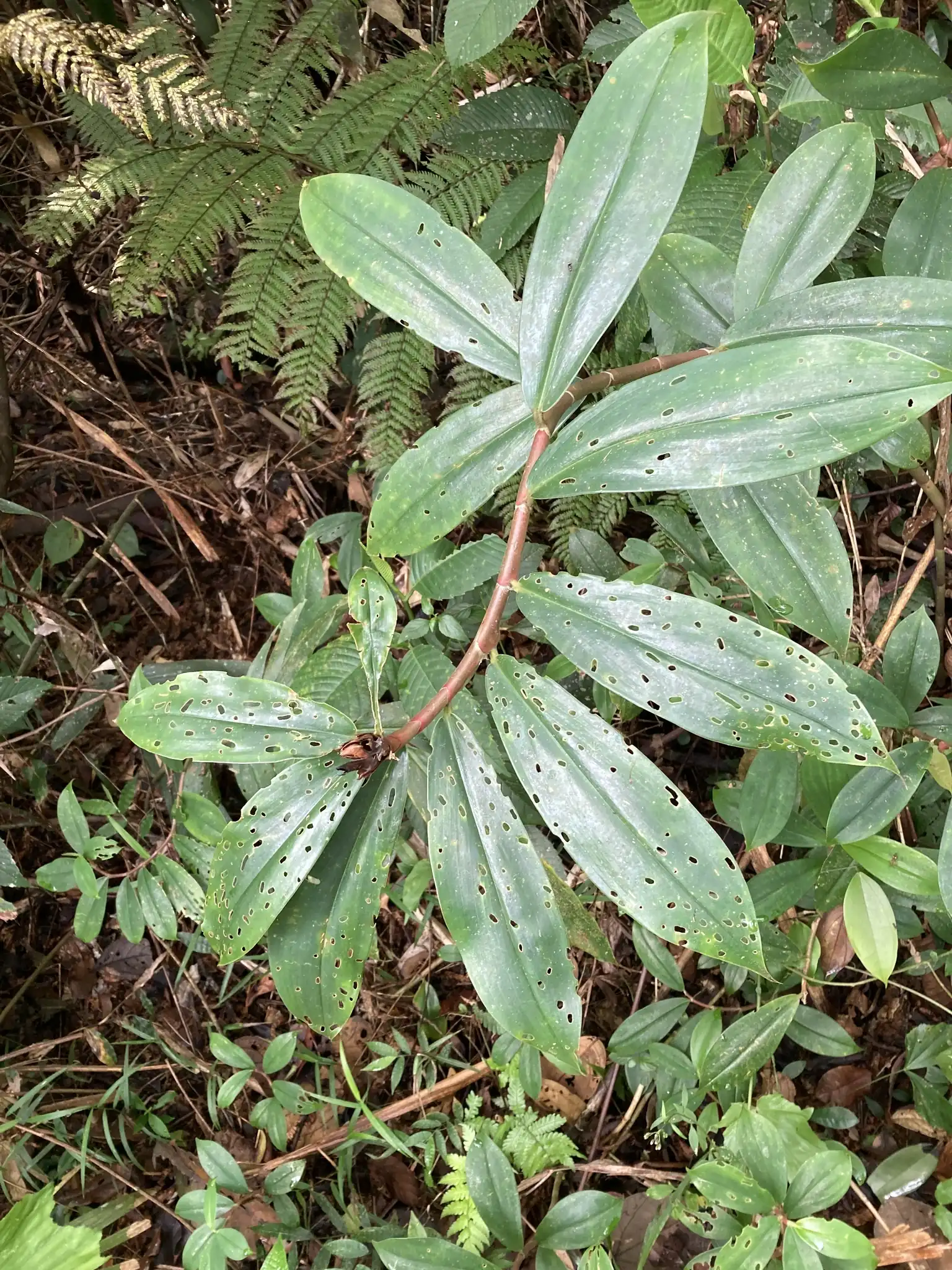
Hellenia speciosa is an erect rhizomatous tropical perennial that produces unbranched stems spiraling outward from a stout underground rootstock. Large, smooth-edged leaves with soft pubescent undersides wrap around each stem, ending in dense terminal flower cones.
The species features deep red, rigid cone-like bracts from which papery white blooms with crinkled margins emerge. Each flower opens with a prominent central yellow-to-orange throat, contrasting against the dark green spiraled foliage.
Uses & Benefits:
Essentials
At a Glance
Plant Type
Perennial
Height
120"
Width
72"
Light
Full Sun, Partial Sun
Zones
9, 10
Water
High
Humidity
High
Lifespan
Perennial
Native To
Asia, Australia
Toxicity
Non-toxic
Bloom period
Summer – Fall
In flower about 6 months of the year
Planting
How to Grow
- Select a planting location in full sun to partial shade with shelter from high winds.
- Amend sandy or clay soil with rich organic compost to achieve a well-draining, moisture-retentive loamy medium.
- Plant rhizomes 2 to 3 inches deep with active growth points facing upward, then water thoroughly.
- Maintain consistent soil moisture throughout the growing season and apply organic mulch to retain ground humidity.
Pro Tip
Cut spent flowering stems down to ground level after blooming ceases; cutting active green shoots mid-season halts flower development for that stem.
Keep It Thriving
Care Guide
Do
- Keep soil consistently moist during spring and summer growth flushes.
- Apply a balanced, slow-release organic fertilizer monthly through the active growing season.
- Provide morning sun with afternoon shade in hot inland climates to protect foliage.
Don't
- Do not allow soil to sit waterlogged, which rots underground rhizomes.
- Do not trim active green stems before they finish flowering.
- Do not expose plants to freezing temperatures without bringing tubers indoors.
Seasonal Care Calendar
| Task | Jan | Feb | Mar | Apr | May | Jun | Jul | Aug | Sep | Oct | Nov | Dec |
|---|---|---|---|---|---|---|---|---|---|---|---|---|
| Divide | ||||||||||||
| Fertilize | ||||||||||||
| Pest Check | ||||||||||||
| Prune |
Watch Out For
Pests & Diseases
Common Pests
Common Diseases
In the Garden
Landscape Uses & Companions
Landscape Uses
Multiply
Propagation Methods
Good to Know
Common Questions
Crepe Ginger questions
What zones can Crepe Ginger grow in?
Crepe Ginger is hardy in USDA Zones 9–10: in that range it survives winter in the ground. Colder than Zone 9, grow it in a container you can move to shelter for the winter, or as an annual.
Is Crepe Ginger deer resistant?
Not reliably. Deer may browse Crepe Ginger, especially tender spring growth — plan on repellents or fencing where pressure is high.
When does Crepe Ginger bloom?
Crepe Ginger typically blooms from summer to fall. Exact timing shifts a week or two with your zone — Sow's bloom calendar maps it to your garden.
Does Crepe Ginger need full sun?
Crepe Ginger does best in full sun to part shade. In hot climates, afternoon shade keeps blooms fresher longer.
Keep exploring
Explore the genus
Hardy in your zone?
Grow Crepe Ginger with confidence
See it in a design of your actual yard, get zone-matched care reminders, and track it season by season in your garden journal.