The Story
Plant Bio
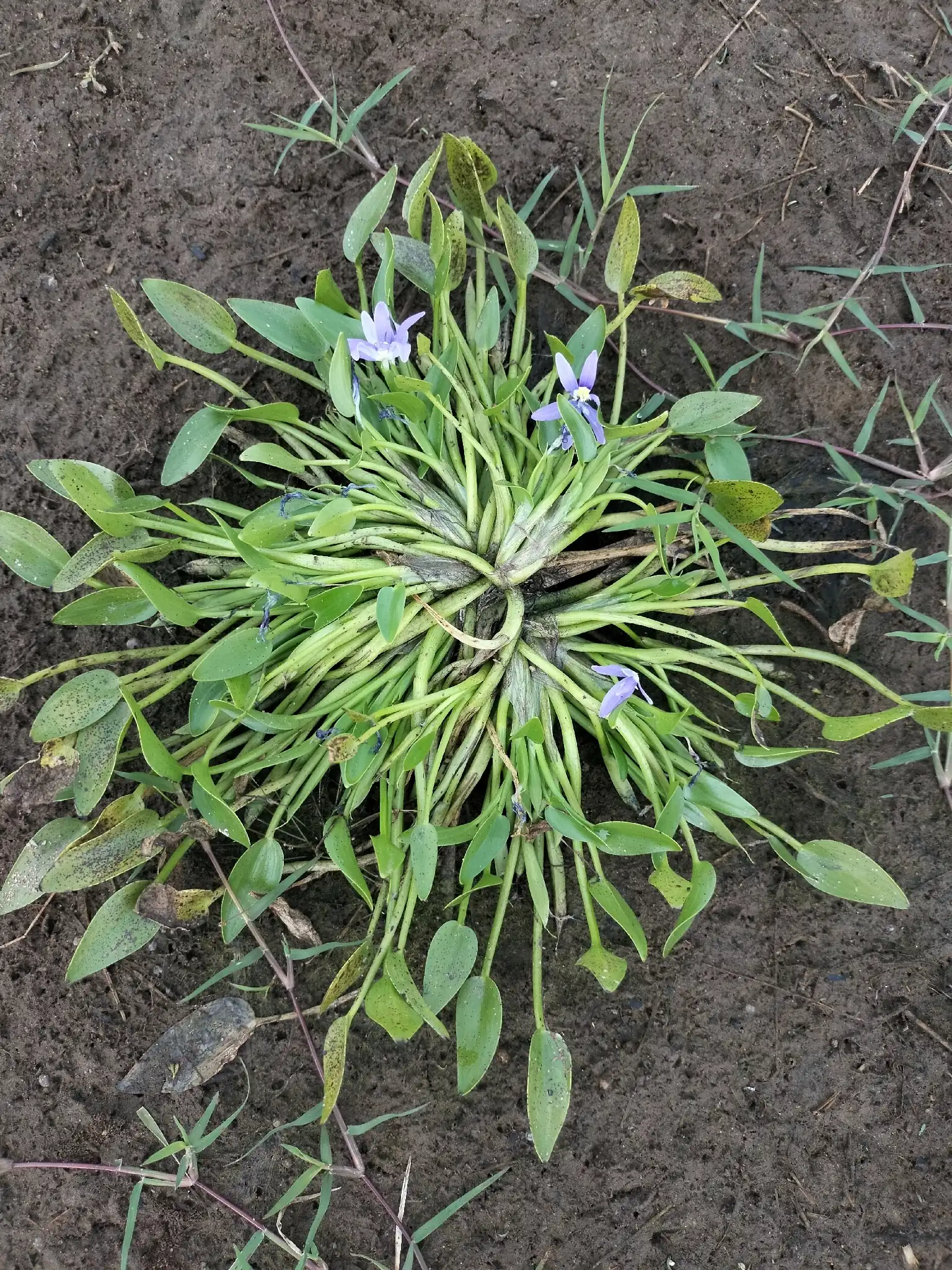
Heteranthera limosa, the blue mudplantain, is an annual aquatic herb reaching two to six inches tall on saturated mud or in shallow water, with oblong to ovate leaves on slender petioles. Stems stay short and tufted on exposed mud and elongate only once water exceeds about two inches, and each glabrous spathe holds a single salverform blue or white flower with a narrow tube.
This species carries only one flower per spathe, blue to purple or white with the upper lobes yellow toward the base, opening within an hour of dawn and collapsing by midday. That brief bloom plus its two forms — compact on mud and stretched with narrow leaves in deeper water — distinguish it from kidney-leaved mudplantains with which it is often confused.
Uses & Benefits:
Essentials
At a Glance
Plant Type
Aquatic
Height
6"
Width
6"
Light
Full Sun
Zones
4, 5, 6, 7, 8, 9, 10
Water
High - saturated mud to water under 2 in
Humidity
High
Lifespan
Annual
Native To
South-central USA to South America
Toxicity
Unknown - no verified toxicity data
Bloom period
Late spring – Autumn
In flower about 7 months of the year
Planting
How to Grow
- Set plugs or seedlings after frost into saturated mud or a pond shelf with less than two inches of standing water.
- Firm roots into wet mud and hold the water level steady until new leaves anchor.
- Give full sun and keep the substrate continuously wet through summer and fall bloom.
- Remove competing weeds by hand to keep the shallow margin open.
- Let fall seed drop on the mud to reseed, or collect capsules before the shelf dries.
Pro Tip
Hold water under two inches over saturated mud and never let the mud dry; deeper water weakens it, and midday wilt of the day flower is normal, not a watering cue.
Keep It Thriving
Care Guide
Do
- Keep mud saturated or under very shallow water all season.
- Hand-weed the margin to keep seedlings in full sun.
- Allow spent day-flowers to fall; collapse by noon is normal.
Don't
- Do not plant in water deeper than a few inches.
- Do not let the mud dry out during germination and bloom.
- Do not wild-collect plants where they are threatened.
Seasonal Care Calendar
| Task | Jan | Feb | Mar | Apr | May | Jun | Jul | Aug | Sep | Oct | Nov | Dec |
|---|---|---|---|---|---|---|---|---|---|---|---|---|
| Deadhead | ||||||||||||
| Pest Check | ||||||||||||
| Plant | ||||||||||||
| Propagate |
Watch Out For
Pests & Diseases
Common Pests
Common Diseases
In the Garden
Landscape Uses & Companions
Landscape Uses
Companion Plants
Multiply
Propagation Methods
Good to Know
Common Questions
Blue Mudplantain questions
What zones can Blue Mudplantain grow in?
Blue Mudplantain is an annual: it grows, flowers and sets seed in one season, so winter cold doesn't limit where it grows. Gardeners in any zone can grow it by planting at the right time, usually after the last spring frost.
When does Blue Mudplantain bloom?
Blue Mudplantain typically blooms from late spring to late fall. Exact timing shifts a week or two with your zone — Sow's bloom calendar maps it to your garden.
Does Blue Mudplantain need full sun?
Blue Mudplantain does best in full sun (6+ hours).
Keep exploring
Explore the genus
Grow Blue Mudplantain with confidence
See it in a design of your actual yard, get zone-matched care reminders, and track it season by season in your garden journal.