The Story
Plant Bio
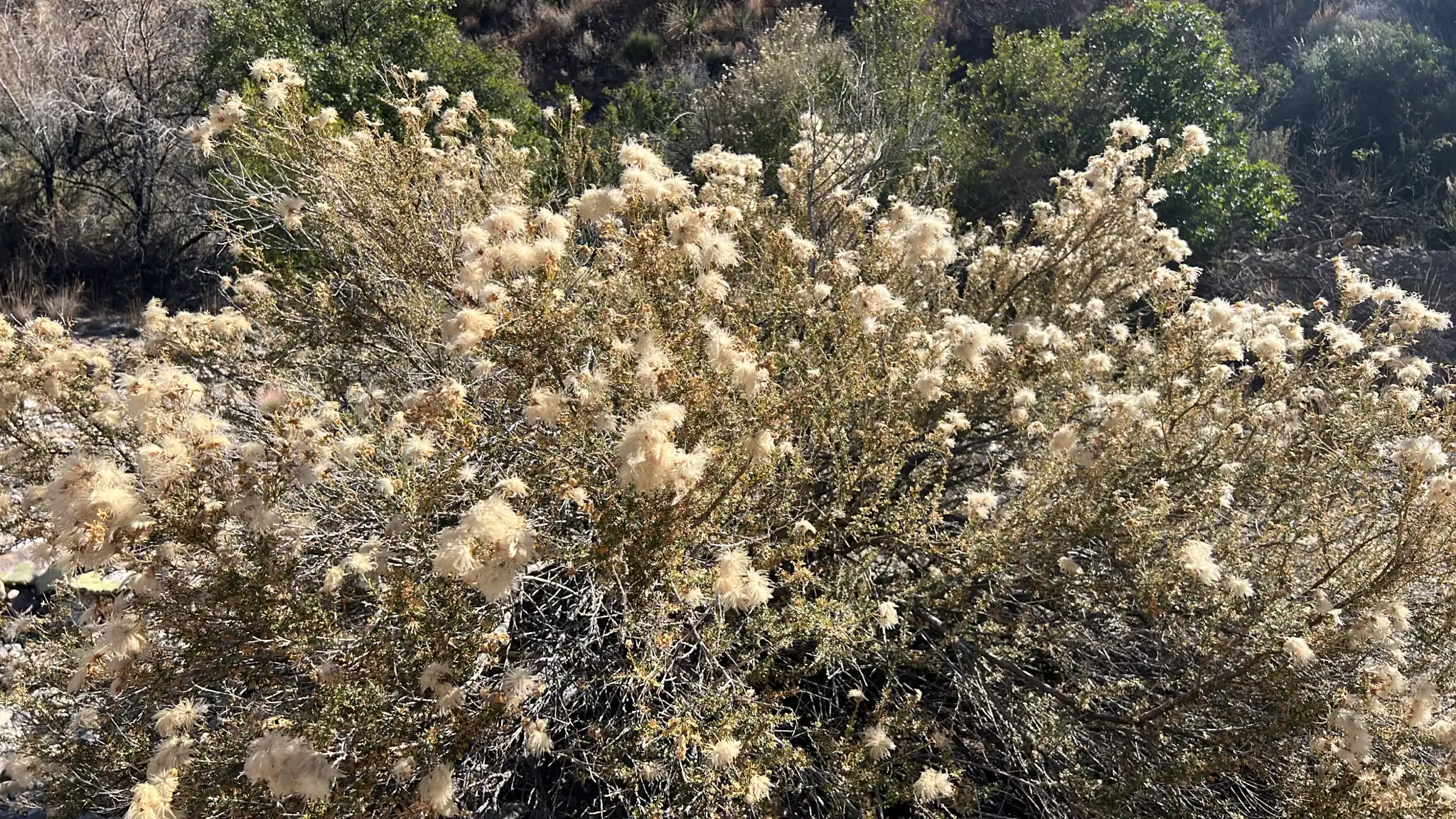
Fallugia paradoxa is a deciduous to semi-evergreen shrub native to the arid mountain slopes, rocky arroyos, and dry washes of the southwestern United States and northern Mexico. It produces solitary white rose-like flowers followed by dense, persistent feathery seed plumes that transition from pinkish-purple to silvery-white.
The persistent seed plumes give the shrub a misty appearance alongside shredding, wheat-colored exfoliating bark. Small, lobed dark green leaves feature star-shaped hairs above and dense silvery or rusty felt underneath to reduce moisture loss in arid environments.
Uses & Benefits:
Essentials
At a Glance
Plant Type
Shrub
Height
94"
Width
118"
Light
Full Sun
Zones
5, 6, 7, 8, 9, 10
Water
Low
Humidity
Low
Lifespan
Perennial
Native To
North America
Toxicity
Non-toxic
Bloom period
Spring – Fall
In flower about 9 months of the year
Planting
How to Grow
- Select a full-sun site with gravelly, sandy, or dry loam soil that drains rapidly.
- Dig a hole equal in depth to the root ball without adding compost, manure, or organic amendments.
- Water sparingly during the first growing season to settle the soil and establish roots.
- Cease routine irrigation after establishment, allowing the root system to rely on ambient rainfall.
- Cut back the oldest woody stems to ground level in late winter to refresh growth.
Pro Tip
Do not fertilize or heavily amend the soil at planting, as high nutrient levels trigger aggressive underground suckering and turn a graceful shrub into an unkempt thicket.
Keep It Thriving
Care Guide
Do
- Plant in lean, rocky, or sandy soils with sharp drainage.
- Prune selectively in late winter to remove old woody stems.
- Allow soil to dry out completely between rare deep waterings.
Don't
- Do not apply fertilizer or nutrient-rich organic soil amendments.
- Do not shear branches into formal hedge shapes or cut severely into old leafless wood.
- Do not plant in heavy, poorly drained clay soils subject to winter wetness.
Seasonal Care Calendar
| Task | Jan | Feb | Mar | Apr | May | Jun | Jul | Aug | Sep | Oct | Nov | Dec |
|---|---|---|---|---|---|---|---|---|---|---|---|---|
| Pest Check | ||||||||||||
| Plant | ||||||||||||
| Propagate | ||||||||||||
| Prune |
Watch Out For
Pests & Diseases
Common Pests
Common Diseases
In the Garden
Landscape Uses & Companions
Landscape Uses
Multiply
Propagation Methods
Good to Know
Common Questions
Apache Plume questions
What zones can Apache Plume grow in?
Apache Plume is hardy in USDA Zones 5–10: in that range it survives winter in the ground. Colder than Zone 5, grow it in a container you can move to shelter for the winter.
Is Apache Plume deer resistant?
Yes — Apache Plume is rated deer-resistant. Deer typically pass it over, though extreme hunger can override any plant's defenses.
When does Apache Plume bloom?
Apache Plume typically blooms from spring to fall. Exact timing shifts a week or two with your zone — Sow's bloom calendar maps it to your garden.
Does Apache Plume need full sun?
Apache Plume does best in full sun (6+ hours).
Is Apache Plume drought tolerant?
Yes — once established (usually after the first full season), Apache Plume handles dry spells with minimal watering. Water deeply its first year to build the root system that makes that possible.
Keep exploring
Explore the genus
Grow Apache Plume with confidence
See it in a design of your actual yard, get zone-matched care reminders, and track it season by season in your garden journal.