The Story
Plant Bio
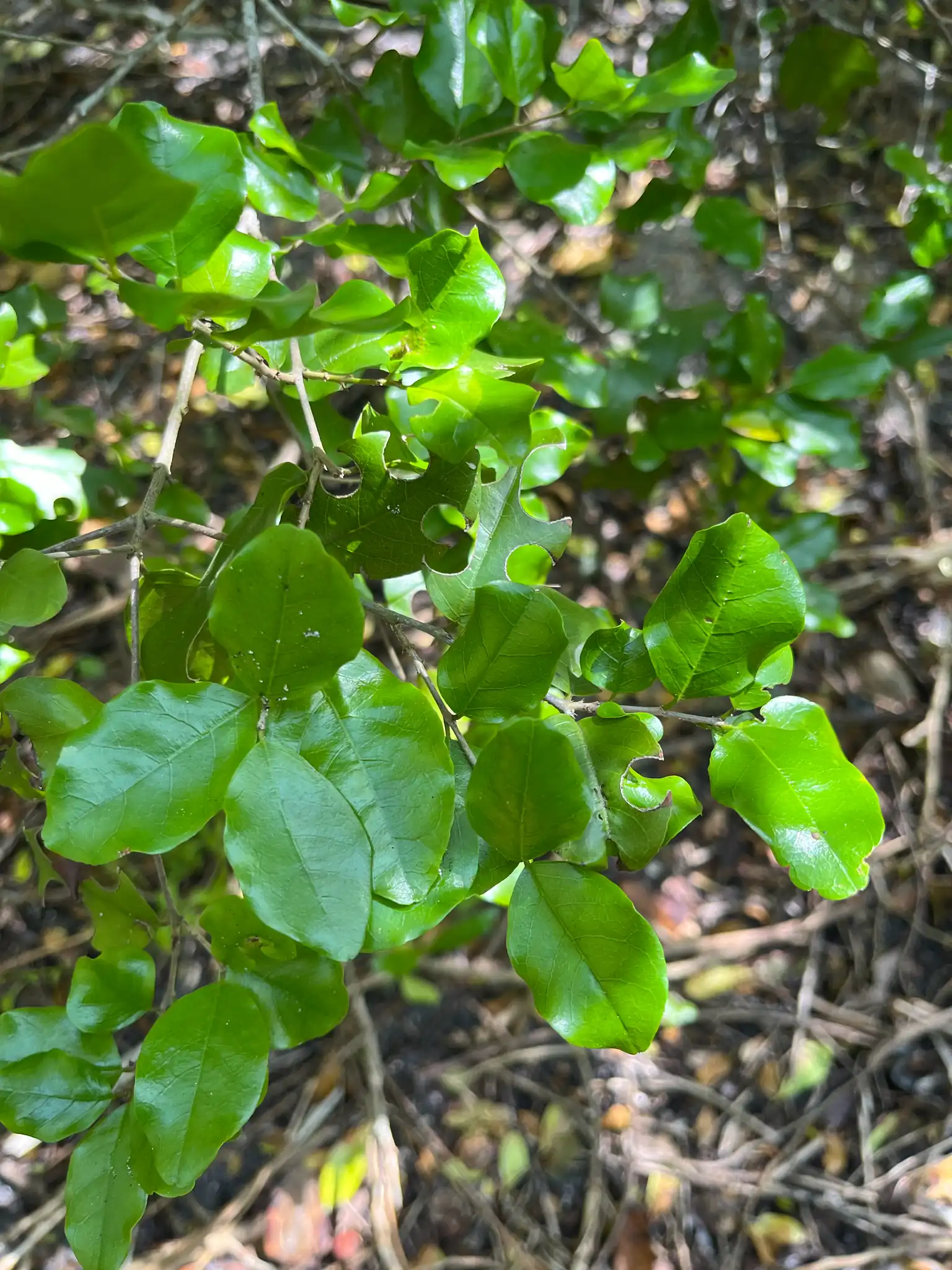
Krugiodendron ferreum, the black ironwood, is a slow-growing evergreen tree of the buckthorn family reaching 15 to 25 feet in gardens, with slender branches forming a dense narrow upright crown. It carries glossy dark green ovate-elliptic leaves 2 to 6 cm long with undulate margins, the new unfolding leaves flushed pinkish.
Its wood is the densest native to North America at about 1.3 specific gravity, carried on a short trunk 10 to 25 cm in diameter with dark gray furrowed bark. The small greenish-yellow star-shaped flowers lack petals but release almond-like fragrance and copious nectar, followed by juicy sweet ovoid drupes ripening from green through purplish-red to black.
Uses & Benefits:
Essentials
At a Glance
Plant Type
Tree
Height
300"
Width
144"
Light
Full Sun, Partial Sun
Zones
9, 10
Water
Low
Humidity
High humidity tolerant
Lifespan
Long-lived
Native To
South Florida, West Indies to Central America
Toxicity
Non-toxic
Bloom period
Late spring – Late summer
In flower about 4 months of the year
Planting
How to Grow
- Plant in USDA 9b-11 in full sun to light shade after frost danger has passed.
- Dig a hole twice the container width in rocky, sandy or loamy soil that drains freely and set the crown level.
- Water deeply at planting and through the first dry season, then taper to rainfall once established.
- Mulch 2 to 3 inches with bark, keeping mulch clear of the trunk.
- Prune only lightly to remove crossing branches; no routine shearing is needed.
Pro Tip
Site it in full sun with sharp drainage and leave it undisturbed; it adds only about a foot per year, so hard pruning only sets it back.
Keep It Thriving
Care Guide
Do
- Give full sun to light shade and soil that drains freely.
- Water to establish, then rely on rainfall except in prolonged drought.
- Leave ripe fruit on the tree for birds if wildlife value is the goal.
Don't
- Do not plant where hard frosts below zone 9b occur.
- Do not cut hard into old wood to reduce size.
- Do not overwater or set in soil that stays soggy.
Seasonal Care Calendar
| Task | Jan | Feb | Mar | Apr | May | Jun | Jul | Aug | Sep | Oct | Nov | Dec |
|---|---|---|---|---|---|---|---|---|---|---|---|---|
| Harvest | ||||||||||||
| Mulch | ||||||||||||
| Pest Check | ||||||||||||
| Plant | ||||||||||||
| Prune |
Watch Out For
Pests & Diseases
Common Pests
In the Garden
Landscape Uses & Companions
Landscape Uses
Multiply
Propagation Methods
Good to Know
Common Questions
Black Ironwood questions
What zones can Black Ironwood grow in?
Black Ironwood is hardy in USDA Zones 9–10: in that range it survives winter in the ground. Colder than Zone 9, winters are too cold for it to survive outdoors.
When does Black Ironwood bloom?
Black Ironwood typically blooms from late spring to late summer. Exact timing shifts a week or two with your zone — Sow's bloom calendar maps it to your garden.
Does Black Ironwood need full sun?
Black Ironwood does best in full sun to part shade. In hot climates, afternoon shade keeps blooms fresher longer.
Is Black Ironwood drought tolerant?
Yes — once established (usually after the first full season), Black Ironwood handles dry spells with minimal watering. Water deeply its first year to build the root system that makes that possible.
Keep exploring
Explore the genus
Hardy in your zone?
Grow Black Ironwood with confidence
See it in a design of your actual yard, get zone-matched care reminders, and track it season by season in your garden journal.