The Story
Plant Bio
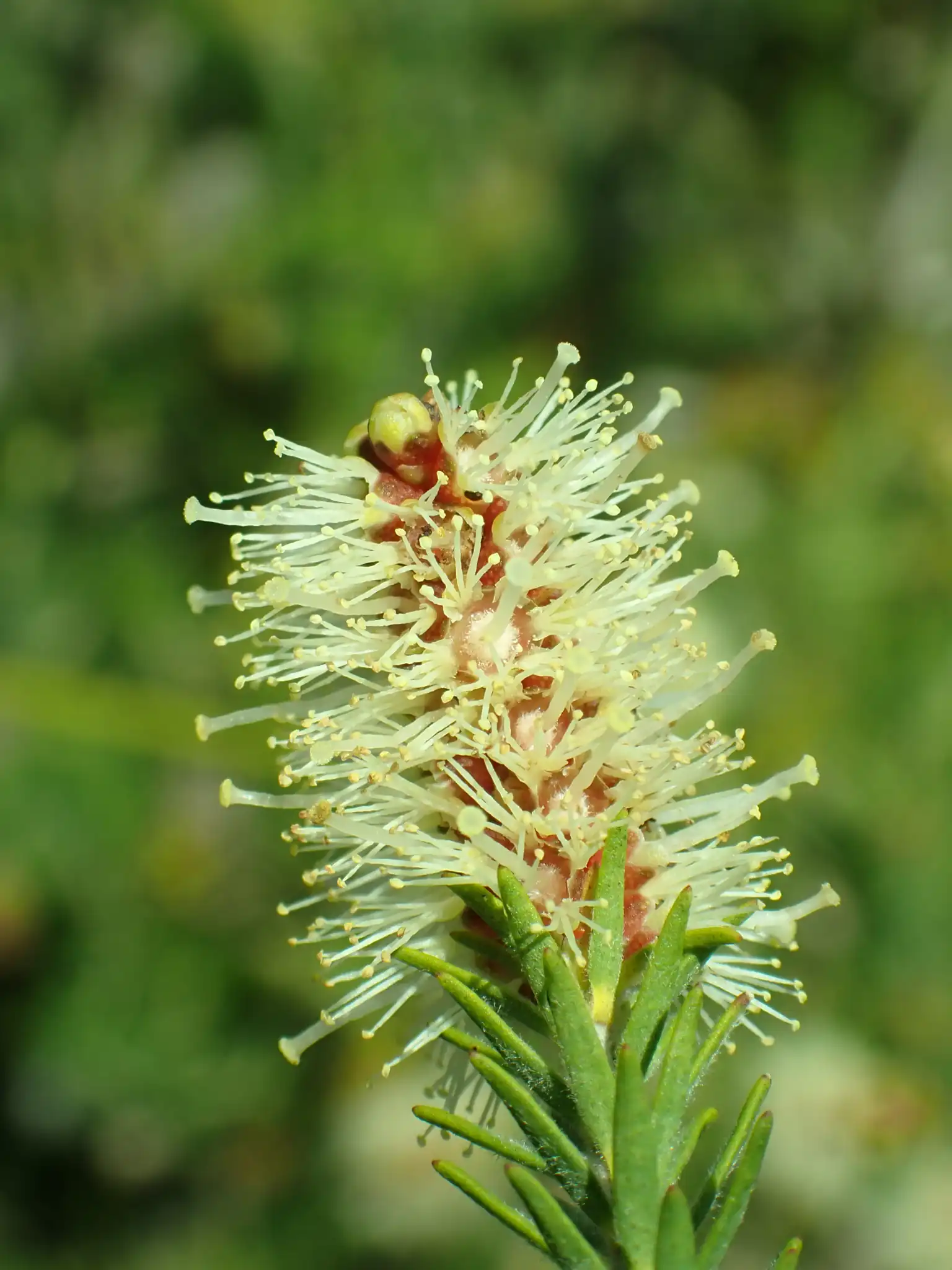
Melaleuca incana, the gray honey-myrtle, is an evergreen Australian shrub with a dense, weeping habit and gracefully arching branches. The soft-textured foliage consists of small, narrow leaves covered in fine hairs that create a distinctive silvery-gray or blue-green appearance.
In late spring, the branch tips produce small, cylindrical bottlebrush spikes of cream to pale yellow flowers with prominent stamens. New foliage growth frequently emerges with a distinct purplish or silvery tint, contrasting against the mature gray leaves.
Uses & Benefits:
Essentials
At a Glance
Plant Type
Shrub
Height
144"
Width
144"
Light
Full Sun, Partial Sun
Zones
9, 10
Water
Low
Humidity
Moderate
Lifespan
Perennial
Native To
Australia
Toxicity
Non-toxic
Bloom period
Late spring – Early summer
In flower about 2 months of the year
Planting
How to Grow
- Select a planting site in full sun to partial shade with well-drained soil.
- Dig a hole twice as wide as the root ball and of equal depth, backfilling with native soil.
- Water deeply and regularly during the first growing season to establish a deep root system.
- Apply a thin layer of organic mulch around the base, keeping it clear of the main stem.
Pro Tip
Avoid shearing this species into rigid, formal shapes, which ruins its natural weeping architecture; instead, use selective tip-pruning after flowering to maintain density. While it tolerates seasonal wetness and heavy clay, establishing functional surface drainage prevents root rot.
Keep It Thriving
Care Guide
Do
- Prune lightly after the spring flowering flush to maintain a dense habit.
- Use a low-phosphorus native fertilizer sparingly in spring if soils are nutrient-deficient.
- Provide occasional deep watering during extended dry spells to improve foliage appearance.
Don't
- Do not prune hard into old, leafless wood as recovery is slow and patchy.
- Do not over-fertilize with standard high-phosphorus fertilizers.
- Do not allow the soil to remain waterlogged in poorly drained areas.
Seasonal Care Calendar
| Task | Jan | Feb | Mar | Apr | May | Jun | Jul | Aug | Sep | Oct | Nov | Dec |
|---|---|---|---|---|---|---|---|---|---|---|---|---|
| Fertilize | ||||||||||||
| Mulch | ||||||||||||
| Pest Check | ||||||||||||
| Prune |
Watch Out For
Pests & Diseases
Common Pests
Common Diseases
In the Garden
Landscape Uses & Companions
Landscape Uses
Companion Plants
Multiply
Propagation Methods
Good to Know
Common Questions
Gray Honey-myrtle questions
What zones can Gray Honey-myrtle grow in?
Gray Honey-myrtle is hardy in USDA Zones 9–10. Inside that range it survives winter in the ground; outside it, grow it as an annual or a container plant you protect.
Is Gray Honey-myrtle deer resistant?
Not reliably. Deer may browse Gray Honey-myrtle, especially tender spring growth — plan on repellents or fencing where pressure is high.
When does Gray Honey-myrtle bloom?
Gray Honey-myrtle typically blooms in late spring through early summer. Exact timing shifts a week or two with your zone — Sow's bloom calendar maps it to your garden.
Does Gray Honey-myrtle need full sun?
Gray Honey-myrtle does best in full sun to part shade. In hot climates, afternoon shade keeps blooms fresher longer.
Is Gray Honey-myrtle drought tolerant?
Yes — once established (usually after the first full season), Gray Honey-myrtle handles dry spells with minimal watering. Water deeply its first year to build the root system that makes that possible.
More Melaleuca to compare
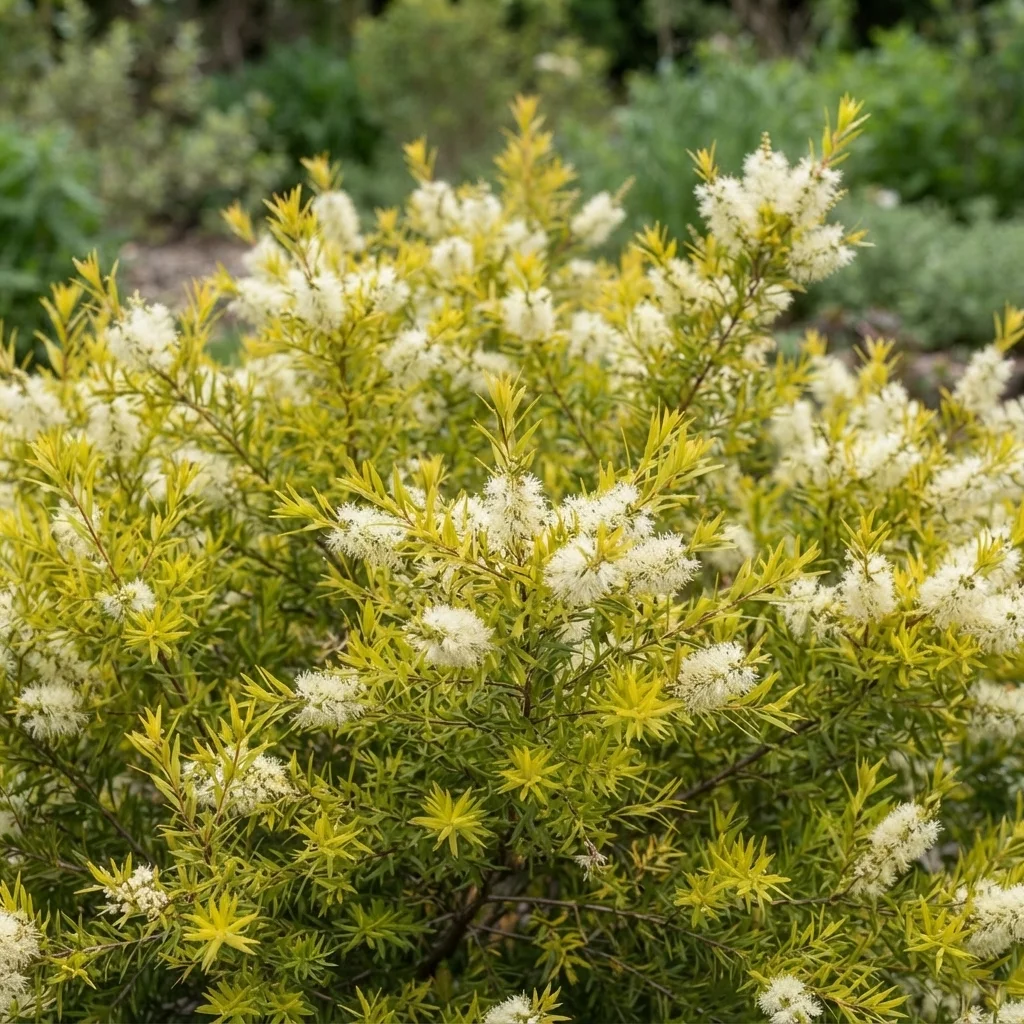
Golden Melaleuca
Melaleuca bracteata 'Golden Gem'
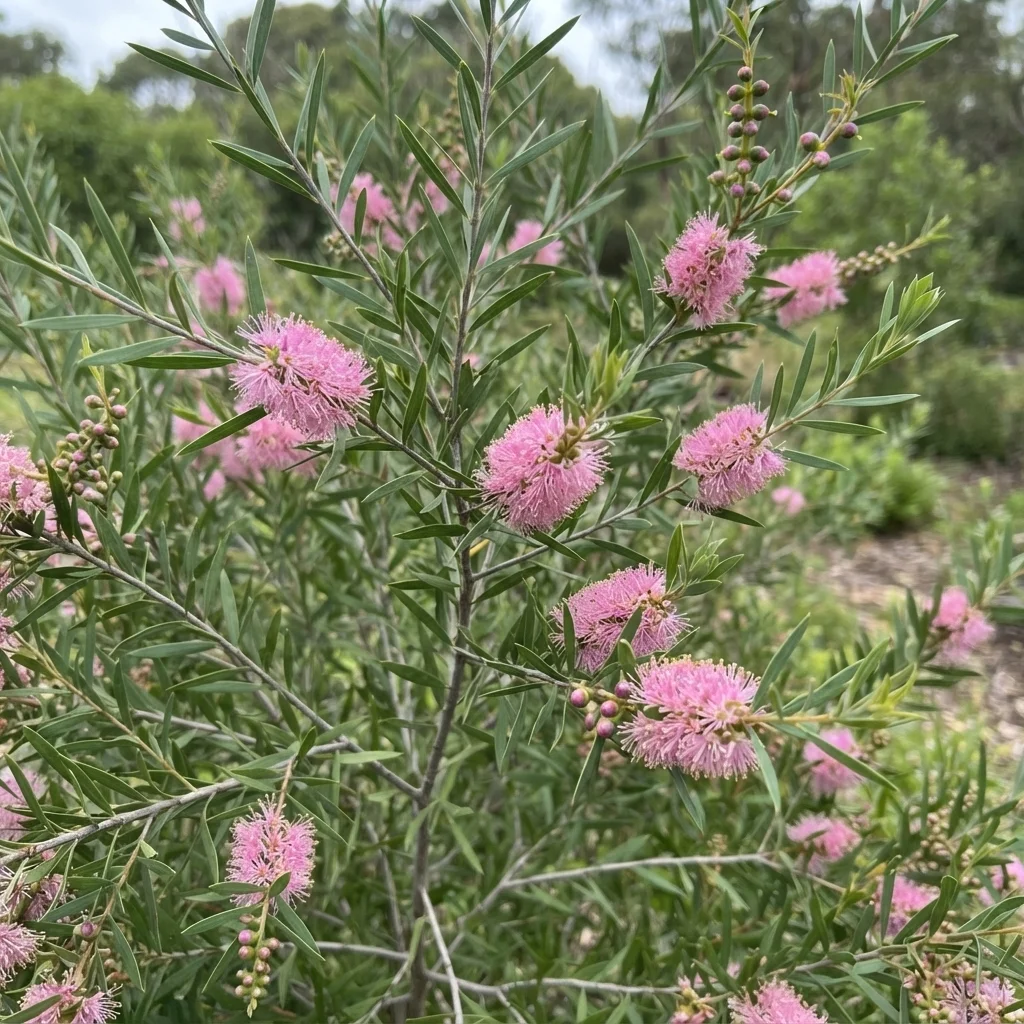
Graceful Honey-myrtle
Melaleuca radula
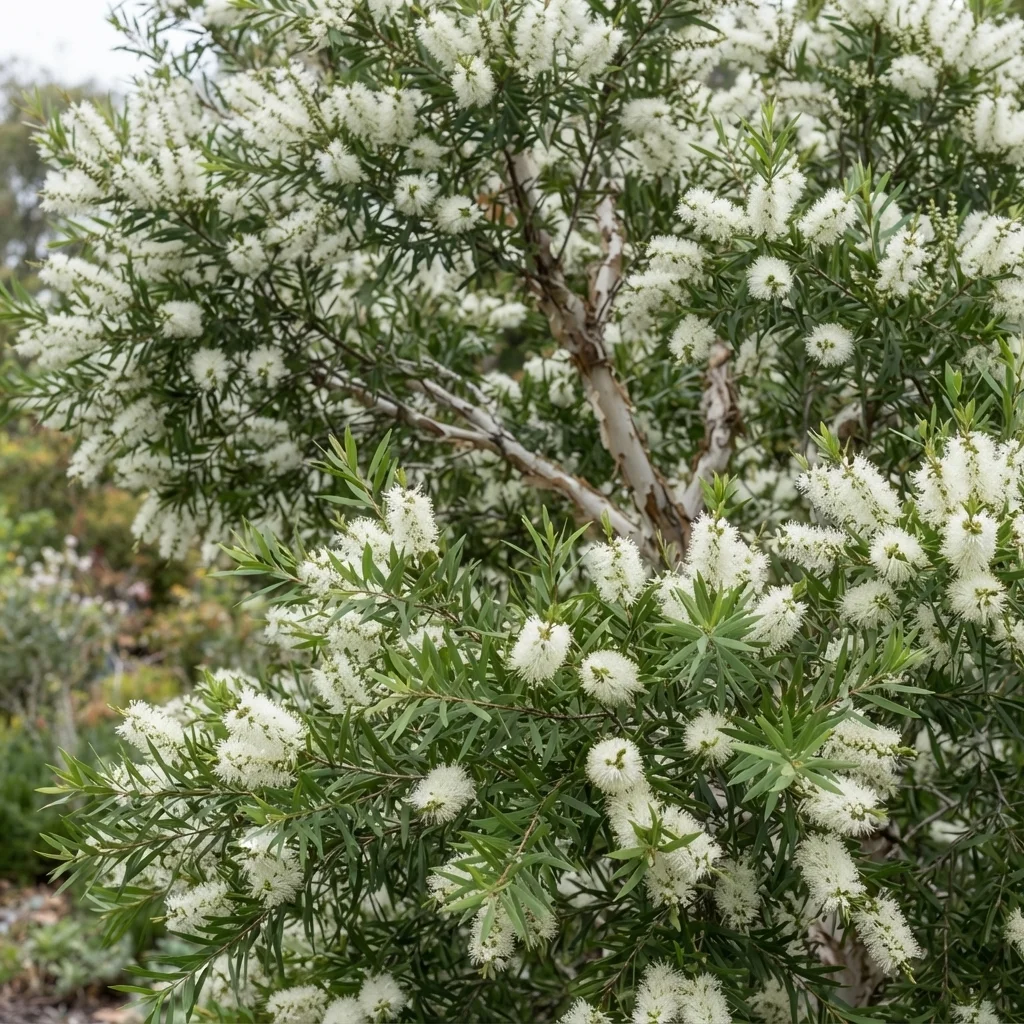
Snow-in-summer
Melaleuca linariifolia
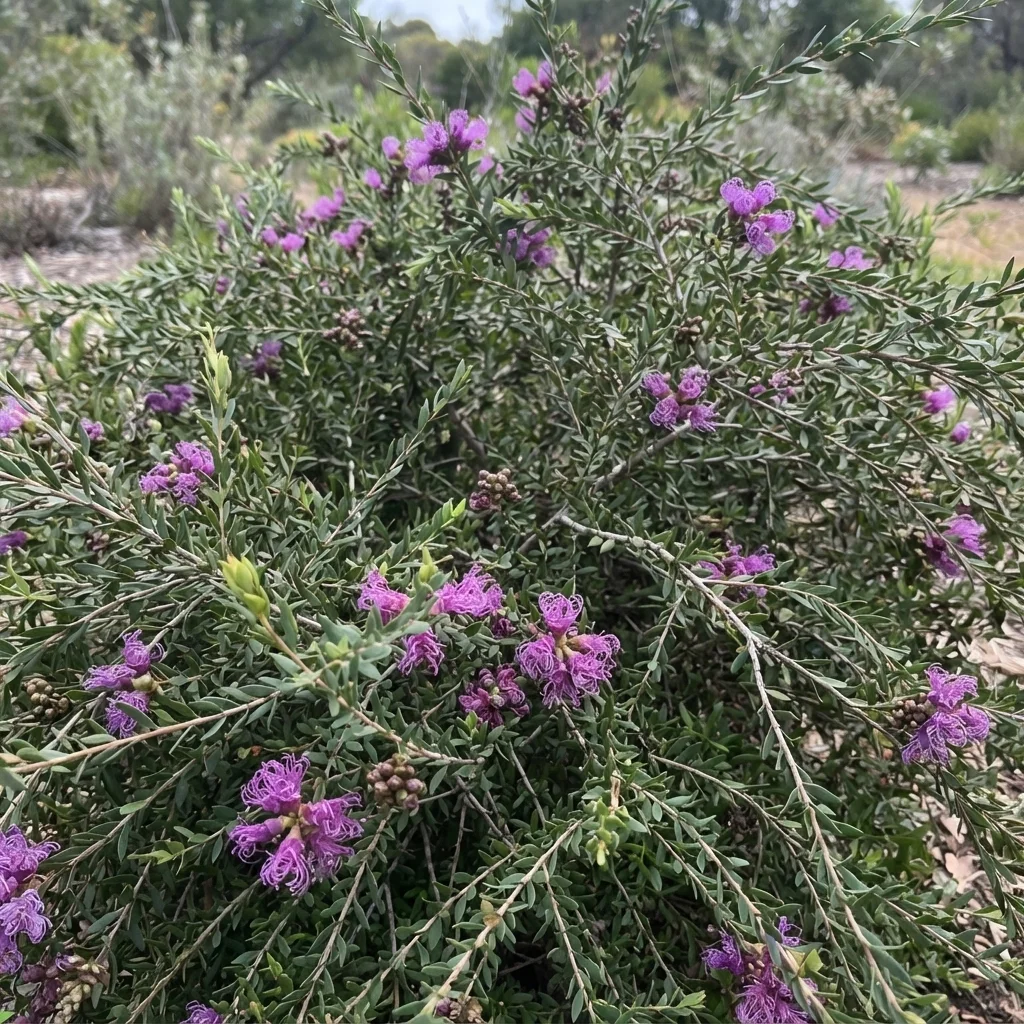
Thymeleaf Melaleuca
Melaleuca thymifolia
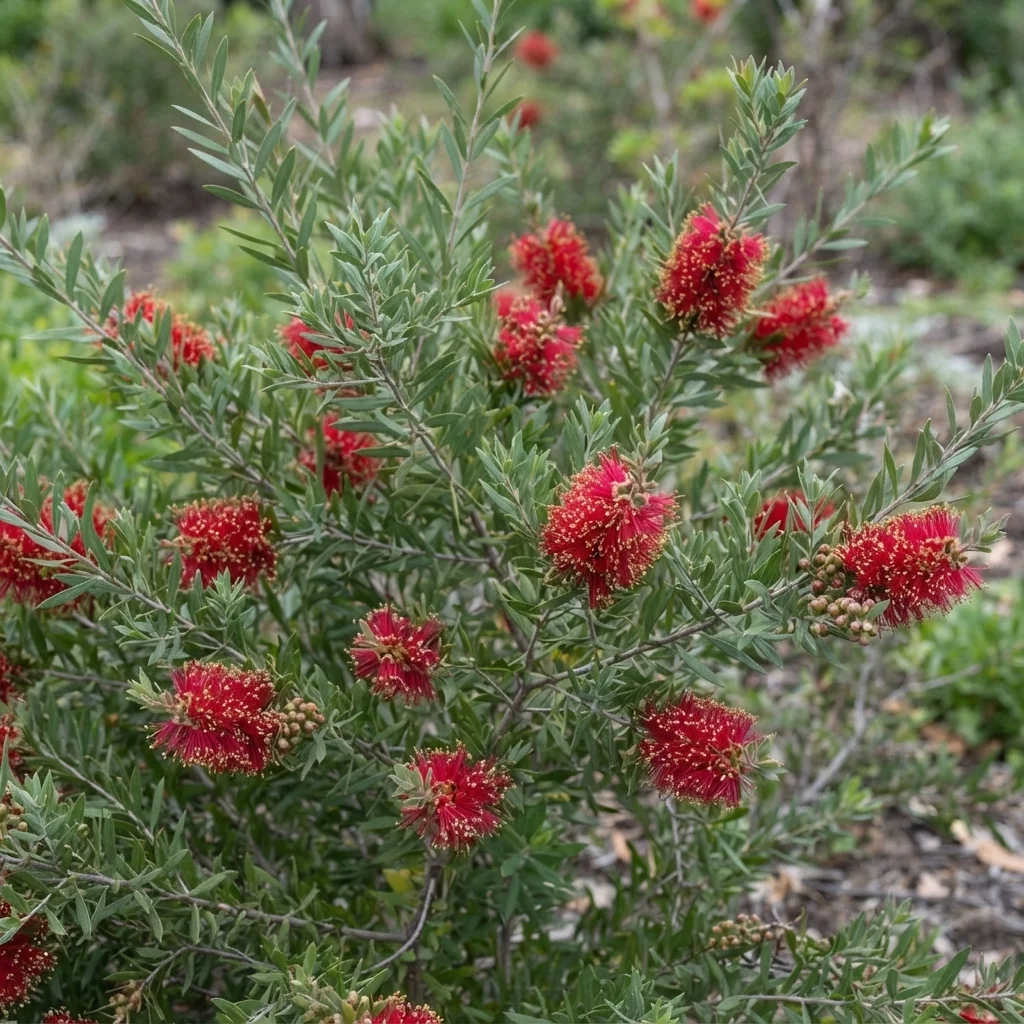
Scarlet Honey Myrtle
Melaleuca fulgens
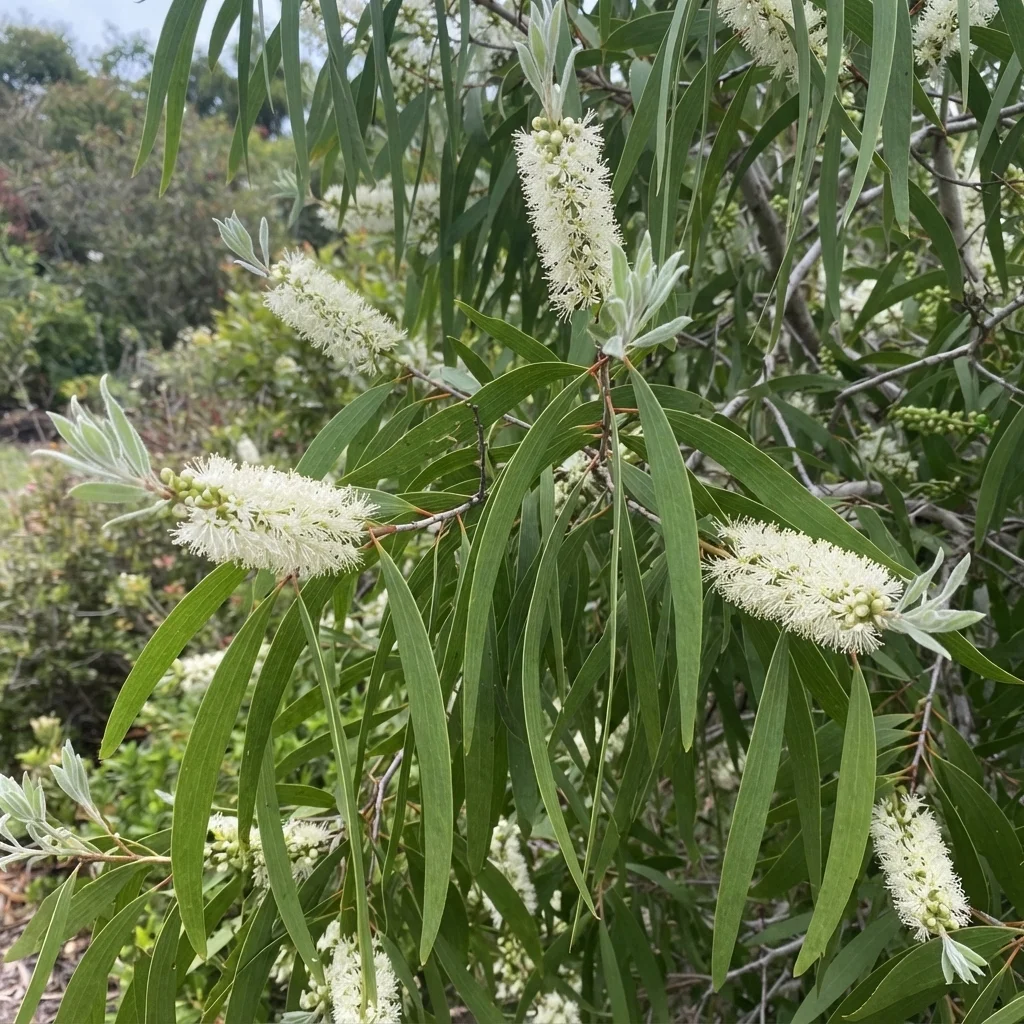
Weeping Paperbark
Melaleuca leucadendra
Keep exploring
Explore the genus
Hardy in your zone?
Grow Gray Honey-myrtle with confidence
See it in a design of your actual yard, get zone-matched care reminders, and track it season by season in your garden journal.