The Story
Plant Bio
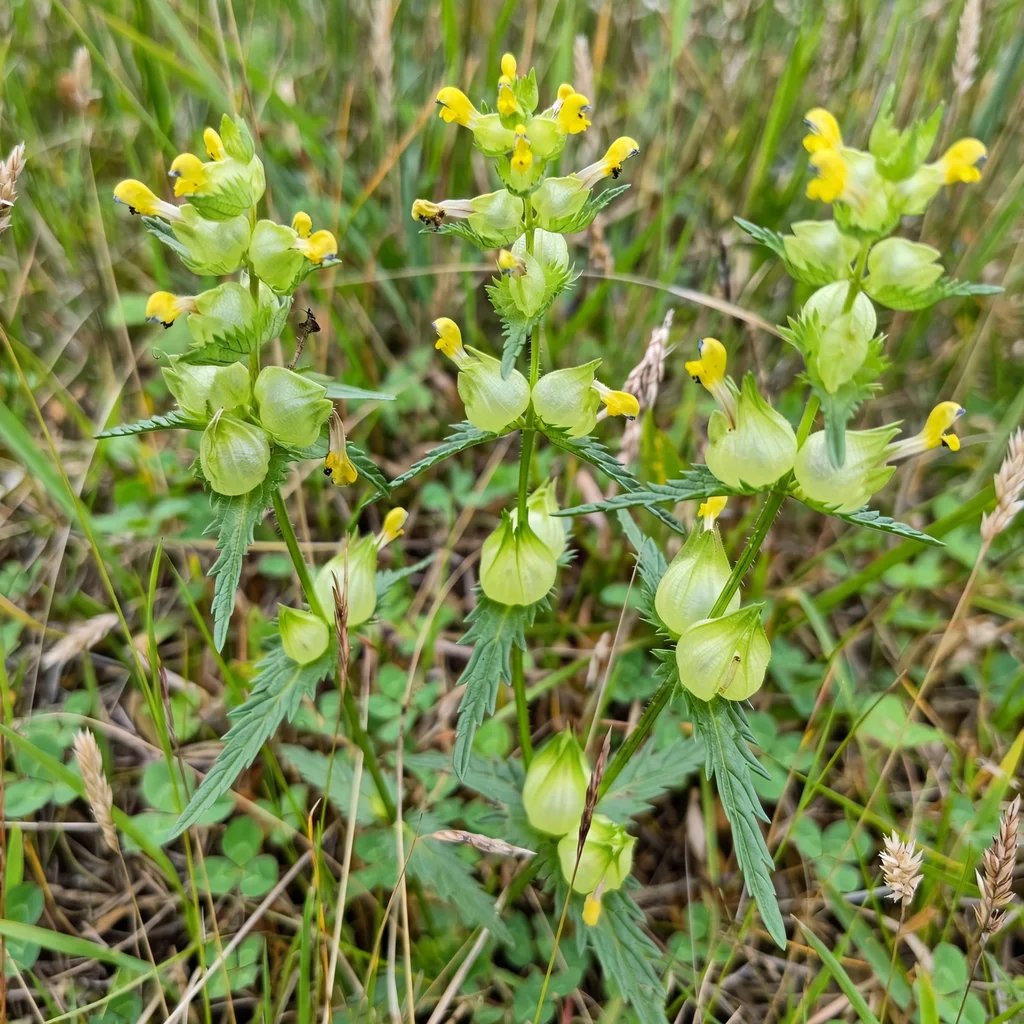
Rhinanthus minor, commonly known as yellow rattle, is an erect hemiparasitic annual that attaches its root system to neighboring grasses and meadow herbs. It produces square stems lined with sharply toothed opposite leaves and hooded yellow flowers held within pale, inflated papery calyces.
As its papery seed capsules dry in midsummer, the mature seeds rattle inside the swollen pods when moved by the wind. Its parasitic habit suppresses dominant turf grasses, creating space for weaker-growing wildflowers to establish in naturalized meadow plantings.
Uses & Benefits:
Essentials
At a Glance
Plant Type
Annual
Height
20"
Width
10"
Light
Full Sun
Zones
4, 5, 6, 7, 8
Water
Moist to Moderate
Humidity
Moderate to High
Lifespan
Annual
Native To
Europe, Russia, Western Siberia, Caucasus
Toxicity
Toxic if ingested
Bloom period
Summer
In flower about 3 months of the year
Planting
How to Grow
- Select a sunny site in late fall where turf grasses are established but not overly dense.
- Scarify the soil surface using a hard rake to expose bare earth between grass crowns.
- Sow seed evenly over the raked area and press firm to ensure direct contact with soil and grass roots.
- Keep the area undisturbed over winter to allow natural cold stratification below 40°F.
Pro Tip
Sow seeds directly into existing turf during fall or early winter, as seedlings require living host grass roots and several weeks of cold soil exposure to break dormancy.
Keep It Thriving
Care Guide
Do
- Sow seeds fresh in fall or early winter so they experience winter chilling.
- Maintain living host grasses like fescues or ryegrass for the plants to parasitize.
- Allow seed pods to dry and shatter on site if you wish to build a self-sustaining meadow population.
Don't
- Do not apply nitrogen fertilizer, as high soil fertility favors grass growth over the hemiparasite.
- Do not attempt to raise seedlings in pot trays or sterile potting mix without host plant roots.
- Do not mow the meadow during late spring or early summer before seeds have fully matured.
Seasonal Care Calendar
| Task | Jan | Feb | Mar | Apr | May | Jun | Jul | Aug | Sep | Oct | Nov | Dec |
|---|---|---|---|---|---|---|---|---|---|---|---|---|
| Pest Check | ||||||||||||
| Plant | ||||||||||||
| Propagate | ||||||||||||
| Prune |
Watch Out For
Pests & Diseases
Common Pests
Common Diseases
In the Garden
Landscape Uses & Companions
Landscape Uses
Multiply
Propagation Methods
Good to Know
Common Questions
Yellow Rattle questions
What zones can Yellow Rattle grow in?
Yellow Rattle is an annual: it grows, flowers and sets seed in one season, so winter cold doesn't limit where it grows. Gardeners in any zone can grow it by planting at the right time, usually after the last spring frost.
Is Yellow Rattle deer resistant?
Yes — Yellow Rattle is rated deer-resistant. Deer typically pass it over, though extreme hunger can override any plant's defenses.
When does Yellow Rattle bloom?
Yellow Rattle typically blooms in summer. Exact timing shifts a week or two with your zone — Sow's bloom calendar maps it to your garden.
Does Yellow Rattle need full sun?
Yellow Rattle does best in full sun (6+ hours).
Keep exploring
Explore the genus
Hardy in your zone?
Grow Yellow Rattle with confidence
See it in a design of your actual yard, get zone-matched care reminders, and track it season by season in your garden journal.