The Story
Plant Bio
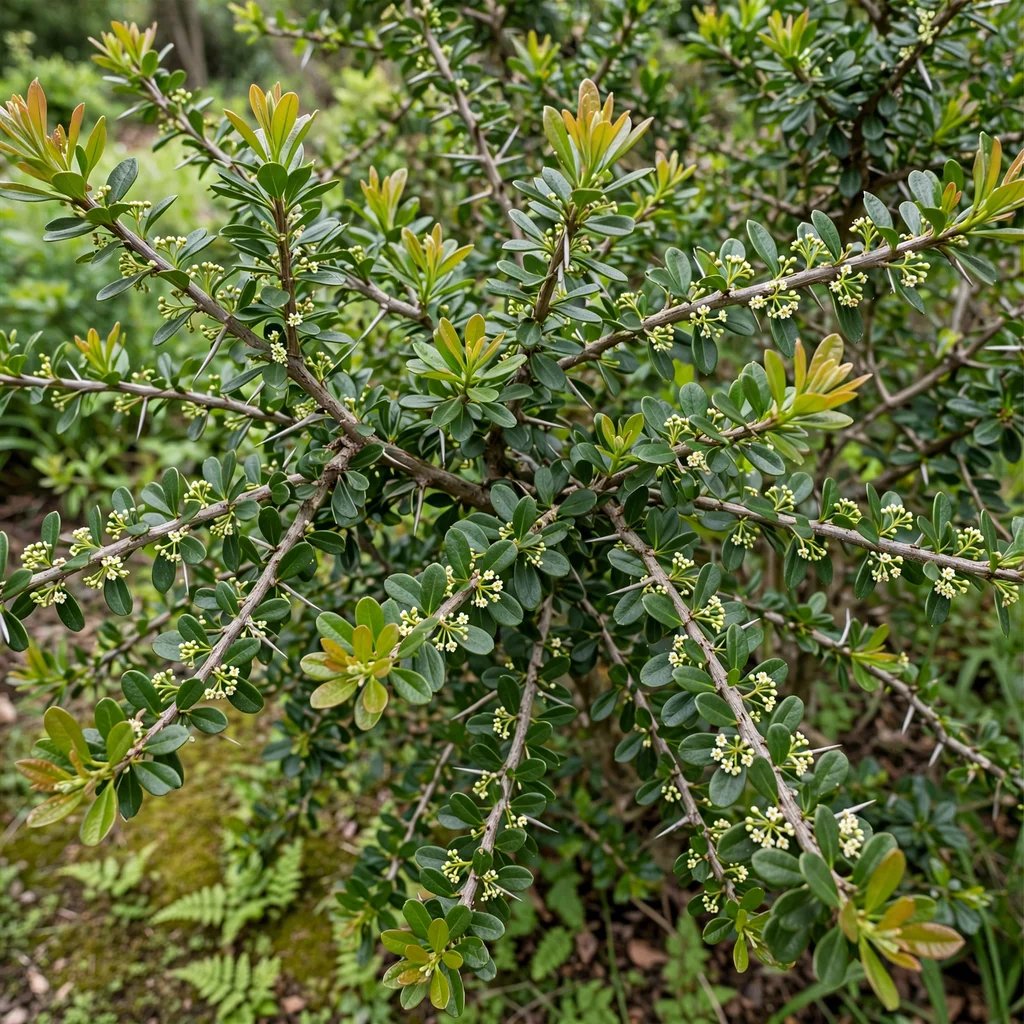
Terminalia molinetii, long known in cultivation as Bucida spinosa, is a slow-growing tropical broadleaf evergreen native to southern Florida and the Caribbean. It develops a dense canopy supported by stiff, sharp thorns and contorted, zigzagging branches lined with tiny leaves.
New foliage emerges bronze or lime-green before darkening to deep green, held in flattened whorls along structural shoots. Tiny, yellowish flowers bloom in small clusters through spring and summer, followed by non-edible seed structures.
Uses & Benefits:
Essentials
At a Glance
Plant Type
Tropical
Height
118"
Width
118"
Light
Full Sun, Partial Sun
Zones
10
Water
Low to Moderate
Humidity
High
Lifespan
Perennial
Native To
Caribbean, Southern Florida
Toxicity
Non-toxic (sharp thorns present)
Bloom period
Spring – Summer
In flower about 6 months of the year
Planting
How to Grow
- Select a planting site or container location in full sun to promote dense foliage and short internodes.
- Plant in a well-draining sandy or loamy soil mix with added limestone to match its natural calcareous habit.
- Water thoroughly after planting, then allow the top inch of soil to dry out between subsequent waterings.
- Move container plants indoors or into a glasshouse before ambient temperatures drop below freezing.
Pro Tip
Maintain bright sun to encourage tight internodes and small leaves, and allow the topsoil to dry slightly between waterings to prevent root rot.
Keep It Thriving
Care Guide
Do
- Provide maximum sunlight to maintain compact leaf clusters.
- Use a gritty, free-draining soil mix high in sand or crushed limestone.
- Allow topsoil to dry out slightly between waterings.
Don't
- Do not allow the plant to sit in waterlogged or soggy substrate.
- Do not prune hard into old, leafless wood during winter dormancy.
- Do not expose container plants to freezing temperatures or cold indoor drafts.
Seasonal Care Calendar
| Task | Jan | Feb | Mar | Apr | May | Jun | Jul | Aug | Sep | Oct | Nov | Dec |
|---|---|---|---|---|---|---|---|---|---|---|---|---|
| Fertilize | ||||||||||||
| Pest Check | ||||||||||||
| Prune | ||||||||||||
| Winter Prep |
Watch Out For
Pests & Diseases
Common Pests
Common Diseases
In the Garden
Landscape Uses & Companions
Landscape Uses
Companion Plants
Multiply
Propagation Methods
Good to Know
Common Questions
Spiny Black Olive questions
What zones can Spiny Black Olive grow in?
Spiny Black Olive is hardy in USDA Zone 10: in that range it survives winter in the ground. Colder than Zone 10, grow it in a container you can move to shelter for the winter, or as an annual.
Is Spiny Black Olive deer resistant?
Not reliably. Deer may browse Spiny Black Olive, especially tender spring growth — plan on repellents or fencing where pressure is high.
When does Spiny Black Olive bloom?
Spiny Black Olive typically blooms from spring to summer. Exact timing shifts a week or two with your zone — Sow's bloom calendar maps it to your garden.
Does Spiny Black Olive need full sun?
Spiny Black Olive does best in full sun to part shade. In hot climates, afternoon shade keeps blooms fresher longer.
Is Spiny Black Olive drought tolerant?
Yes — once established (usually after the first full season), Spiny Black Olive handles dry spells with minimal watering. Water deeply its first year to build the root system that makes that possible.
Keep exploring
Explore the genus
Hardy in your zone?
Grow Spiny Black Olive with confidence
See it in a design of your actual yard, get zone-matched care reminders, and track it season by season in your garden journal.