The Story
Plant Bio
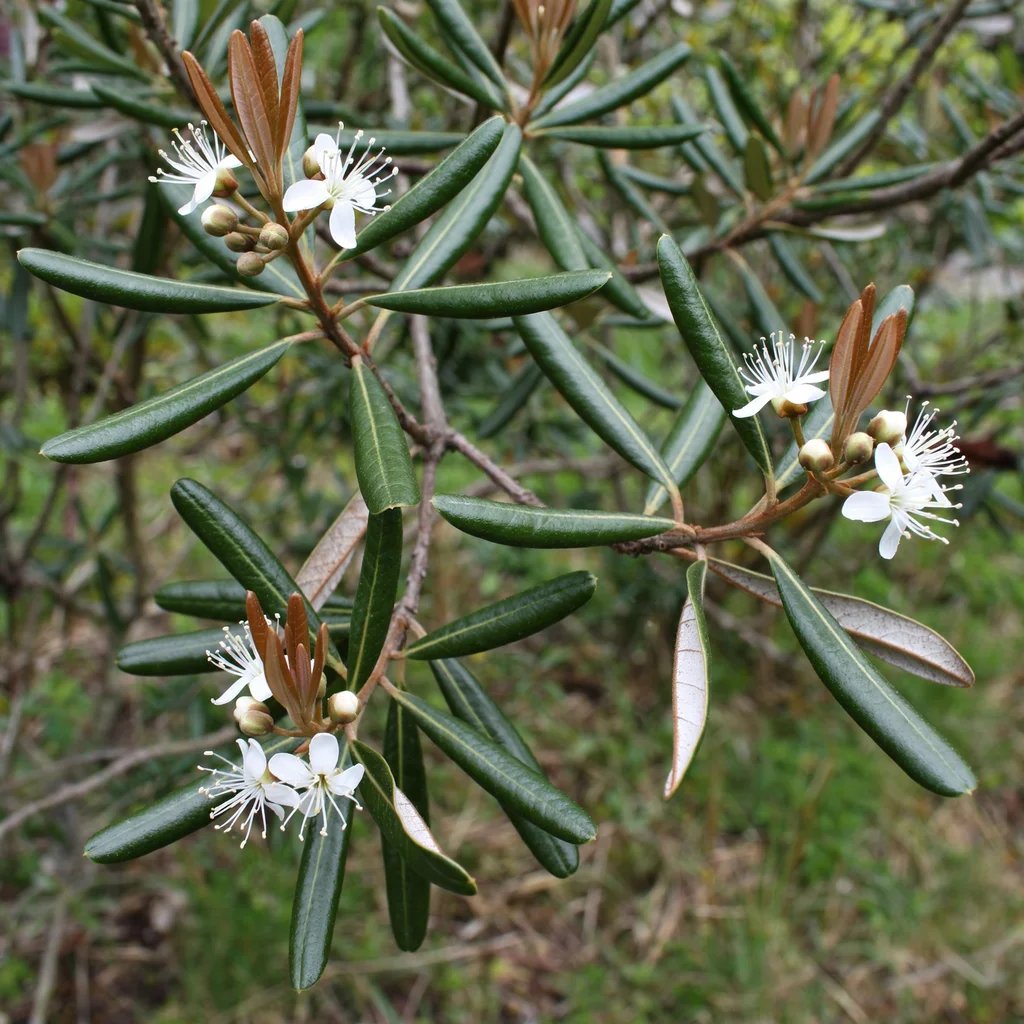
Quadrella jamaicensis, the Jamaican caper, is an evergreen large shrub to small tree reaching 6 to 12 feet in gardens and to 15 feet or more with age, with a compact upright-spreading crown. The leaves are simple, elliptic and leathery with an entire margin, glossy green above and pale beneath, and the spring to summer flowers are borne in terminal clusters with four white petals and a boss of long stamens.
New growth emerges folded and bronze before hardening to dark green, and mature leaves are distinguished by a rounded tip with a small notch and a coating of whitish to rusty scales underneath. Each flower opens white and fades to pink within about a day, releasing fragrance in the evening, with purple filaments to two inches tipped in white that give the cluster its spider-like form.
Uses & Benefits:
Essentials
At a Glance
Plant Type
Shrub
Height
180"
Width
144"
Light
Full Sun, Partial Sun, Shade
Zones
10
Water
Low once established
Humidity
Tolerant of humid coastal air
Lifespan
Long-lived shrub to small tree
Native To
Coastal South and Central Florida to Caribbean and Central America
Toxicity
Non-toxic - no hazards reported
Bloom period
Spring – Summer
In flower about 6 months of the year
Planting
How to Grow
- Set in full sun to partial shade in well-drained sand, loam or clay with acidic to slightly alkaline pH.
- Dig the hole as deep as the container and twice as wide, set the crown level, backfill and water in.
- Water regularly until established, then water deeply only in extended drought.
- Maintain a 2 to 3 inch mulch ring clear of the trunk and prune only after flowering to shape or train to a single trunk.
Pro Tip
Prune only right after the summer flush to shape or lift low limbs; wood removed later carries next spring's flower buds.
Keep It Thriving
Care Guide
Do
- Plant in a frost-free, well-drained coastal or courtyard site
- Water regularly during the first growing season to establish roots
- Mulch to hold moisture and prune after flowering if shaping is needed
Don't
- Do not shear or prune in fall and winter and remove next season's bloom
- Do not plant where hard freezes occur or in soil that stays wet
- Do not overwater once established; it tolerates drought and salt spray but not flooding
Seasonal Care Calendar
| Task | Jan | Feb | Mar | Apr | May | Jun | Jul | Aug | Sep | Oct | Nov | Dec |
|---|---|---|---|---|---|---|---|---|---|---|---|---|
| Mulch | ||||||||||||
| Pest Check | ||||||||||||
| Plant | ||||||||||||
| Propagate | ||||||||||||
| Prune |
Watch Out For
Pests & Diseases
Common Pests
Common Diseases
In the Garden
Landscape Uses & Companions
Landscape Uses
Companion Plants
Multiply
Propagation Methods
Good to Know
Common Questions
Jamaican Caper questions
What zones can Jamaican Caper grow in?
Jamaican Caper is hardy in USDA Zone 10: in that range it survives winter in the ground. Colder than Zone 10, grow it in a container you can move to shelter for the winter.
Is Jamaican Caper deer resistant?
Yes — Jamaican Caper is rated deer-resistant. Deer typically pass it over, though extreme hunger can override any plant's defenses.
When does Jamaican Caper bloom?
Jamaican Caper typically blooms from spring to summer. Exact timing shifts a week or two with your zone — Sow's bloom calendar maps it to your garden.
Does Jamaican Caper need full sun?
Jamaican Caper does best in full sun to part shade. In hot climates, afternoon shade keeps blooms fresher longer.
Is Jamaican Caper drought tolerant?
Yes — once established (usually after the first full season), Jamaican Caper handles dry spells with minimal watering. Water deeply its first year to build the root system that makes that possible.
Keep exploring
Explore the genus
Hardy in your zone?
Grow Jamaican Caper with confidence
See it in a design of your actual yard, get zone-matched care reminders, and track it season by season in your garden journal.