The Story
Plant Bio
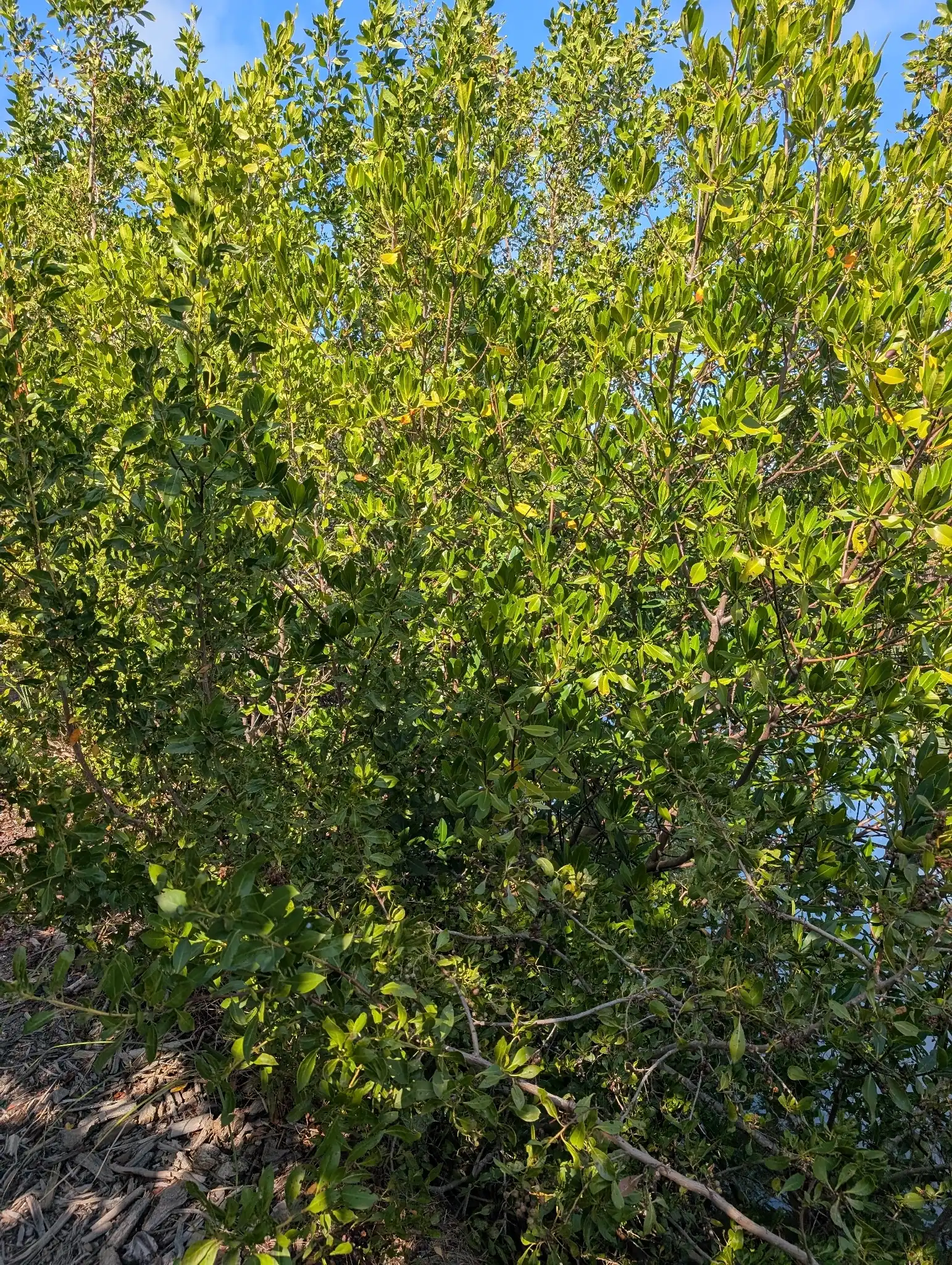
Conocarpus erectus, commonly known as buttonwood, is a dense, multi-trunked evergreen tree native to the coastal regions of Florida and the Caribbean. It features alternate, leathery leaves and inconspicuous, greenish-cream flowers packed into dense, spherical, button-like heads.
The species occurs in two distinct forms: a glossy, dark green variant and a silver-leaved variant covered in fine, silky hairs. Both forms produce hard, reddish-brown, cone-like woody burrs that persist on the branches after flowering.
Uses & Benefits:
Essentials
At a Glance
Plant Type
Tree
Height
472"
Width
354"
Light
Full Sun, Partial Sun
Zones
10
Water
Low to High
Humidity
High
Lifespan
Long
Native To
Americas, West Africa
Toxicity
Non-toxic
Bloom period
Spring – Fall
In flower about 9 months of the year
Planting
How to Grow
- Select a planting site in full sun to partial shade with well-draining sand, clay, or limestone soil.
- Dig a hole twice as wide as the root ball and set the plant at the same depth it was growing in the container.
- Water deeply and regularly during the first growing season to establish a deep, drought-tolerant root system.
- Apply a light, balanced, controlled-release fertilizer in spring if planting in highly depleted urban soils.
Pro Tip
Avoid pruning back into thick, old, leafless wood, as the plant fails to regenerate new shoots from mature stems. Though often associated with wet mangrove swamps, it thrives in dry, highly alkaline, sandy urban soils once established.
Keep It Thriving
Care Guide
Do
- Prune regularly during the active growing season to maintain a dense hedge or formal shape.
- Ensure the planting site has reasonable soil aeration to prevent severe root stress.
- Prune out any branches showing stunted, dense clusters of twig growth well below the affected area.
Don't
- Do not shear back into old, bare wood, as it will not sprout new foliage.
- Do not over-fertilize when grown in native coastal soils, as it requires minimal nutrients.
- Do not plant in poorly drained, persistently waterlogged soils unless the roots have adequate aeration.
Seasonal Care Calendar
| Task | Jan | Feb | Mar | Apr | May | Jun | Jul | Aug | Sep | Oct | Nov | Dec |
|---|---|---|---|---|---|---|---|---|---|---|---|---|
| Fertilize | ||||||||||||
| Pest Check | ||||||||||||
| Prune | ||||||||||||
| Spring Cleanup |
Watch Out For
Pests & Diseases
Common Pests
Common Diseases
In the Garden
Landscape Uses & Companions
Landscape Uses
Companion Plants
Multiply
Propagation Methods
Good to Know
Common Questions
Buttonwood questions
What zones can Buttonwood grow in?
Buttonwood is hardy in USDA Zone 10: in that range it survives winter in the ground. Colder than Zone 10, winters are too cold for it to survive outdoors.
When does Buttonwood bloom?
Buttonwood typically blooms from spring to fall. Exact timing shifts a week or two with your zone — Sow's bloom calendar maps it to your garden.
Does Buttonwood need full sun?
Buttonwood does best in full sun to part shade. In hot climates, afternoon shade keeps blooms fresher longer.
Is Buttonwood drought tolerant?
Yes — once established (usually after the first full season), Buttonwood handles dry spells with minimal watering. Water deeply its first year to build the root system that makes that possible.
Keep exploring
Explore the genus
Hardy in your zone?
Grow Buttonwood with confidence
See it in a design of your actual yard, get zone-matched care reminders, and track it season by season in your garden journal.