The Story
Plant Bio
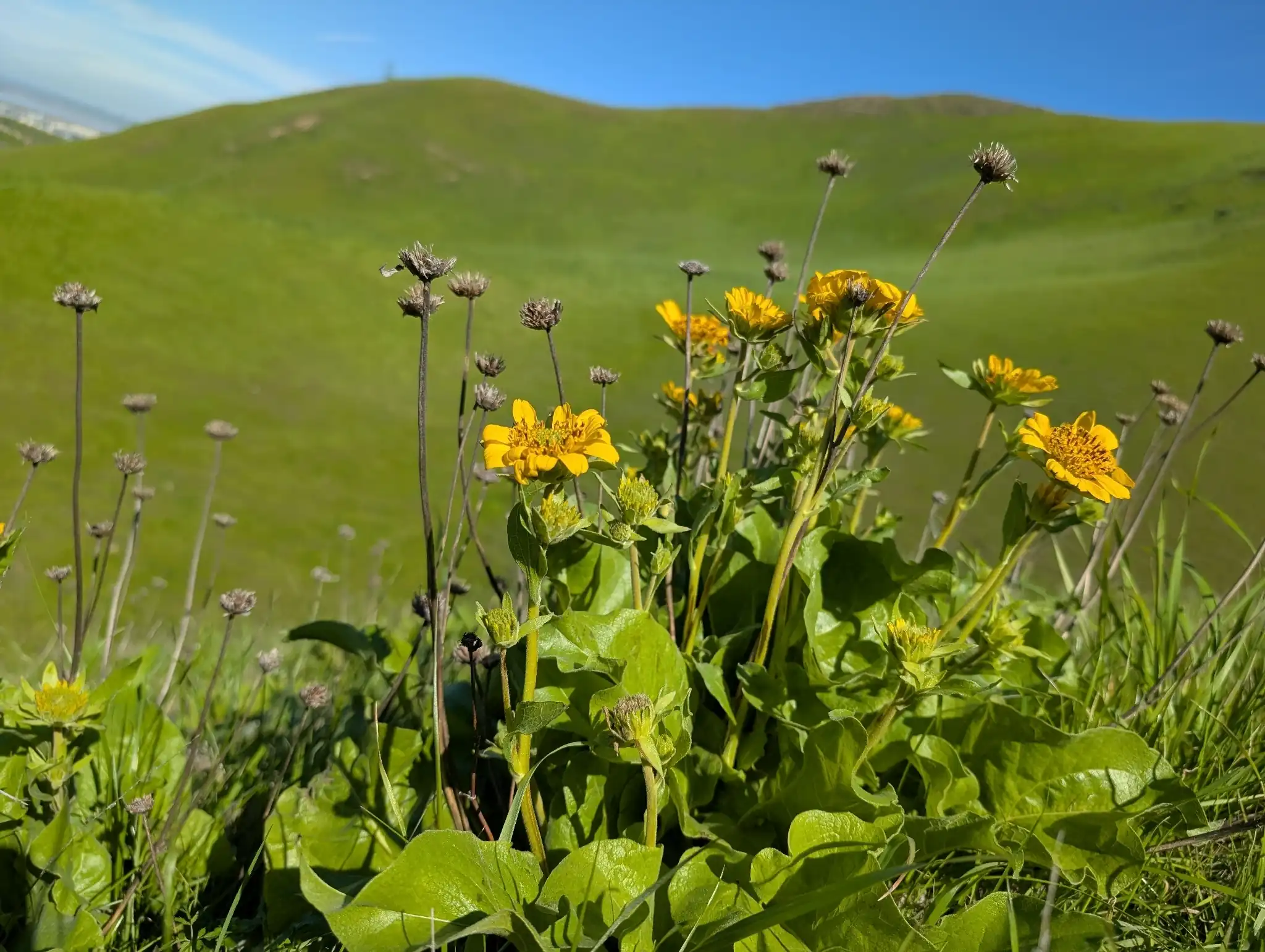
Balsamorhiza deltoidea is an erect, clump-forming perennial native to western North America, producing a bold basal rosette of roughly triangular leaves up to twenty inches long. Bright yellow, sunflower-like flower heads rise on hairy, glandular stems above the foliage from spring into early summer.
The plant relies on a thick, deep, fleshy taproot that provides high drought tolerance once established in gravelly or sandy soils. Its prominent ray and disc florets support a wide range of native bees and butterflies, while its seeds are eaten by birds.
Uses & Benefits:
Essentials
At a Glance
Plant Type
Perennial
Height
35"
Width
30"
Light
Full Sun
Zones
5, 6, 7, 8, 9
Water
Low
Humidity
Low
Lifespan
Perennial
Native To
Western North America
Toxicity
Non-toxic
Bloom period
Spring – Early summer
In flower about 4 months of the year
Planting
How to Grow
- Select a site in full sun with sharp, fast-draining sandy, loamy, or rocky soil.
- Plant container-grown seedlings carefully without disturbing or breaking the central taproot.
- Water lightly at installation to settle soil, then irrigate moderately during the first spring growing season.
- Stop watering completely as plants enter summer dormancy post-bloom to prevent fungal rot.
Pro Tip
Withhold all summer irrigation once foliage begins to die back, as moisture in warm soil rapidly induces fatal root and crown rot.
Keep It Thriving
Care Guide
Do
- Ensure excellent soil drainage throughout winter and summer dormancy.
- Cut dead foliage down to the base in late winter before new growth emerges.
- Protect emerging spring growth from deer and rabbit browsing using cages.
Don't
- Do not apply summer irrigation after the plant flowers and leaves turn yellow.
- Do not attempt to divide mature plants, as splitting damages the taproot and causes death.
- Do not add rich organic compost or nitrogen fertilizer to the soil.
Seasonal Care Calendar
| Task | Jan | Feb | Mar | Apr | May | Jun | Jul | Aug | Sep | Oct | Nov | Dec |
|---|---|---|---|---|---|---|---|---|---|---|---|---|
| Pest Check | ||||||||||||
| Plant | ||||||||||||
| Propagate | ||||||||||||
| Spring Cleanup |
Watch Out For
Pests & Diseases
Common Pests
Common Diseases
In the Garden
Landscape Uses & Companions
Landscape Uses
Companion Plants
Multiply
Propagation Methods
Good to Know
Common Questions
Deltoid Balsamroot questions
What zones can Deltoid Balsamroot grow in?
Deltoid Balsamroot is hardy in USDA Zones 5–9: in that range it survives winter in the ground. Colder than Zone 5, grow it in a container you can move to shelter for the winter, or as an annual. Warmer than Zone 9, winter isn't the problem: it prefers colder winters, and summer heat can shorten its life.
Is Deltoid Balsamroot deer resistant?
Not reliably. Deer may browse Deltoid Balsamroot, especially tender spring growth — plan on repellents or fencing where pressure is high.
When does Deltoid Balsamroot bloom?
Deltoid Balsamroot typically blooms from early spring to early summer. Exact timing shifts a week or two with your zone — Sow's bloom calendar maps it to your garden.
Does Deltoid Balsamroot need full sun?
Deltoid Balsamroot does best in full sun (6+ hours).
Is Deltoid Balsamroot drought tolerant?
Yes — once established (usually after the first full season), Deltoid Balsamroot handles dry spells with minimal watering. Water deeply its first year to build the root system that makes that possible.
Keep exploring
Explore the genus
Hardy in your zone?
Grow Deltoid Balsamroot with confidence
See it in a design of your actual yard, get zone-matched care reminders, and track it season by season in your garden journal.