The Story
Plant Bio
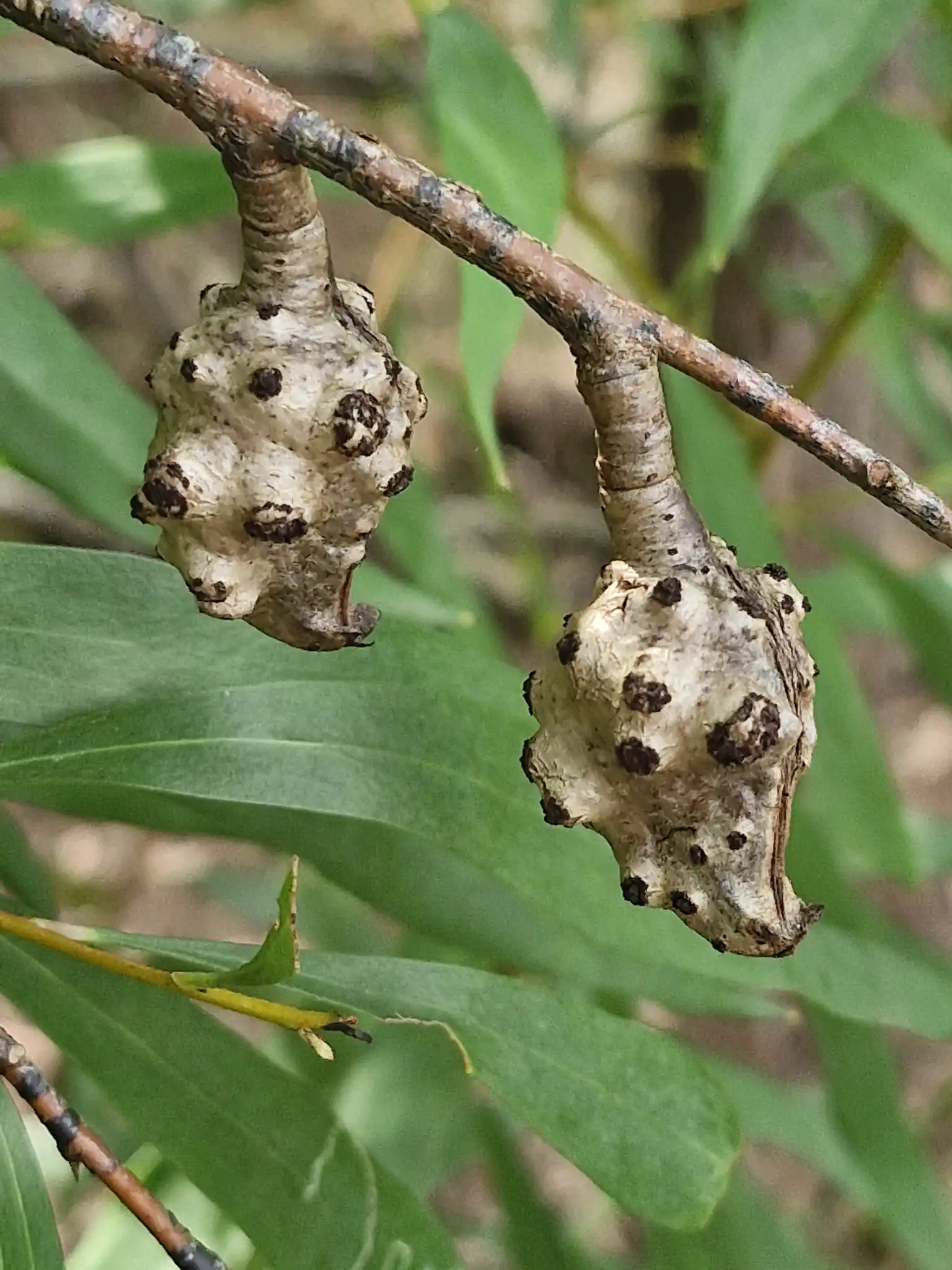
Hakea salicifolia is an upright, dense evergreen shrub or small tree native to eastern Australia, characterized by its smooth bark and flat, willow-like leaves. In winter and spring, it produces small, axillary clusters of white to creamy-white flowers along the branches, followed by woody, persistent seed follicles.
The narrow, elliptical foliage emerges with distinct bronze or reddish tones before maturing to a deep green. While most members of the Proteaceae family demand exceptional drainage, this species demonstrates unusual tolerance for heavier clay loams and occasionally wet soils.
Uses & Benefits:
Essentials
At a Glance
Plant Type
Shrub
Height
315"
Width
197"
Light
Full Sun, Partial Sun
Zones
9, 10
Water
Low
Humidity
Moderate to High
Lifespan
20-30 years
Native To
Eastern Australia
Toxicity
Non-toxic
Bloom period
Winter – Spring
In flower about 6 months of the year
Planting
How to Grow
- Select a planting site in full sun to partial shade with well-drained soil, though clay loam is acceptable.
- Dig a hole twice the width of the root ball and of equal depth, ensuring the soil is loose around the margins.
- Install the plant so the crown sits level with or slightly above the surrounding soil line to prevent collar rot.
- Water thoroughly to settle the soil, and apply a thick layer of organic mulch, keeping it clear of the main stem.
Pro Tip
Prune lightly immediately after flowering to maintain a dense, bushy habit; cutting back severely into old, leafless wood prevents the plant from shooting back.
Keep It Thriving
Care Guide
Do
- Prune lightly after the spring flowering flush to encourage dense, bushy growth.
- Use only low-phosphorus, slow-release fertilizers formulated specifically for native Australian plants if feeding is necessary.
- Ensure the soil drains well, even though this species tolerates heavier soils better than other hakeas.
Don't
- Do not prune hard into old, bare wood, as it lacks latent buds and will fail to regenerate.
- Do not apply standard garden fertilizers high in phosphorus, which can quickly cause toxic leaf burn and kill the root system.
- Do not overwater once established, as stagnant moisture promotes root rot.
Seasonal Care Calendar
| Task | Jan | Feb | Mar | Apr | May | Jun | Jul | Aug | Sep | Oct | Nov | Dec |
|---|---|---|---|---|---|---|---|---|---|---|---|---|
| Fertilize | ||||||||||||
| Mulch | ||||||||||||
| Pest Check | ||||||||||||
| Prune |
Watch Out For
Pests & Diseases
Common Pests
Common Diseases
In the Garden
Landscape Uses & Companions
Landscape Uses
Companion Plants
Multiply
Propagation Methods
Good to Know
Common Questions
Willow-leaved Hakea questions
What zones can Willow-leaved Hakea grow in?
Willow-leaved Hakea is hardy in USDA Zones 9–10. Inside that range it survives winter in the ground; outside it, grow it as an annual or a container plant you protect.
Is Willow-leaved Hakea deer resistant?
Not reliably. Deer may browse Willow-leaved Hakea, especially tender spring growth — plan on repellents or fencing where pressure is high.
When does Willow-leaved Hakea bloom?
Willow-leaved Hakea typically blooms in winter through spring. Exact timing shifts a week or two with your zone — Sow's bloom calendar maps it to your garden.
Does Willow-leaved Hakea need full sun?
Willow-leaved Hakea does best in full sun to part shade. In hot climates, afternoon shade keeps blooms fresher longer.
Is Willow-leaved Hakea drought tolerant?
Yes — once established (usually after the first full season), Willow-leaved Hakea handles dry spells with minimal watering. Water deeply its first year to build the root system that makes that possible.
More Hakea to compare
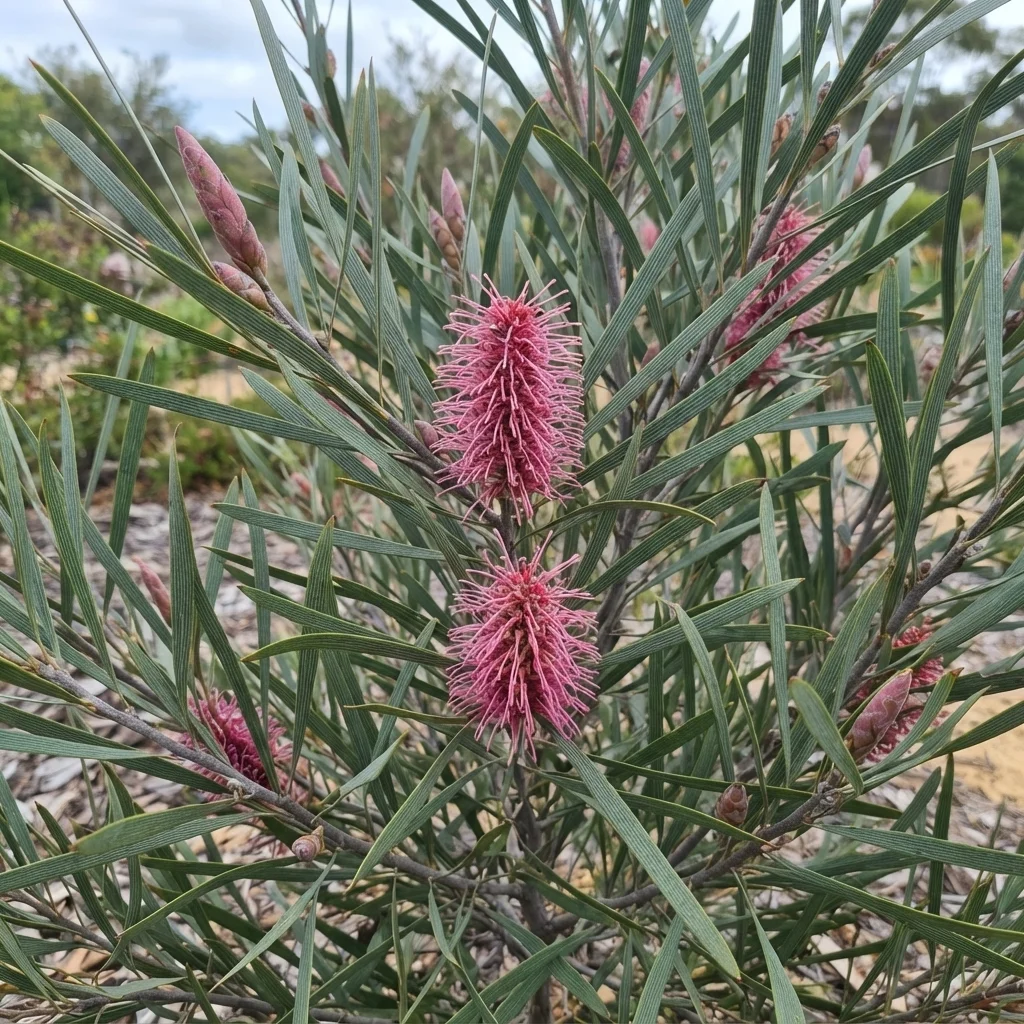
Grass-Leaf Hakea
Hakea francisiana
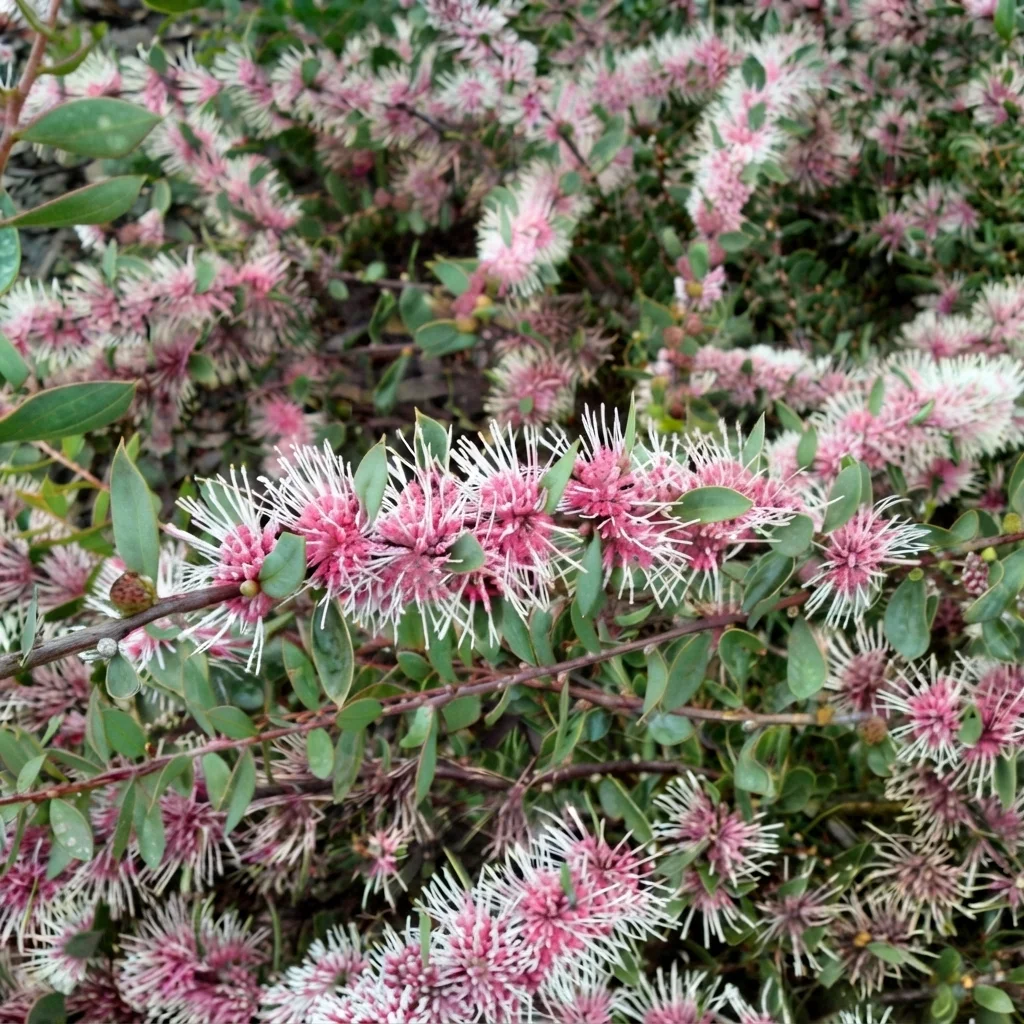
Burrendong Beauty
Hakea x hybrida 'Burrendong Beauty'
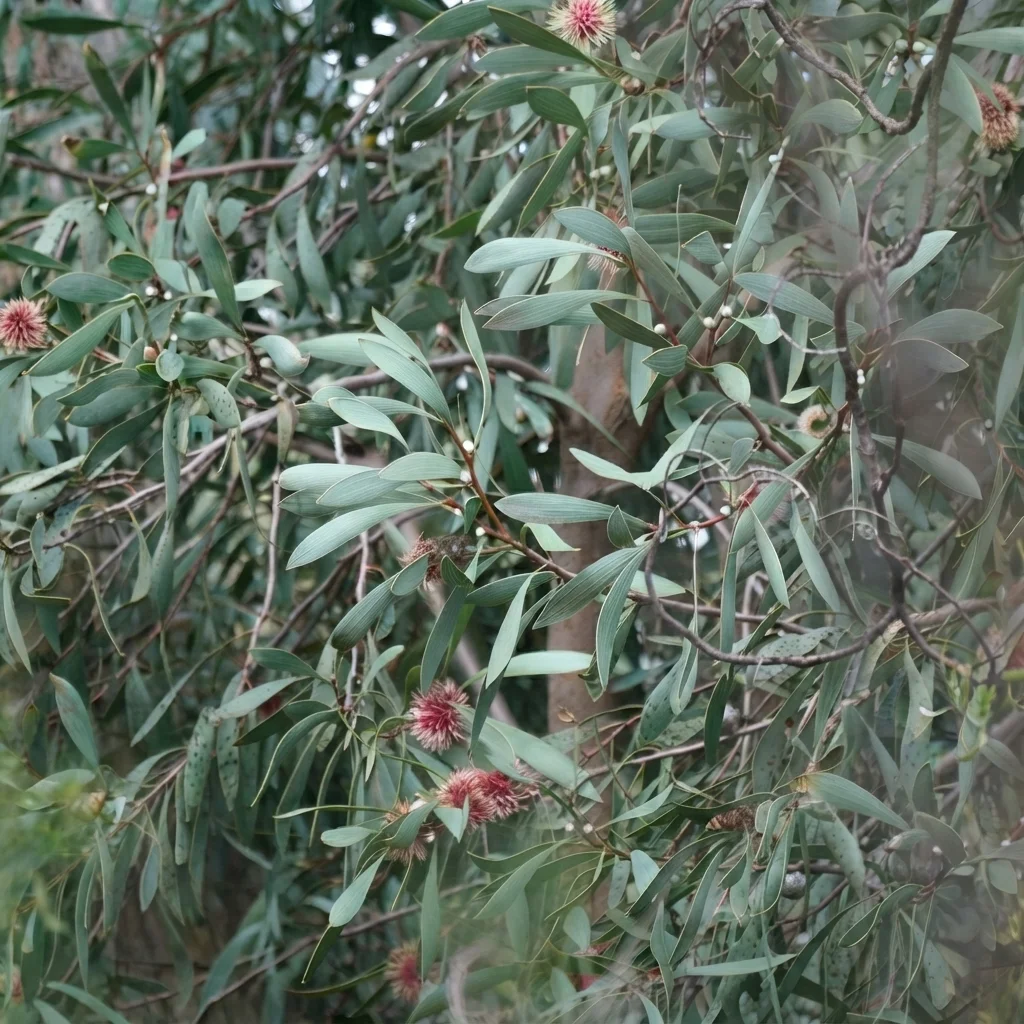
Pincushion Hakea
Hakea laurina
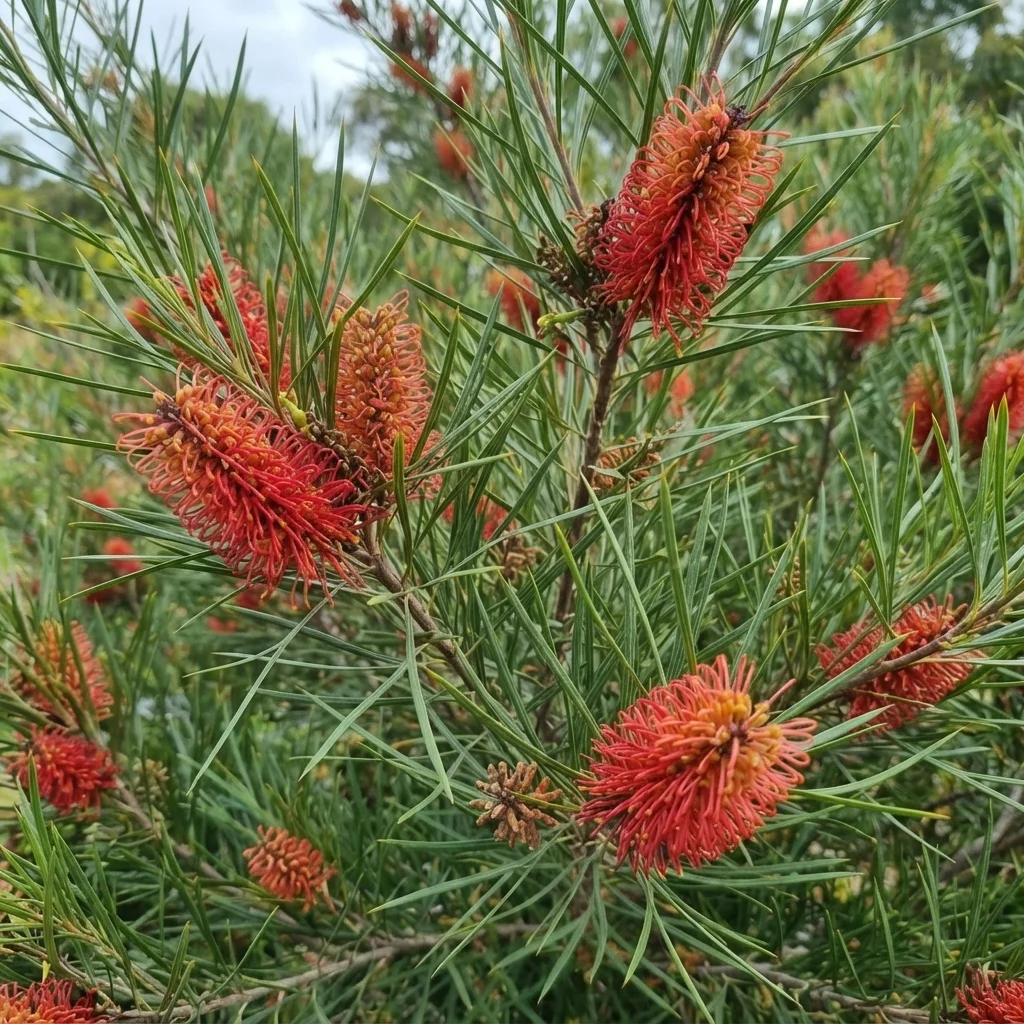
Red Pokers
Hakea bucculenta
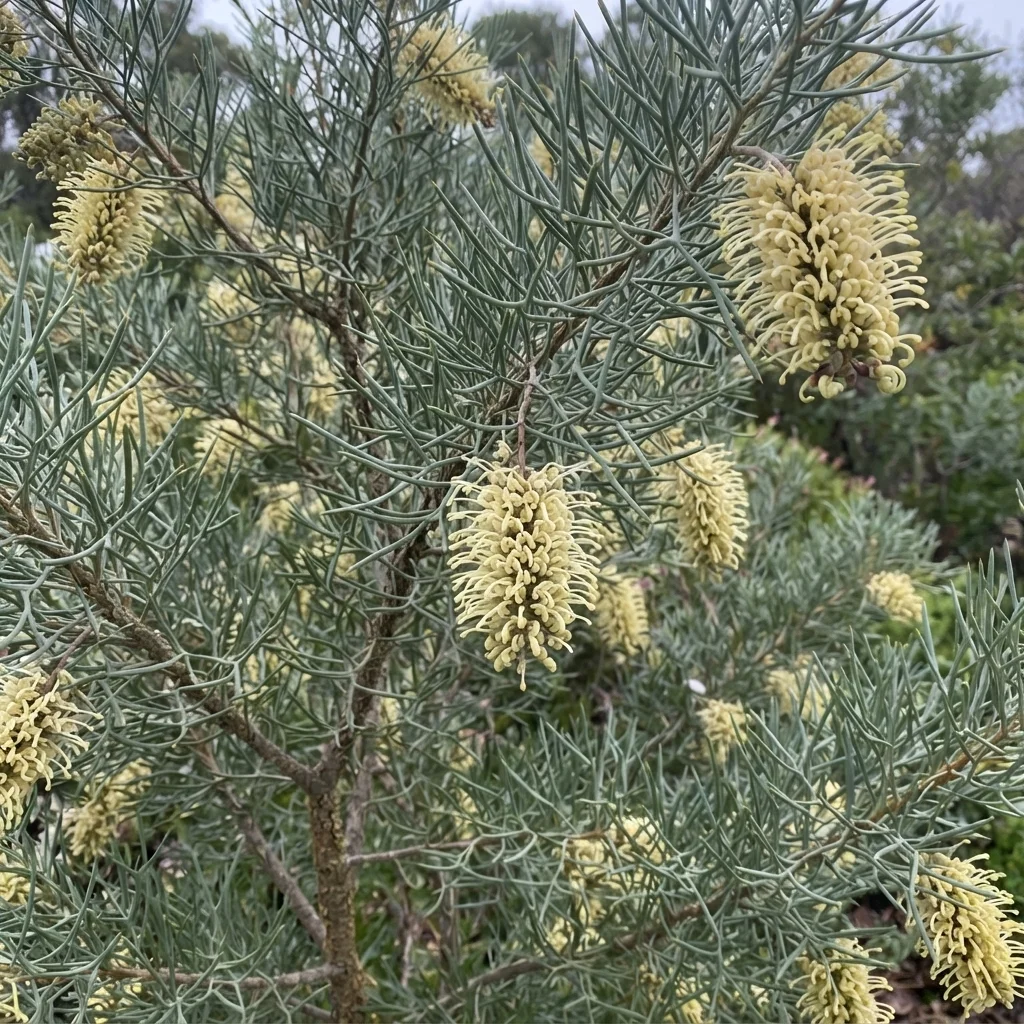
Needlewood
Hakea divaricata
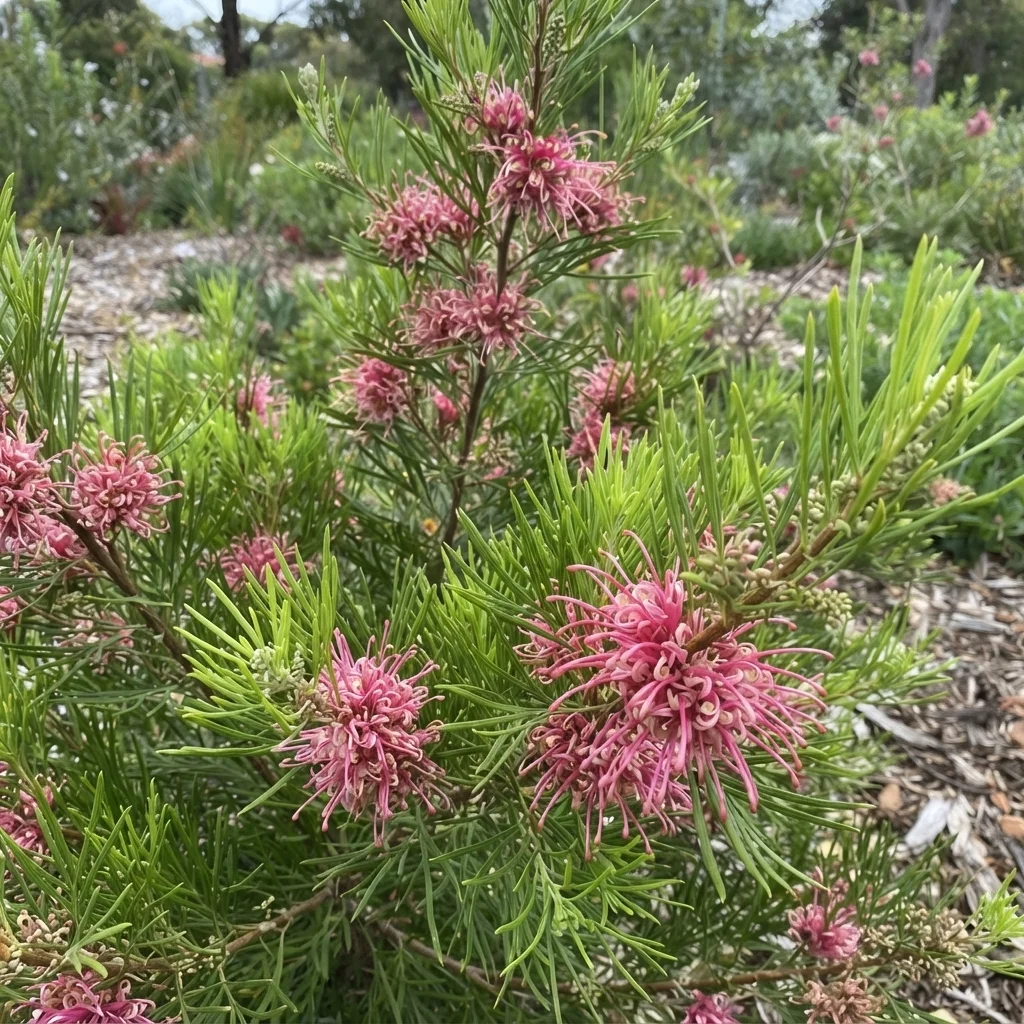
Baker's Hakea
Hakea bakeriana
Keep exploring
Explore the genus
Hardy in your zone?
Grow Willow-leaved Hakea with confidence
See it in a design of your actual yard, get zone-matched care reminders, and track it season by season in your garden journal.