The Story
Plant Bio
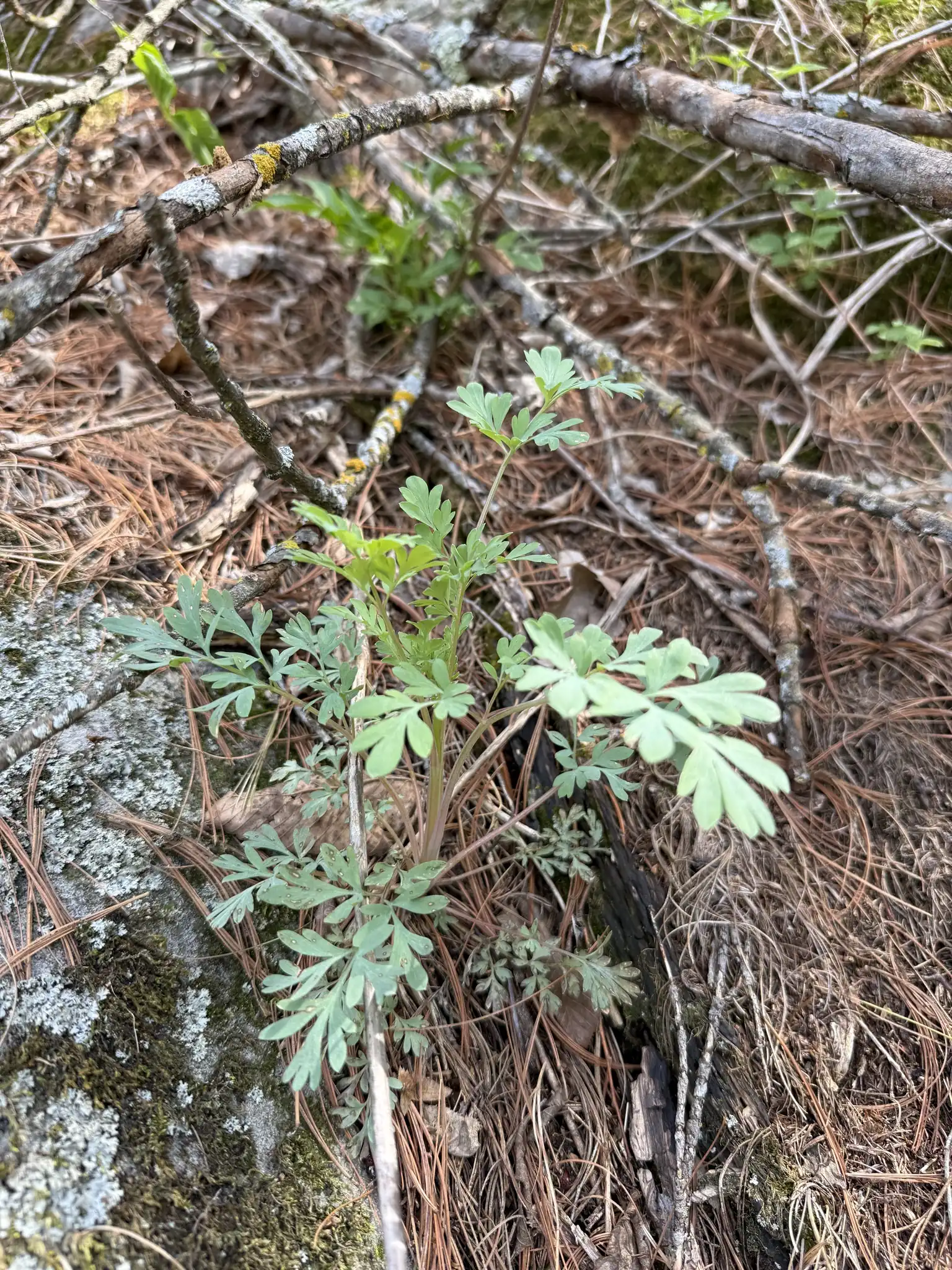
Capnoides sempervirens, commonly known as rock harlequin, is an upright annual or biennial native to rocky outcrops and thin woodland soils across northern North America. It produces fine, glaucous blue-green foliage on slender reddish stems, followed by drooping tubular pink flowers tipped with bright yellow.
The bi-colored blossoms feature a single basal spur and hang in small clusters continuously from late spring into early fall. Long, erect seed capsules follow the flowers, shattering when ripe to scatter seeds into acidic gravelly microclimates.
Uses & Benefits:
Essentials
At a Glance
Plant Type
Annual
Height
32"
Width
18"
Light
Full Sun, Partial Sun
Zones
4, 5, 6, 7
Water
Low
Humidity
Moderate
Lifespan
Annual / Biennial
Native To
North America
Toxicity
Toxic if ingested; mild skin irritant
Bloom period
Late spring – Early autumn
In flower about 5 months of the year
Planting
How to Grow
- Select a site with full sun or light woodland shade featuring gravelly, sandy, or rocky soil with an acidic pH.
- Sow seeds directly onto the soil surface in autumn or early spring, as seeds require cold exposure to break dormancy.
- Keep the seedbed barely damp until germination, then reduce moisture as seedlings establish basal rosettes.
- Allow mature plants to drop seed freely in late summer to maintain a self-sustaining colony for subsequent years.
Pro Tip
Cultivating in rich, heavily amended garden soil with neutral pH leads to weak growth and crown rot; plant in nutrient-poor, sharp-draining acidic substrates and let colonies self-seed naturally.
Keep It Thriving
Care Guide
Do
- Provide gritty, fast-draining soil with an acidic pH below 6.8.
- Position plants in bright light to maintain compact stems and powder-blue foliage.
- Allow seed pods to mature fully if naturalized self-seeding is desired.
Don't
- Do not add lime, compost, or rich organic fertilizers to the planting zone.
- Do not overwater or plant in heavy clay soils that hold standing moisture.
- Do not attempt to divide mature plants with established taproots.
Seasonal Care Calendar
| Task | Jan | Feb | Mar | Apr | May | Jun | Jul | Aug | Sep | Oct | Nov | Dec |
|---|---|---|---|---|---|---|---|---|---|---|---|---|
| Deadhead | ||||||||||||
| Pest Check | ||||||||||||
| Plant | ||||||||||||
| Winter Prep |
Watch Out For
Pests & Diseases
Common Pests
Common Diseases
In the Garden
Landscape Uses & Companions
Landscape Uses
Multiply
Propagation Methods
Good to Know
Common Questions
Rock Harlequin questions
What zones can Rock Harlequin grow in?
Rock Harlequin is an annual: it grows, flowers and sets seed in one season, so winter cold doesn't limit where it grows. Gardeners in any zone can grow it by planting at the right time, usually after the last spring frost.
Is Rock Harlequin deer resistant?
Yes — Rock Harlequin is rated deer-resistant. Deer typically pass it over, though extreme hunger can override any plant's defenses.
When does Rock Harlequin bloom?
Rock Harlequin typically blooms from late spring to early fall. Exact timing shifts a week or two with your zone — Sow's bloom calendar maps it to your garden.
Does Rock Harlequin need full sun?
Rock Harlequin does best in full sun to part shade. In hot climates, afternoon shade keeps blooms fresher longer.
Keep exploring
Explore the genus
Hardy in your zone?
Grow Rock Harlequin with confidence
See it in a design of your actual yard, get zone-matched care reminders, and track it season by season in your garden journal.