The Story
Plant Bio
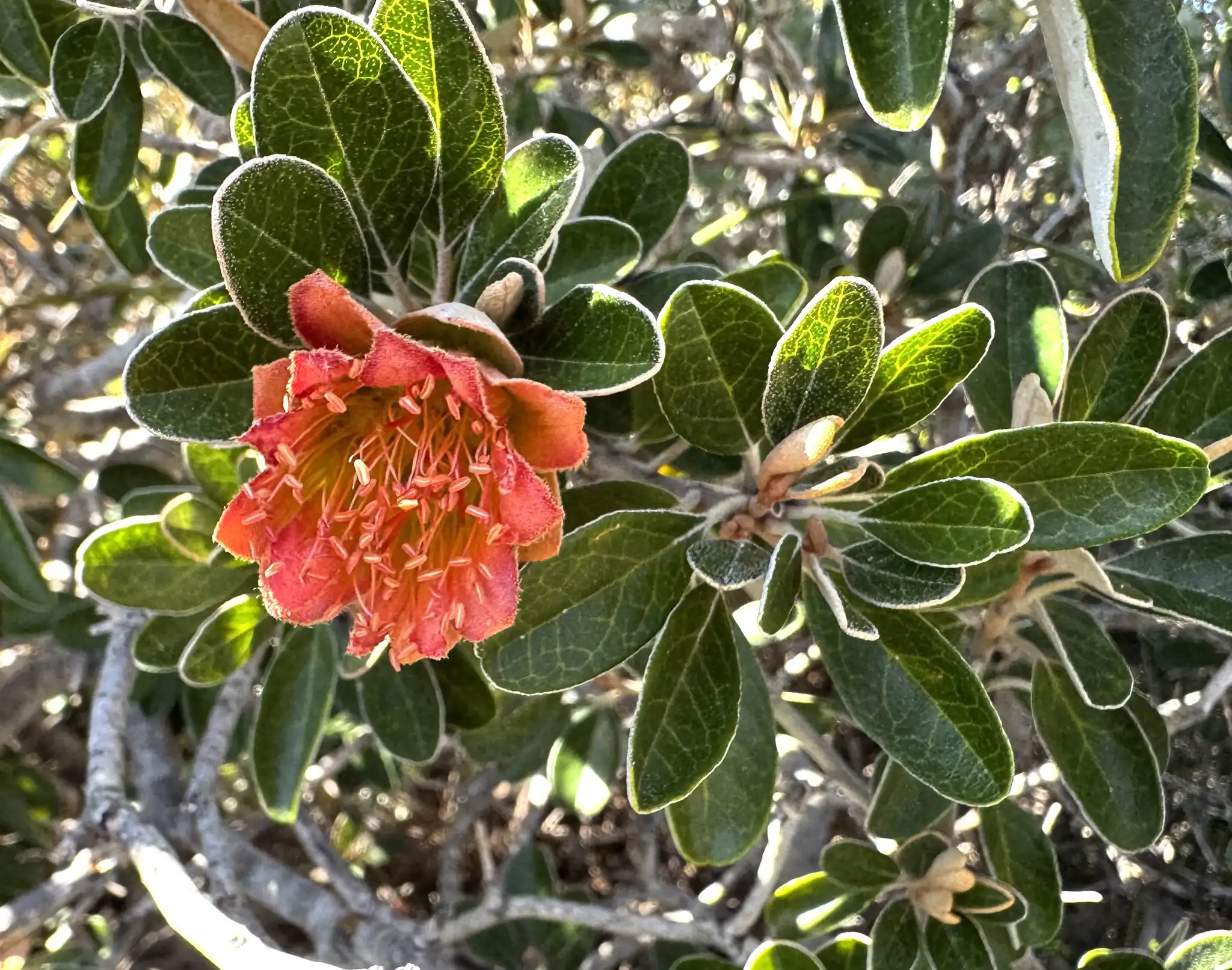
Diplolaena grandiflora is an erect, bushy evergreen shrub native to limestone outcrops and coastal ridges of Western Australia. It features ovate dark green leaves with downy grey undersides and produces pendent inflorescences of bright red-orange stamens encased in red bracts from late fall through spring.
This species stands out for its large, head-turning floral display and high tolerance for limestone soils and coastal salt spray. Unlike eastern Australian flora, it requires exceptionally fast sub-surface drainage and dry atmosphere to thrive long-term.
Uses & Benefits:
Essentials
At a Glance
Plant Type
Shrub
Height
118"
Width
98"
Light
Full Sun, Partial Sun
Zones
9, 10
Water
Low
Humidity
Low
Lifespan
Perennial
Native To
Western Australia
Toxicity
Non-toxic
Bloom period
Late fall – Spring
In flower about 7 months of the year
Planting
How to Grow
- Select a fully sunny site with coarse sand, gravel, or rocky soil that drains instantly.
- Position the root crown slightly elevated above the surrounding grade to avoid standing water around the main stem.
- Apply a light layer of gravel or stone mulch around the base, keeping it 2 inches away from the trunk.
- Water moderately during initial establishment, transitioning to minimal summer irrigation once roots extend deep.
Pro Tip
Plant in sharp, mineral-rich sand or gravel on raised beds to protect the root crown from wet rot, and never cut back into old leafless wood.
Keep It Thriving
Care Guide
Do
- Provide full sun and sharp, fast-draining soil.
- Apply low-phosphorus fertilizers sparingly during early spring growth.
- Tip-prune light green shoots immediately after flowering to retain a compact shape.
Don't
- Do not plant in heavy clay or waterlogged soils.
- Do not cut hard into bare, woody stems during pruning.
- Do not apply standard high-phosphorus garden fertilizers.
Seasonal Care Calendar
| Task | Jan | Feb | Mar | Apr | May | Jun | Jul | Aug | Sep | Oct | Nov | Dec |
|---|---|---|---|---|---|---|---|---|---|---|---|---|
| Fertilize | ||||||||||||
| Mulch | ||||||||||||
| Pest Check | ||||||||||||
| Prune |
Watch Out For
Pests & Diseases
Common Pests
Common Diseases
In the Garden
Landscape Uses & Companions
Landscape Uses
Companion Plants
Multiply
Propagation Methods
Good to Know
Common Questions
Tamala Rose questions
What zones can Tamala Rose grow in?
Tamala Rose is hardy in USDA Zones 9–10: in that range it survives winter in the ground. Colder than Zone 9, grow it in a container you can move to shelter for the winter.
Is Tamala Rose deer resistant?
Not reliably. Deer may browse Tamala Rose, especially tender spring growth — plan on repellents or fencing where pressure is high.
When does Tamala Rose bloom?
Tamala Rose typically blooms from late fall to late spring. Exact timing shifts a week or two with your zone — Sow's bloom calendar maps it to your garden.
Does Tamala Rose need full sun?
Tamala Rose does best in full sun to part shade. In hot climates, afternoon shade keeps blooms fresher longer.
Is Tamala Rose drought tolerant?
Yes — once established (usually after the first full season), Tamala Rose handles dry spells with minimal watering. Water deeply its first year to build the root system that makes that possible.
Keep exploring
Explore the genus
Hardy in your zone?
Grow Tamala Rose with confidence
See it in a design of your actual yard, get zone-matched care reminders, and track it season by season in your garden journal.