The Story
Plant Bio
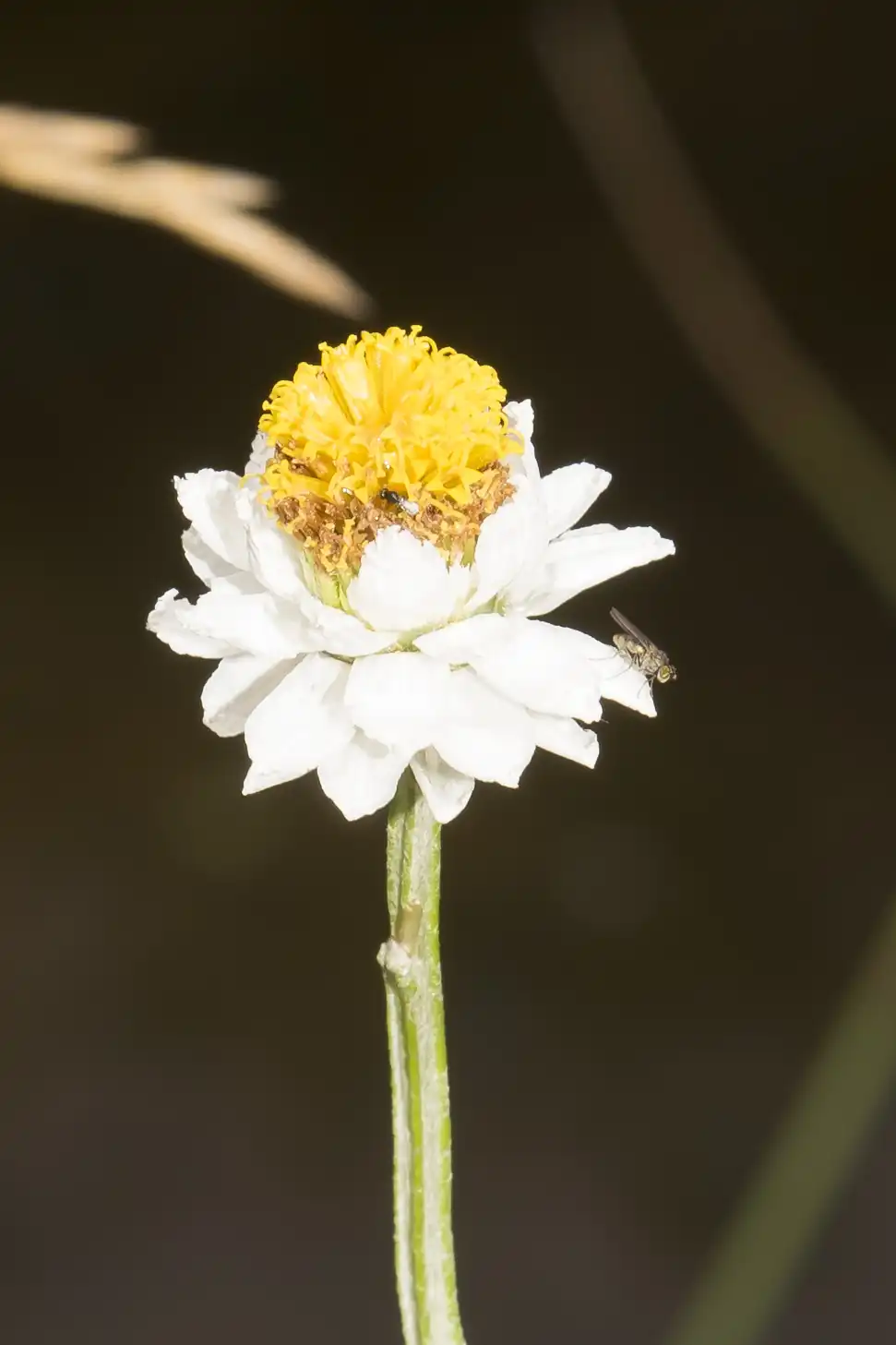
Ammobium alatum is an erect herbaceous perennial native to southeastern Australia, growing two to three feet tall with white-woolly stems distinctly framed by prominent green wings. The basal leaves form a silver-gray rosette from which tall, branching flowering stems arise topped with small, yellow-centered flower heads surrounded by papery white bracts.
The prominent stem wings and dry, petallike involucral bracts hold their shape and stark white color indefinitely after cut and dried. Unlike standard composite flowers, the papery outer scales do not wither or drop as the central disc florets mature to brownish-yellow.
Uses & Benefits:
Essentials
At a Glance
Plant Type
Perennial
Height
36"
Width
16"
Light
Full Sun
Zones
8, 9, 10
Water
Low to Moderate
Humidity
Low to Moderate
Lifespan
Perennial (Treated as Annual)
Native To
Australia
Toxicity
Non-toxic
Bloom period
Summer – Fall
In flower about 6 months of the year
Planting
How to Grow
- Select a site in full sun with sharp-draining sandy, loamy, or gravelly soil.
- Space plants 12 to 16 inches apart to maintain free air movement around the lower leaves.
- Water sparingly during initial establishment, allowing the upper soil layer to dry completely between waterings.
- Cut back flowering stems at the base regularly to stimulate a continuous harvest of new blooms.
Pro Tip
Avoid applying rich nitrogen fertilizers or placing heavy organic mulch against the basal rosette; excessive soil fertility causes weak, floppy growth and crown moisture triggers rapid fungal rots.
Keep It Thriving
Care Guide
Do
- Plant in light, low-nutrient soils with excellent internal drainage.
- Cut flower stems just as the yellow disc florets begin to open for optimal drying quality.
Don't
- Do not overwater or plant in heavy, waterlogged clay soils.
- Do not apply heavy organic mulch right against the base of the plant.
Seasonal Care Calendar
| Task | Jan | Feb | Mar | Apr | May | Jun | Jul | Aug | Sep | Oct | Nov | Dec |
|---|---|---|---|---|---|---|---|---|---|---|---|---|
| Deadhead | ||||||||||||
| Harvest | ||||||||||||
| Pest Check | ||||||||||||
| Plant |
Watch Out For
Pests & Diseases
Common Pests
Common Diseases
In the Garden
Landscape Uses & Companions
Landscape Uses
Companion Plants
Multiply
Propagation Methods
Good to Know
Common Questions
Winged Everlasting questions
What zones can Winged Everlasting grow in?
Winged Everlasting is hardy in USDA Zones 8–10: in that range it survives winter in the ground. Colder than Zone 8, grow it in a container you can move to shelter for the winter, or as an annual.
When does Winged Everlasting bloom?
Winged Everlasting typically blooms from summer to fall. Exact timing shifts a week or two with your zone — Sow's bloom calendar maps it to your garden.
Does Winged Everlasting need full sun?
Winged Everlasting does best in full sun (6+ hours).
Is Winged Everlasting drought tolerant?
Yes — once established (usually after the first full season), Winged Everlasting handles dry spells with minimal watering. Water deeply its first year to build the root system that makes that possible.
Keep exploring
Explore the genus
Hardy in your zone?
Grow Winged Everlasting with confidence
See it in a design of your actual yard, get zone-matched care reminders, and track it season by season in your garden journal.