The Story
Plant Bio
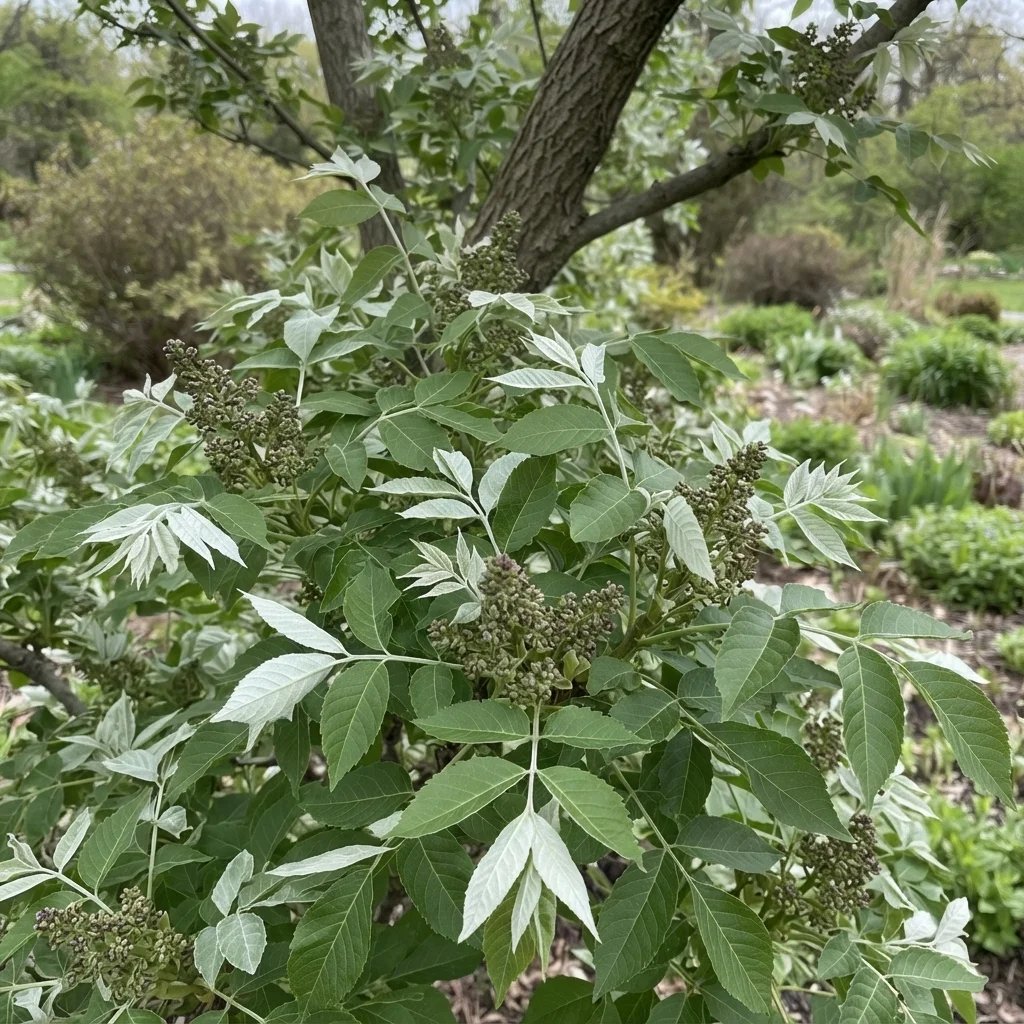
Fraxinus americana, commonly known as white ash, is a large deciduous canopy tree native to eastern and central North America, developing a broad, rounded crown at maturity. The opposite, odd-pinnate leaves feature dark green upper surfaces and distinct pale, whitish-green undersides that turn yellow, purple, or maroon in fall.
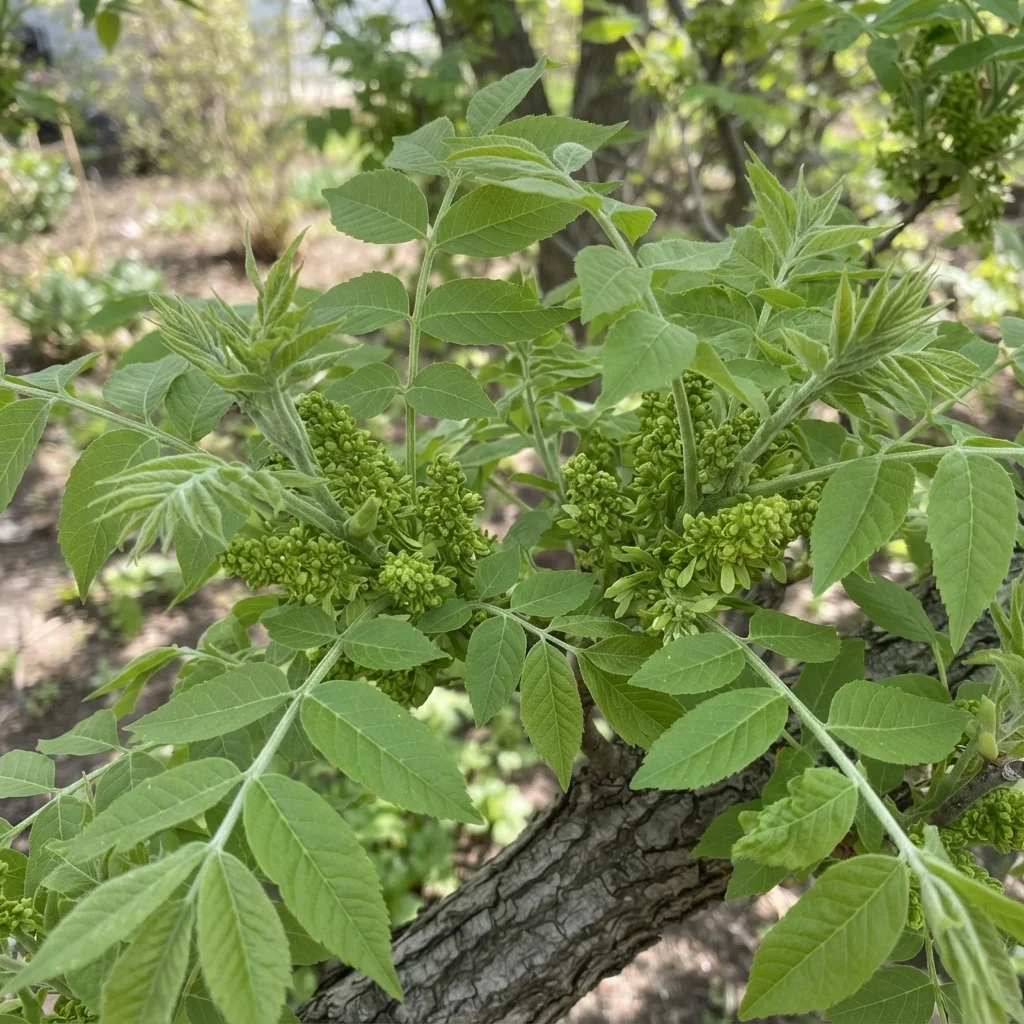
This dioecious species produces inconspicuous, apetalous purplish-green flowers in dense clusters during spring before the foliage emerges. Its wood is exceptionally strong and elastic, while its seeds provide a critical food source for native birds and small mammals.
Uses & Benefits:
Essentials
At a Glance
Plant Type
Tree
Height
9600"
Width
7200"
Light
Full Sun, Partial Sun
Zones
4, 5, 6, 7, 8, 9
Water
Medium
Humidity
High
Lifespan
Long-lived
Native To
North America
Toxicity
Non-toxic
Bloom period
Spring
In flower about 3 months of the year
Planting
How to Grow
- Select a planting site in full sun to partial shade with deep, moist, well-drained loam.
- Dig a hole twice as wide as the root ball but no deeper, ensuring the root flare sits flush with or slightly above the soil surface.
- Backfill with native soil without adding soil amendments, and water thoroughly to settle the ground.
- Apply a three-inch layer of organic mulch over the root zone, keeping it clear of the trunk to prevent rot.
Pro Tip
In areas with active emerald ash borer populations, apply systemic insecticide treatments containing emamectin benzoate or imidacloprid preventively to protect high-value specimens from guaranteed mortality.
Keep It Thriving
Care Guide
Do
- Water young trees deeply during dry spells to establish a deep, resilient root system.
- Prune young trees in late winter to establish a strong central leader and balanced branch structure.
- Monitor the canopy annually for thinning, branch dieback, or D-shaped exit holes.
Don't
- Do not perform heavy structural pruning on mature wood unless removing dead or diseased limbs.
- Do not over-fertilize, as excessive nitrogen stimulates soft growth that is highly susceptible to boring insects.
- Do not plant this species in regions heavily infested with emerald ash borer without a committed chemical treatment plan.
Seasonal Care Calendar
| Task | Jan | Feb | Mar | Apr | May | Jun | Jul | Aug | Sep | Oct | Nov | Dec |
|---|---|---|---|---|---|---|---|---|---|---|---|---|
| Fertilize | ||||||||||||
| Mulch | ||||||||||||
| Pest Check | ||||||||||||
| Prune | ||||||||||||
| Spring Cleanup |
Watch Out For
Pests & Diseases
Common Pests
Common Diseases
In the Garden
Landscape Uses & Companions
Landscape Uses
Multiply
Propagation Methods
Good to Know
Common Questions
White Ash questions
What zones can White Ash grow in?
White Ash is hardy in USDA Zones 4–9. Inside that range it survives winter in the ground; outside it, grow it as an annual or a container plant you protect.
When does White Ash bloom?
White Ash typically blooms in spring through spring. Exact timing shifts a week or two with your zone — Sow's bloom calendar maps it to your garden.
Does White Ash need full sun?
White Ash does best in full sun to part shade. In hot climates, afternoon shade keeps blooms fresher longer.
Is White Ash drought tolerant?
Yes — once established (usually after the first full season), White Ash handles dry spells with minimal watering. Water deeply its first year to build the root system that makes that possible.
More Fraxinus to compare
Keep exploring
Explore the genus
Grow White Ash with confidence
See it in a design of your actual yard, get zone-matched care reminders, and track it season by season in your garden journal.