The Story
Plant Bio
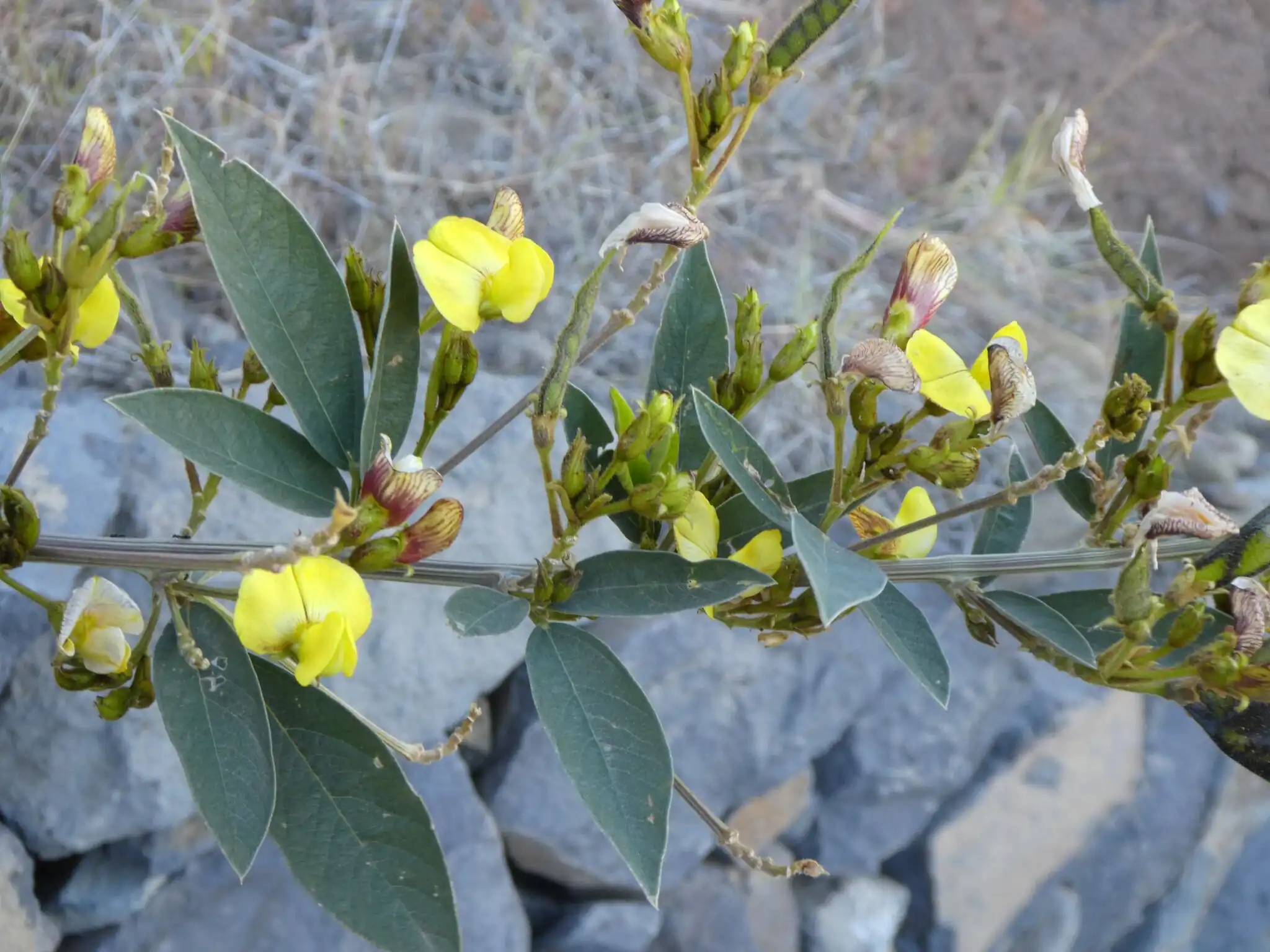
Cajanus cajan is a woody short-lived perennial shrub, usually grown as an annual, forming an erect bushy plant 5 to 10 feet tall with trifoliate pea leaves. It fixes nitrogen in root nodules, so it keeps growing in low-fertility soils where heavy feeders stall.
The flowers are 1/2 to 1 inch yellow pea blossoms streaked red to reddish brown on the outside, carried in terminal and axillary racemes. Bloom is short-day triggered in fall, followed by flat pods of edible pigeon peas that ripen into fall and spring in frost-free areas.
Uses & Benefits:
Essentials
At a Glance
Plant Type
Shrub
Height
120"
Width
120"
Light
Full Sun
Zones
9, 10
Water
Low
Humidity
Unknown
Lifespan
Short-lived perennial, 3-5 years, usually grown as annual
Native To
Peninsular India
Toxicity
Edible pulse; no toxicity reported
Bloom period
Fall – Spring
In flower about 9 months of the year
Planting
How to Grow
- Sow seed in spring after all frost danger, 1 inch deep in full sun and well-drained soil.
- Thin to 2 to 3 feet apart and weed diligently for the first 6 weeks while growth is slow.
- Water deeply but infrequently and water at the base; never keep the crown wet.
- Prune lightly after harvest to shape a bushy frame; plants respond well to cutting back.
- Pull and compost spent annual plants after hard frost, or cut back perennials in zones 9-11.
Pro Tip
Sow early in warm soil in full sun with sharp drainage; late sowing pushes bloom into frost, and wet soil rots the roots.
Keep It Thriving
Care Guide
Do
- Plant in full sun with excellent drainage
- Water at the base, not overhead
- Control weeds early while seedlings establish
- Use certified disease-free seed and rotate planting spots
Don't
- Do not overwater or plant in soggy soil where roots rot
- Do not overfertilize, especially with nitrogen
- Do not sow late and expect pods before frost
- Do not expect it to survive hard frost as a perennial
Seasonal Care Calendar
| Task | Jan | Feb | Mar | Apr | May | Jun | Jul | Aug | Sep | Oct | Nov | Dec |
|---|---|---|---|---|---|---|---|---|---|---|---|---|
| Harvest | ||||||||||||
| Pest Check | ||||||||||||
| Plant | ||||||||||||
| Winter Prep |
Watch Out For
Pests & Diseases
Common Pests
Common Diseases
In the Garden
Landscape Uses & Companions
Landscape Uses
Companion Plants
Multiply
Propagation Methods
Good to Know
Common Questions
Pigeon Pea questions
What zones can Pigeon Pea grow in?
Pigeon Pea is hardy in USDA Zones 9–10: in that range it survives winter in the ground. Colder than Zone 9, grow it in a container you can move to shelter for the winter.
When does Pigeon Pea bloom?
Pigeon Pea typically blooms from fall to spring. Exact timing shifts a week or two with your zone — Sow's bloom calendar maps it to your garden.
Does Pigeon Pea need full sun?
Pigeon Pea does best in full sun (6+ hours).
Is Pigeon Pea drought tolerant?
Yes — once established (usually after the first full season), Pigeon Pea handles dry spells with minimal watering. Water deeply its first year to build the root system that makes that possible.
Keep exploring
Explore the genus
Hardy in your zone?
Grow Pigeon Pea with confidence
See it in a design of your actual yard, get zone-matched care reminders, and track it season by season in your garden journal.