The Story
Plant Bio
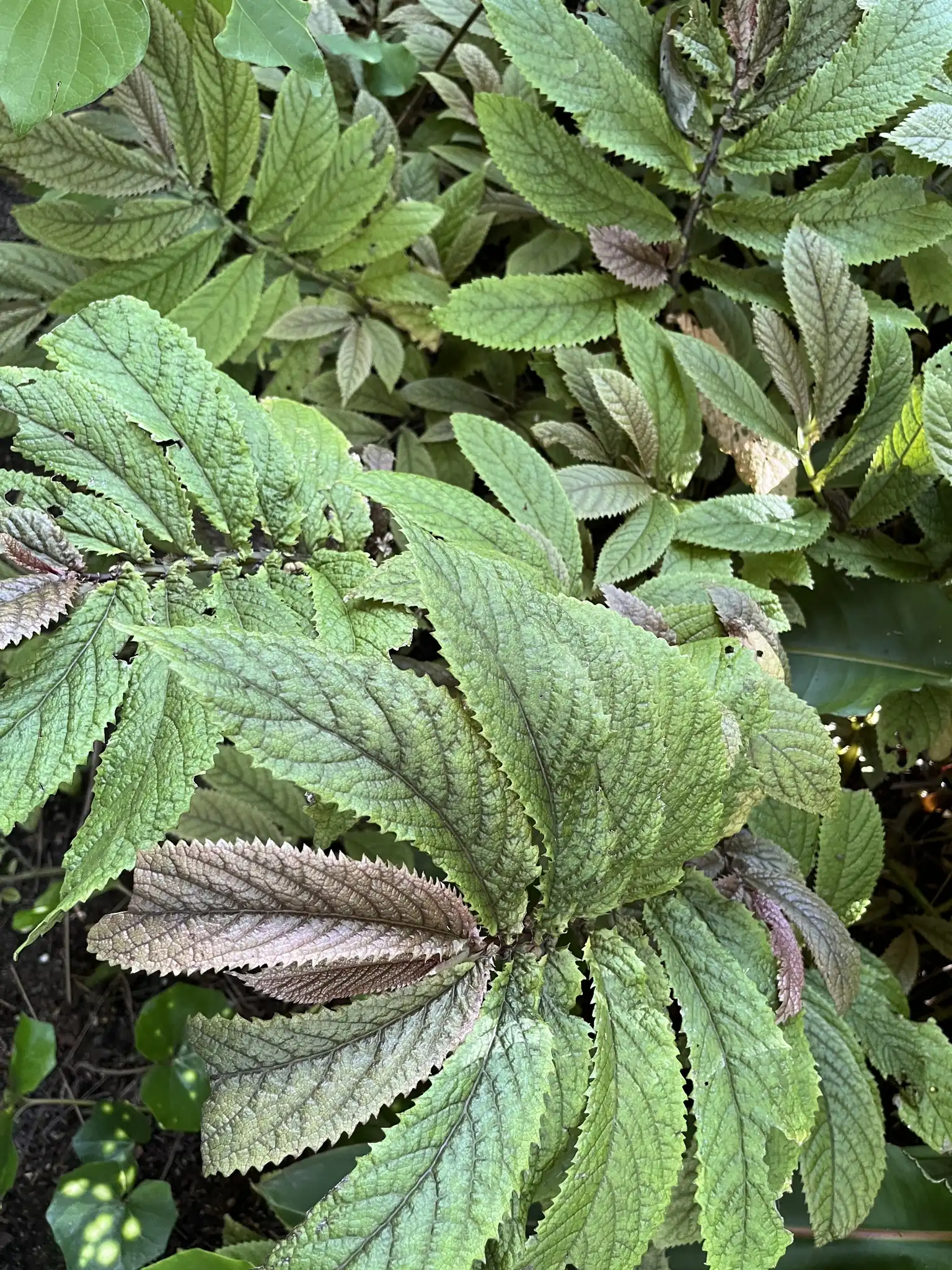
Elatostema rugosum is an evergreen perennial subshrub native to damp, shaded forest floors and stream gullies in New Zealand. Spreading via fleshy horizontal rhizomes, it produces leaning succulent stems clad in deeply wrinkled, asymmetric leaves that emerge reddish-purple before maturing to dark bronze-green.
The heavily textured, coarsely toothed foliage features persistent purple tones on young shoots, creating a dark ground cover in deep shade. Inconspicuous whitish-green flowers form tight, fleshy pads in the leaf axils from summer into fall.
Uses & Benefits:
Essentials
At a Glance
Plant Type
Perennial
Height
39"
Width
39"
Light
Partial Sun, Shade
Zones
9, 10
Water
High
Humidity
High
Lifespan
Perennial
Native To
New Zealand
Toxicity
Non-toxic
Bloom period
Summer – Fall
In flower about 6 months of the year
Planting
How to Grow
- Select a site in partial to full shade protected from harsh winds and direct afternoon sun.
- Work abundant organic compost or leaf mold into well-draining soil to maintain high moisture retention.
- Plant rhizomes at soil level, firming gently and watering thoroughly to settle air pockets.
- Maintain consistent soil moisture and maintain ambient humidity, never allowing the root zone to dry out.
Pro Tip
Cut back damaged stems lightly in spring just above active buds; never prune into dry, bare old wood, as leafless stems fail to regenerate.
Keep It Thriving
Care Guide
Do
- Keep soil continuously moist using rich organic mulches.
- Provide shelter from strong winds to prevent stem breakage and leaf burn.
- Protect plants from hard frosts using frost cloth or greenhouse shelter.
Don't
- Do not allow the soil to dry out between waterings.
- Do not prune hard into bare, leafless woody stems.
- Do not plant in full, direct sunlight.
Seasonal Care Calendar
| Task | Jan | Feb | Mar | Apr | May | Jun | Jul | Aug | Sep | Oct | Nov | Dec |
|---|---|---|---|---|---|---|---|---|---|---|---|---|
| Fertilize | ||||||||||||
| Pest Check | ||||||||||||
| Propagate | ||||||||||||
| Prune |
Watch Out For
Pests & Diseases
Common Pests
Common Diseases
In the Garden
Landscape Uses & Companions
Landscape Uses
Companion Plants
Multiply
Propagation Methods
Good to Know
Common Questions
Parataniwha questions
What zones can Parataniwha grow in?
Parataniwha is hardy in USDA Zones 9–10: in that range it survives winter in the ground. Colder than Zone 9, grow it in a container you can move to shelter for the winter, or as an annual.
When does Parataniwha bloom?
Parataniwha typically blooms from summer to fall. Exact timing shifts a week or two with your zone — Sow's bloom calendar maps it to your garden.
Does Parataniwha need full sun?
Parataniwha does best in part shade.
Keep exploring
Explore the genus
Hardy in your zone?
Grow Parataniwha with confidence
See it in a design of your actual yard, get zone-matched care reminders, and track it season by season in your garden journal.