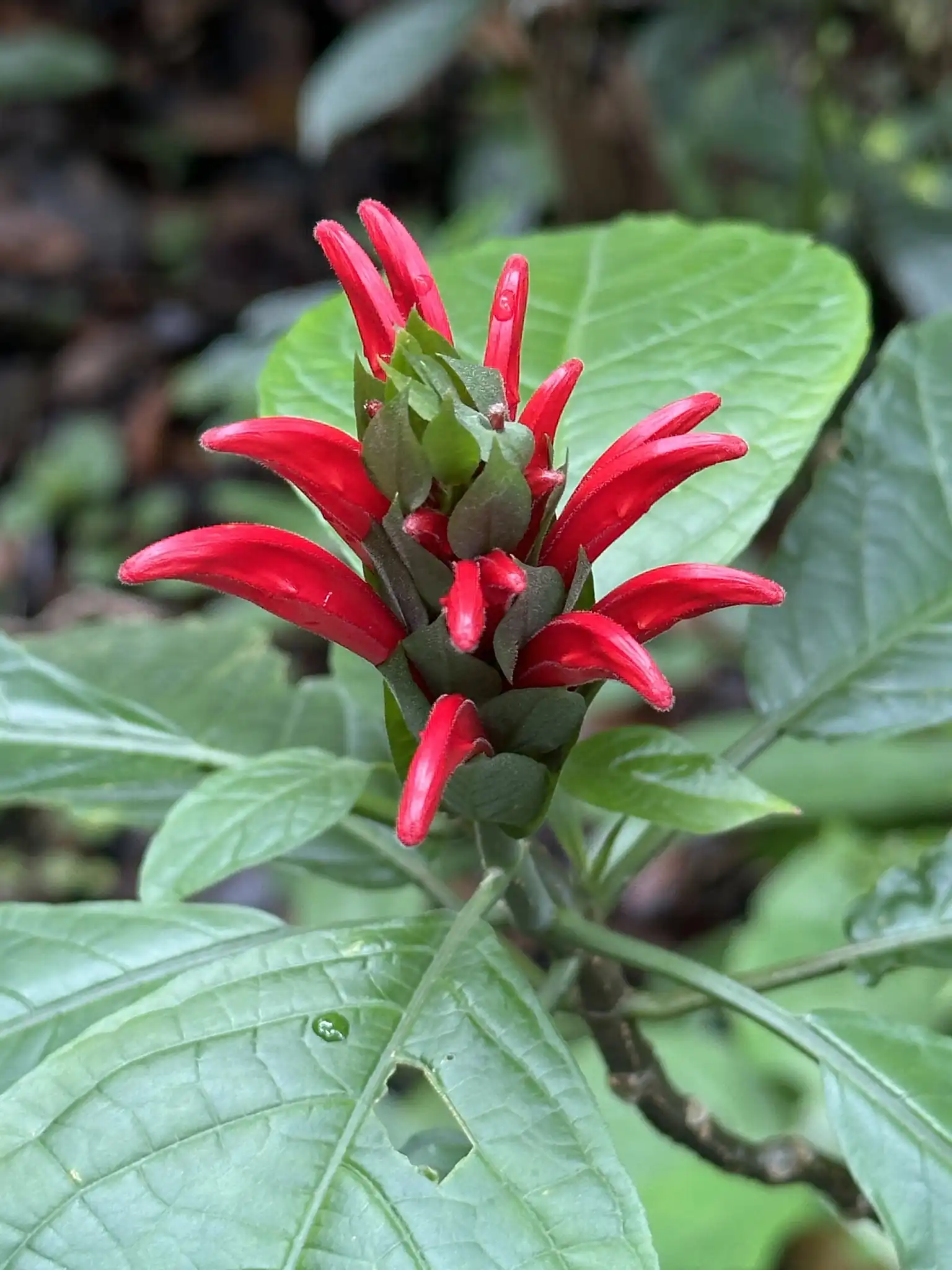
The Story
Plant Bio
Pachystachys coccinea is an erect evergreen shrub from wet forests of northern South America and Trinidad, with opposite ovate-elliptic leaves that are dark green and strongly veined to six inches long. The scarlet tubular flowers are two-lipped and borne in dense terminal spikes with green bracts to six inches long.
It is grown for upright spikes of true scarlet-red flowers that open over months in warm humid air rather than in a single flush. Container plants in the north stay one to two feet tall, while plants in the ground in frost-free climates reach five feet or more on long ascending sparsely branched stems.
Uses & Benefits:
Essentials
At a Glance
Plant Type
Tropical
Height
24"
Width
36"
Light
Full Sun, Partial Sun
Zones
10
Water
Evenly moist
Humidity
High
Lifespan
Tender evergreen shrub
Native To
Trinidad to Peru
Toxicity
Unknown
Bloom period
Summer – Autumn
In flower about 6 months of the year
Planting
How to Grow
- Set out after frost in full sun to part shade when nights stay warm.
- Pot in organically rich, well-drained mix and keep evenly moist; do not let it dry out.
- Water consistently through summer and reduce watering in winter without drying the rootball.
- Overwinter indoors in a sunny, warm, humid spot above 65F.
- Give good air flow and avoid wetting foliage to limit leaf problems.
Pro Tip
Keep the rootball evenly moist and the air humid, and check leaf undersides weekly indoors for spider mites and whiteflies.
Keep It Thriving
Care Guide
Do
- Keep soil consistently moist and high in organic matter.
- Provide bright light with some afternoon shade and humid air.
- Bring containers indoors before first frost to a sunny window.
- Inspect indoor plants regularly for sucking insects.
Don't
- Do not let the rootball dry out completely.
- Do not expose to frost or cold below 65F.
- Do not keep in soggy, poorly drained soil.
- Do not cut hard into old leafless stems.
Seasonal Care Calendar
| Task | Jan | Feb | Mar | Apr | May | Jun | Jul | Aug | Sep | Oct | Nov | Dec |
|---|---|---|---|---|---|---|---|---|---|---|---|---|
| Fertilize | ||||||||||||
| Pest Check | ||||||||||||
| Plant | ||||||||||||
| Prune | ||||||||||||
| Winter Prep |
Watch Out For
Pests & Diseases
Common Pests
Common Diseases
In the Garden
Landscape Uses & Companions
Landscape Uses
Companion Plants
Multiply
Propagation Methods
Good to Know
Common Questions
Cardinal's Guard questions
What zones can Cardinal's Guard grow in?
Cardinal's Guard is hardy in USDA Zone 10: in that range it survives winter in the ground. Colder than Zone 10, grow it in a container you can move to shelter for the winter, or as an annual.
When does Cardinal's Guard bloom?
Cardinal's Guard typically blooms from summer to fall. Exact timing shifts a week or two with your zone — Sow's bloom calendar maps it to your garden.
Does Cardinal's Guard need full sun?
Cardinal's Guard does best in full sun to part shade. In hot climates, afternoon shade keeps blooms fresher longer.
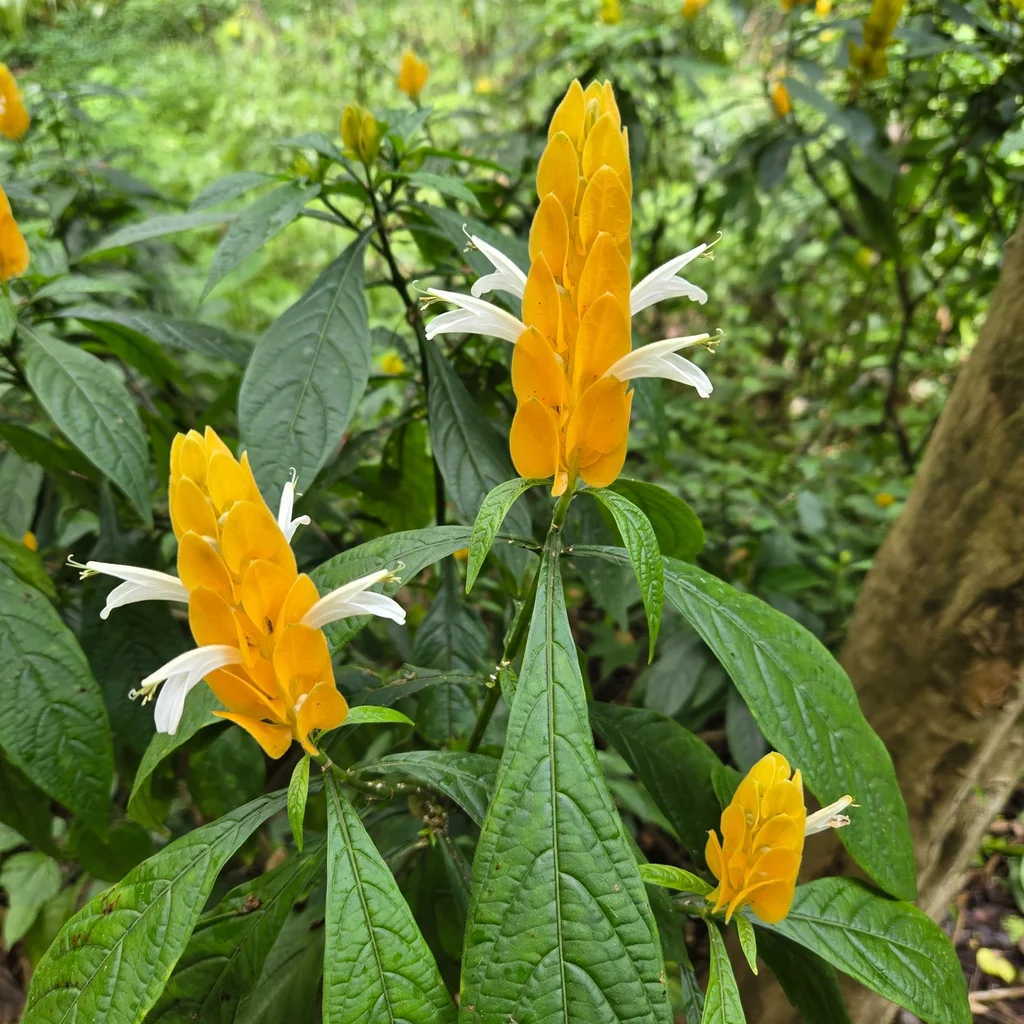
More Pachystachys to compare
Keep exploring
Explore the genus
Hardy in your zone?
Grow Cardinal's Guard with confidence
See it in a design of your actual yard, get zone-matched care reminders, and track it season by season in your garden journal.