The Story
Plant Bio
Asystasia gangetica, the Chinese violet, is a tender sprawling perennial subshrub that roots where stems touch soil to form a loose mat 2 feet tall and 3 to 4 feet wide. The opposite oval leaves are soft green, and the 1-inch tubular flowers open in spike-like racemes with five flaring violet lobes.
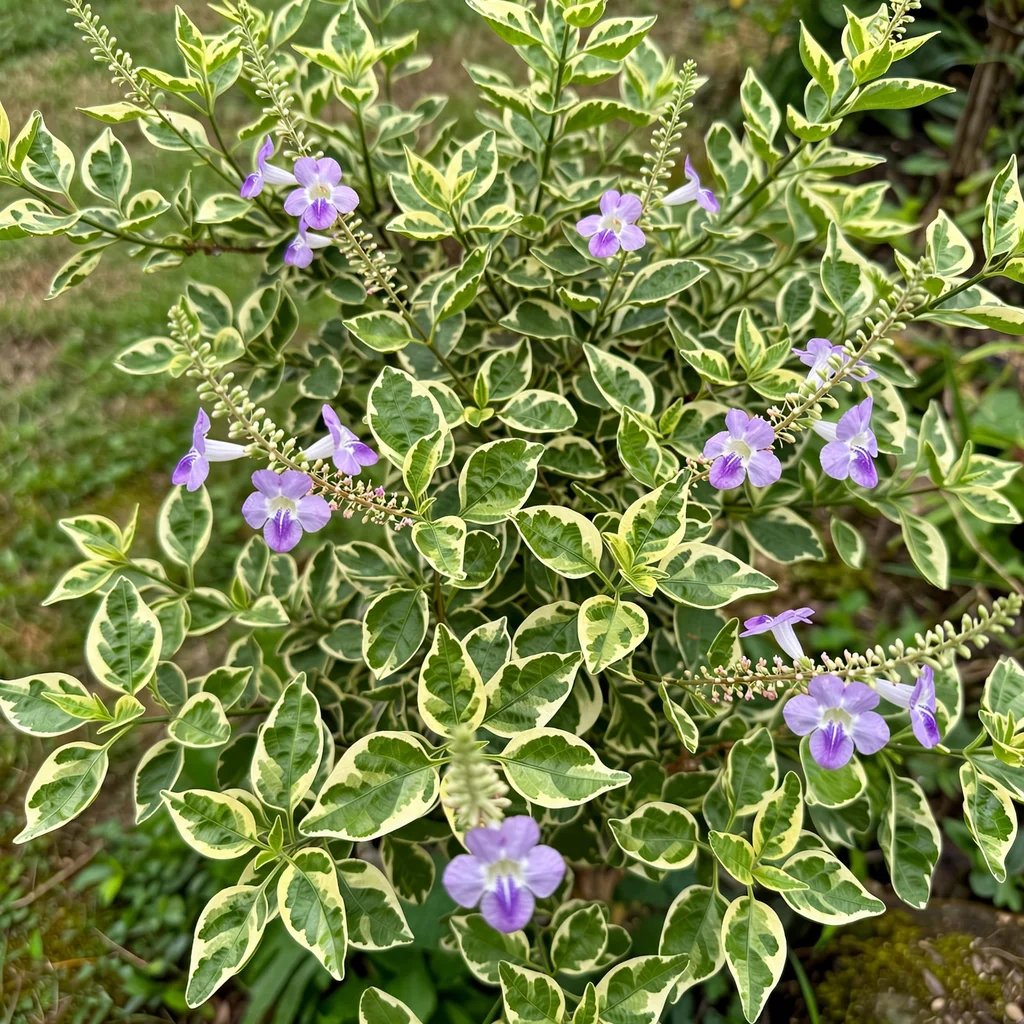
'Variegata' is the variegated garden form, with each oval-heart leaf edged and splashed creamy-white to yellow, brightest on new growth. It flowers like the species with white buds opening lavender-purple, but it still sets seed rapidly and layers where stems touch soil if left uncut.
Uses & Benefits:
Essentials
At a Glance
Plant Type
Groundcover
Height
24"
Width
42"
Light
Full Sun, Partial Sun, Shade
Zones
8, 9, 10
Water
Moderate
Humidity
Tolerant of heat and humidity
Lifespan
Tender perennial
Native To
Tropical Old World: India to Southeast Asia and northern Australia
Toxicity
Non-toxic
Bloom period
Spring – Summer
In flower about 6 months of the year
Planting
How to Grow
- Plant after last frost in full sun to partial shade in well-draining soil, spacing 18 to 24 inches to close as groundcover.
- Water to settle in, then water pots 1 to 2 times per week, allowing the surface to dry between waterings.
- Feed lightly through spring and summer with a balanced or bloom-booster fertilizer for containers.
- Pinch shoot tips and trim runners through the season to keep the mat dense and prevent layering.
- Bring pots indoors before first fall frost or treat as an annual where not hardy.
Pro Tip
Pinch shoot tips every few weeks in warm weather; stems left to touch bare soil layer down and root.
Keep It Thriving
Care Guide
Do
- Plant in well-draining soil, even low-nutrient sand or loam
- Give full sun to partial shade, including under trees
- Trim and remove dead or diseased leaves to improve airflow
Don't
- Do not plant in the ground in Florida or beside natural areas where it seeds out
- Do not keep soil soggy in still air, which invites leaf spot and rot
- Do not let runners escape the bed; stems root on contact with soil
Seasonal Care Calendar
| Task | Jan | Feb | Mar | Apr | May | Jun | Jul | Aug | Sep | Oct | Nov | Dec |
|---|---|---|---|---|---|---|---|---|---|---|---|---|
| Fertilize | ||||||||||||
| Pest Check | ||||||||||||
| Plant | ||||||||||||
| Propagate | ||||||||||||
| Prune |
Watch Out For
Pests & Diseases
Common Pests
Common Diseases
In the Garden
Landscape Uses & Companions
Landscape Uses
Companion Plants
Multiply
Propagation Methods
Good to Know
Common Questions
Variegated Chinese Violet questions
What zones can Variegated Chinese Violet grow in?
Variegated Chinese Violet is hardy in USDA Zones 8–10: in that range it survives winter in the ground. Colder than Zone 8, grow it in a container you can move to shelter for the winter, or as an annual.
When does Variegated Chinese Violet bloom?
Variegated Chinese Violet typically blooms from spring to summer. Exact timing shifts a week or two with your zone — Sow's bloom calendar maps it to your garden.
Does Variegated Chinese Violet need full sun?
Variegated Chinese Violet does best in full sun to part shade. In hot climates, afternoon shade keeps blooms fresher longer.
Is Variegated Chinese Violet drought tolerant?
Yes — once established (usually after the first full season), Variegated Chinese Violet handles dry spells with minimal watering. Water deeply its first year to build the root system that makes that possible.
Keep exploring
Explore the genus
Hardy in your zone?
Grow Variegated Chinese Violet with confidence
See it in a design of your actual yard, get zone-matched care reminders, and track it season by season in your garden journal.