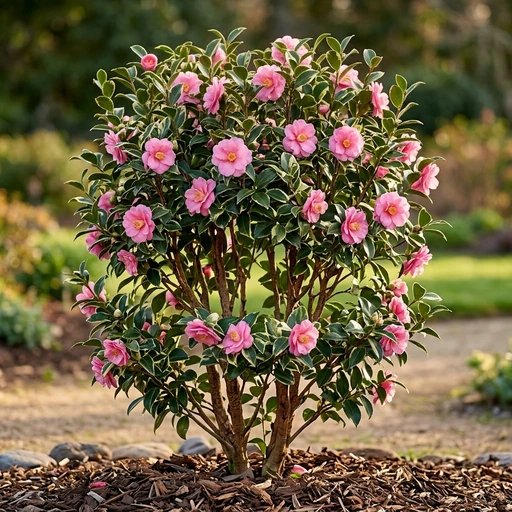
Garden hybrid
This is a garden hybrid, bred from more than one wild species, so it has no single species page of its own.
10 other cultivars
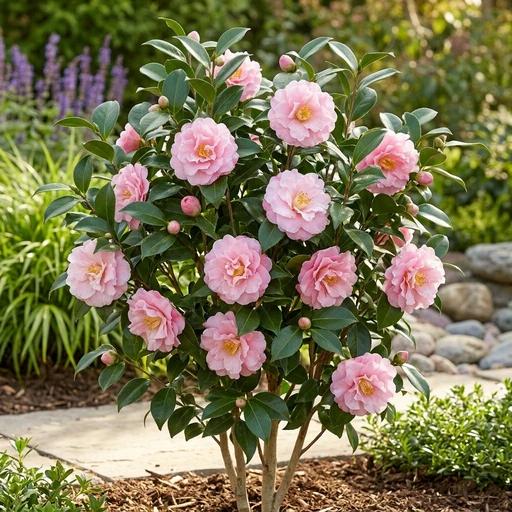 ‘High Fragrance’High Fragrance Camellia
 ‘Winter's Joy Camellia’Winter's Joy Camellia
 ‘Pink Icicle’Pink Icicle Camellia
 ‘Taylor'S Perfection’Taylor's Perfection Camellia
 ‘Winter's Star Camellia’Winter's Star Camellia
 ‘April Dawn’April Dawn Hybrid Camellia
 ‘April Remembered’April Remembered Camellia
 ‘Ack-Scent’Ack-Scent Hybrid Camellia
 ‘Crimson Candles’Crimson Candles Hybrid Camellia
 ‘Winter's Snowman’Winter's Snowman Camellia
The Story
Plant Bio
The 'April' series of hybrid camellias were developed by Dr. Clifford Parks for increased cold hardiness, allowing them to be grown successfully in colder zones. They are typically spring-blooming with a variety of flower forms and colors.
'April Kiss' is distinguished by its formal double, rose-red flowers and its late blooming season, which helps its buds avoid damage from late frosts. It has a compact, upright growth habit suitable for smaller gardens.
Uses & Benefits:
Bred from more than one wild species, so it has no species page of its own.
Essentials
At a Glance
Plant Type
Shrub
Height
96"
Width
72"
Light
Partial Sun, Shade
Zones
6, 7, 8, 9
Water
Medium
Humidity
Prefers moderate to high
Lifespan
Long-lived evergreen shrub
Native To
Hybrid origin
Toxicity
Non-toxic to humans and pets
Bloom period
Mid-spring – Late spring
In flower about 2 months of the year
Planting
How to Grow
- Select a site with well-drained, acidic soil and dappled shade.
- Dig a hole twice as wide as the root ball but no deeper.
- Gently tease out any circling roots before placing in the hole.
- Ensure the top of the root ball is at or slightly above soil level.
- Backfill with soil, water thoroughly to remove air pockets.
- Mulch with 2-3 inches of pine bark or compost, avoiding the stem.
Pro Tip
In Zone 6, plant in a location sheltered from harsh winter winds and afternoon sun to prevent desiccation and leaf burn.
Keep It Thriving
Care Guide
Do
- Water deeply and regularly during the first few years.
- Maintain a consistent layer of acidic mulch.
- Protect from winter winds in the colder parts of its range.
- Test soil pH and amend if necessary to keep it acidic.
Don't
- Do not plant too deep; this is a common cause of failure.
- Avoid locations with hot, direct afternoon sun.
- Don't let the soil dry out completely, especially in summer.
- Refrain from heavy pruning, as it can ruin the natural shape.
Seasonal Care Calendar
| Task | Jan | Feb | Mar | Apr | May | Jun | Jul | Aug | Sep | Oct | Nov | Dec |
|---|---|---|---|---|---|---|---|---|---|---|---|---|
| Fertilize | ||||||||||||
| Mulch | ||||||||||||
| Prune | ||||||||||||
| Winter Prep |
Watch Out For
Pests & Diseases
Common Pests
Common Diseases
In the Garden
Landscape Uses & Companions
Landscape Uses
Multiply
Propagation Methods
Good to Know
Common Questions
April Kiss Hybrid Camellia questions
What zones can April Kiss Hybrid Camellia grow in?
April Kiss Hybrid Camellia is hardy in USDA Zones 6–9. Inside that range it survives winter in the ground; outside it, grow it as an annual or a container plant you protect.
Is April Kiss Hybrid Camellia deer resistant?
Yes — April Kiss Hybrid Camellia is rated deer-resistant. Deer typically pass it over, though extreme hunger can override any plant's defenses.
When does April Kiss Hybrid Camellia bloom?
April Kiss Hybrid Camellia typically blooms in mid-spring through late spring. Exact timing shifts a week or two with your zone — Sow's bloom calendar maps it to your garden.
Does April Kiss Hybrid Camellia need full sun?
April Kiss Hybrid Camellia does best in part shade.
More Camellia to compare
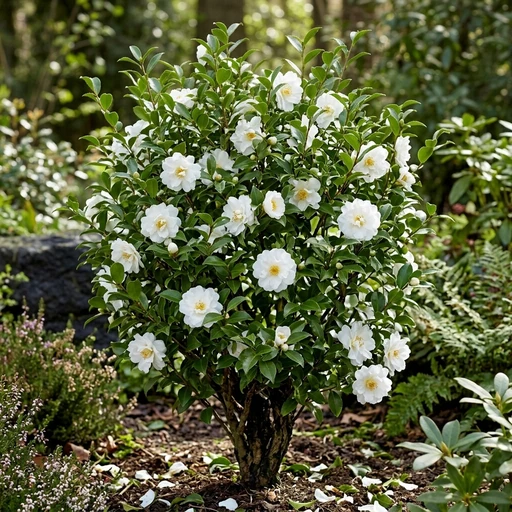
Setsugekka Camellia
Camellia sasanqua 'Setsugekka'
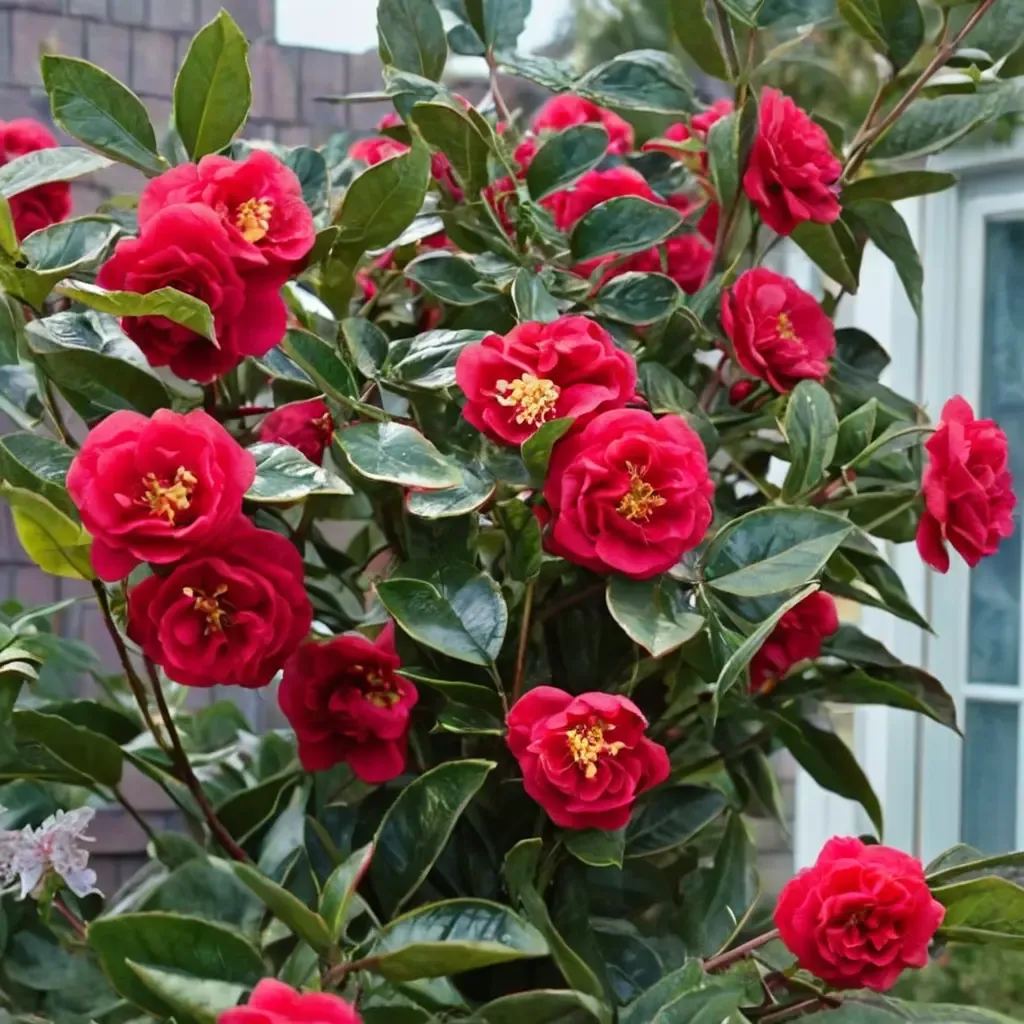
Kramer's Supreme Camellia
Camellia japonica 'Kramer's Supreme'
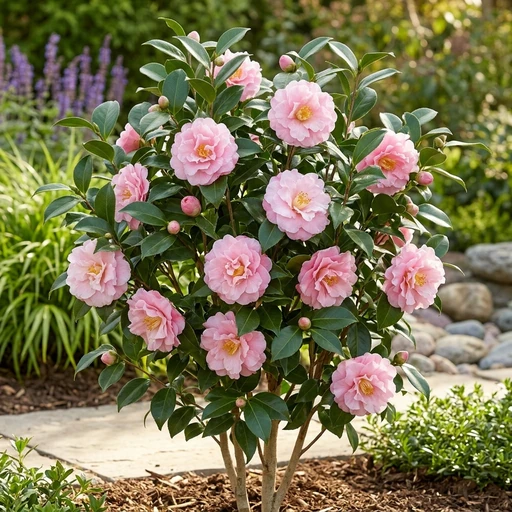
High Fragrance Camellia
Camellia x hybrida 'High Fragrance'
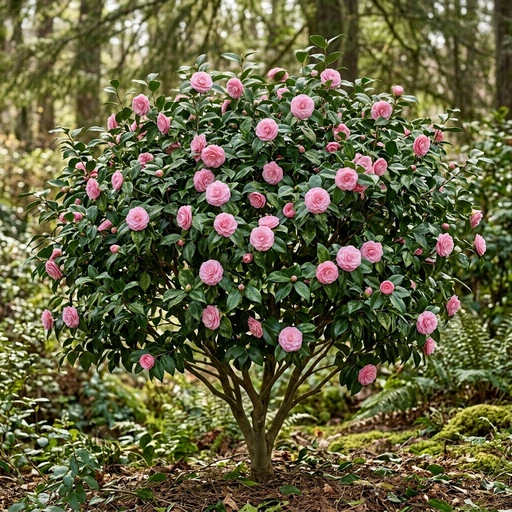
Early Wonder Camellia
Camellia japonica 'Early Wonder'
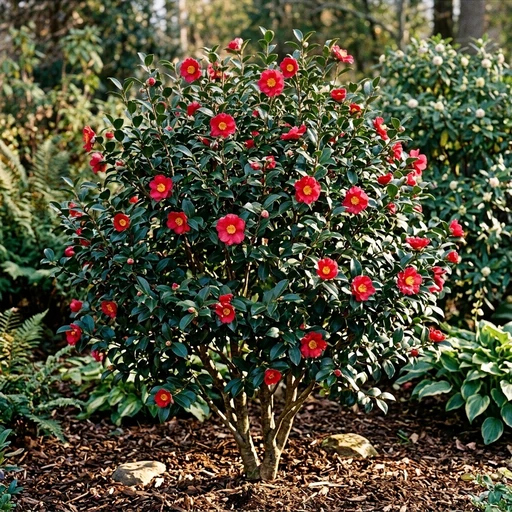
Yuletide Camellia
Camellia sasanqua 'Yuletide'
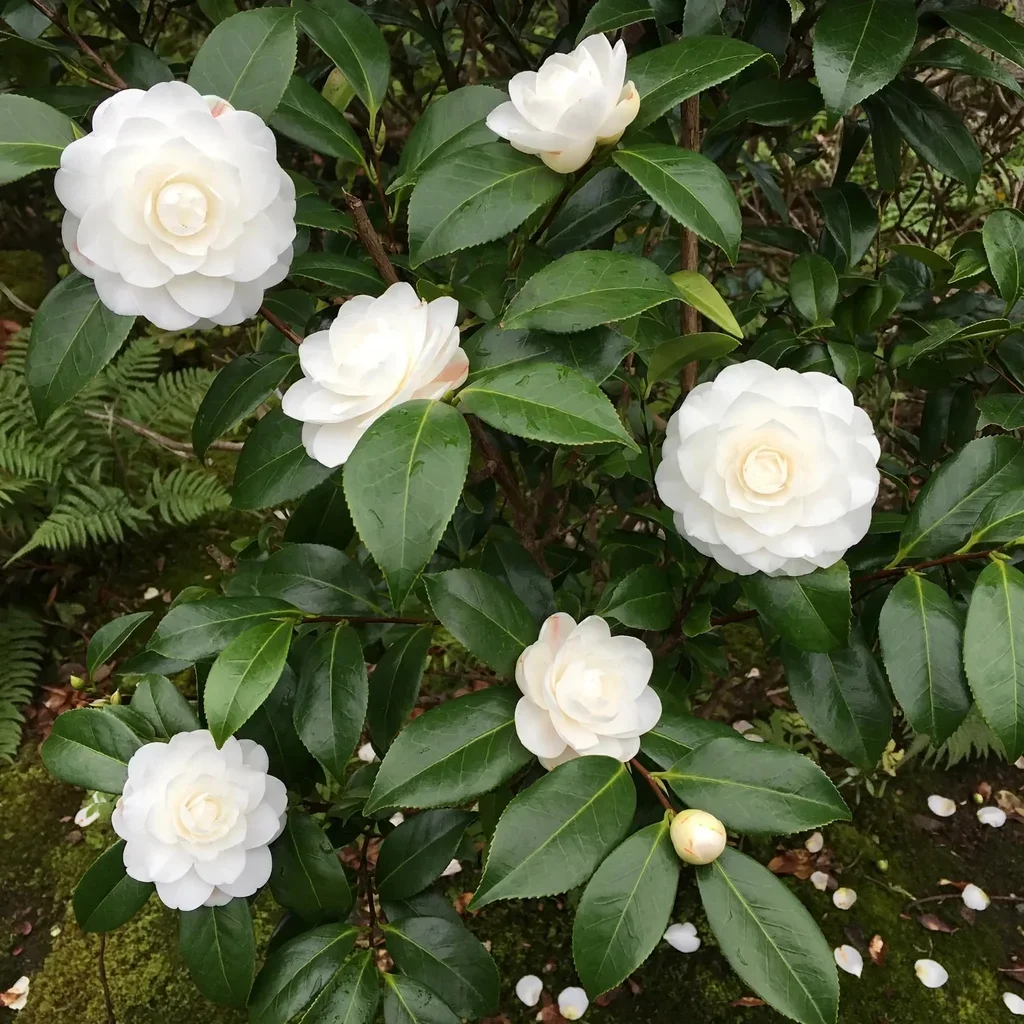
Sea Foam Camellia
Camellia japonica 'Sea Foam'
Keep exploring
Explore the genus
Hardy in your zone?
Grow April Kiss Hybrid Camellia with confidence
See it in a design of your actual yard, get zone-matched care reminders, and track it season by season in your garden journal.