The Story
Plant Bio
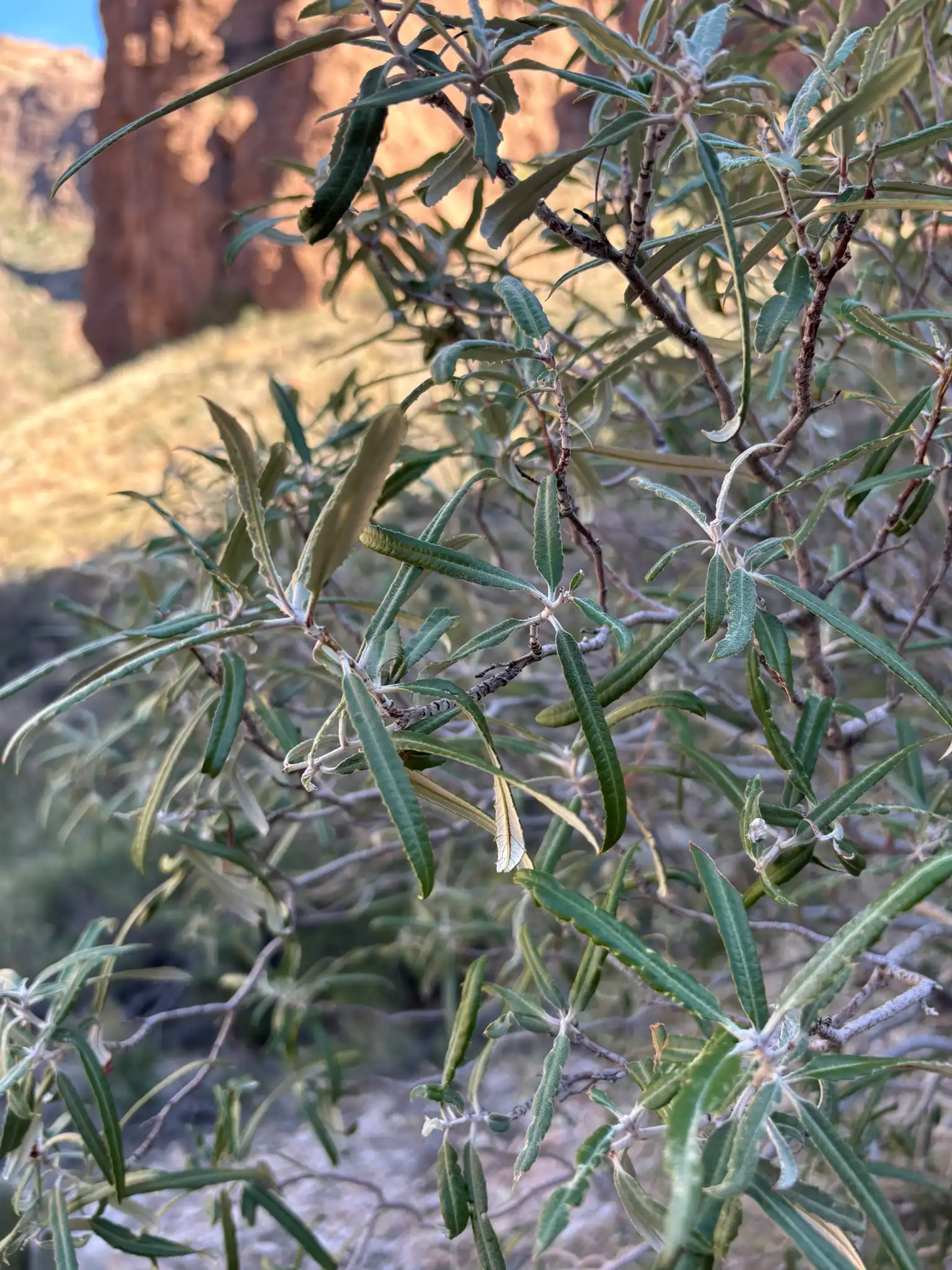
Vauquelinia californica is an evergreen large shrub or small tree from rocky slopes and canyon walls of the Southwest and northwestern Mexico, reaching 8 to 10 feet in gardens with a low-branched upright frame and dark red bark. The alternate lance-shaped leaves are leathery and glossy dark green with finely toothed margins, and the small white five-petaled flowers open in dense flat-topped clusters 2 to 4 inches across at the branch tips.
Despite the name californica it does not occur naturally in California, growing instead from Arizona and western Texas south into Sonora and Baja California. It resembles oleander in leaf but carries no toxicity, holding tan woody capsules long after bloom and tolerating reflected sun, alkaline rock, and drought once established.
Uses & Benefits:
Essentials
At a Glance
Plant Type
Shrub
Height
120"
Width
120"
Light
Full Sun
Zones
7, 8, 9, 10
Water
Low
Humidity
Unknown
Lifespan
Long-lived
Native To
Southwestern USA to northwestern Mexico
Toxicity
Non-toxic
Bloom period
Late spring – Early summer
In flower about 2 months of the year
Planting
How to Grow
- Choose a full-sun site with deep, well-drained sandy, loam, or rocky soil on a slope or raised grade.
- Dig a hole no deeper than the container and twice as wide, keeping the native alkaline soil for backfill.
- Set the plant with the crown slightly above grade and backfill firmly without burying the stem.
- Water deeply once to settle, then mulch with gravel and withhold water until the soil dries.
- Give infrequent deep soakings the first summer, then taper to little or no supplemental water.
Pro Tip
Set the crown slightly high in sharply drained rocky soil and water deeply but rarely; extra water and shaping cuts shorten its life.
Keep It Thriving
Care Guide
Do
- Give full or reflected sun and excellent drainage with limestone or granite rock.
- Water deeply but infrequently and let soil dry between soakings.
- Leave the persistent tan capsules for structure or clip them lightly after bloom if desired.
Don't
- Do not plant in low poorly drained clay bowls where roots stay wet.
- Do not overwater, over-fertilize, or amend with rich organic soil.
- Do not shear or over-prune; it needs shaping only rarely.
Seasonal Care Calendar
| Task | Jan | Feb | Mar | Apr | May | Jun | Jul | Aug | Sep | Oct | Nov | Dec |
|---|---|---|---|---|---|---|---|---|---|---|---|---|
| Mulch | ||||||||||||
| Pest Check | ||||||||||||
| Plant | ||||||||||||
| Prune |
Watch Out For
Pests & Diseases
Common Pests
Common Diseases
In the Garden
Landscape Uses & Companions
Landscape Uses
Companion Plants
Multiply
Propagation Methods
Good to Know
Common Questions
Arizona Rosewood questions
What zones can Arizona Rosewood grow in?
Arizona Rosewood is hardy in USDA Zones 7–10: in that range it survives winter in the ground. Colder than Zone 7, grow it in a container you can move to shelter for the winter.
Is Arizona Rosewood deer resistant?
Not reliably. Deer may browse Arizona Rosewood, especially tender spring growth — plan on repellents or fencing where pressure is high.
When does Arizona Rosewood bloom?
Arizona Rosewood typically blooms from late spring to early summer. Exact timing shifts a week or two with your zone — Sow's bloom calendar maps it to your garden.
Does Arizona Rosewood need full sun?
Arizona Rosewood does best in full sun (6+ hours).
Is Arizona Rosewood drought tolerant?
Yes — once established (usually after the first full season), Arizona Rosewood handles dry spells with minimal watering. Water deeply its first year to build the root system that makes that possible.
Keep exploring
Explore the genus
Hardy in your zone?
Grow Arizona Rosewood with confidence
See it in a design of your actual yard, get zone-matched care reminders, and track it season by season in your garden journal.