The Story
Plant Bio
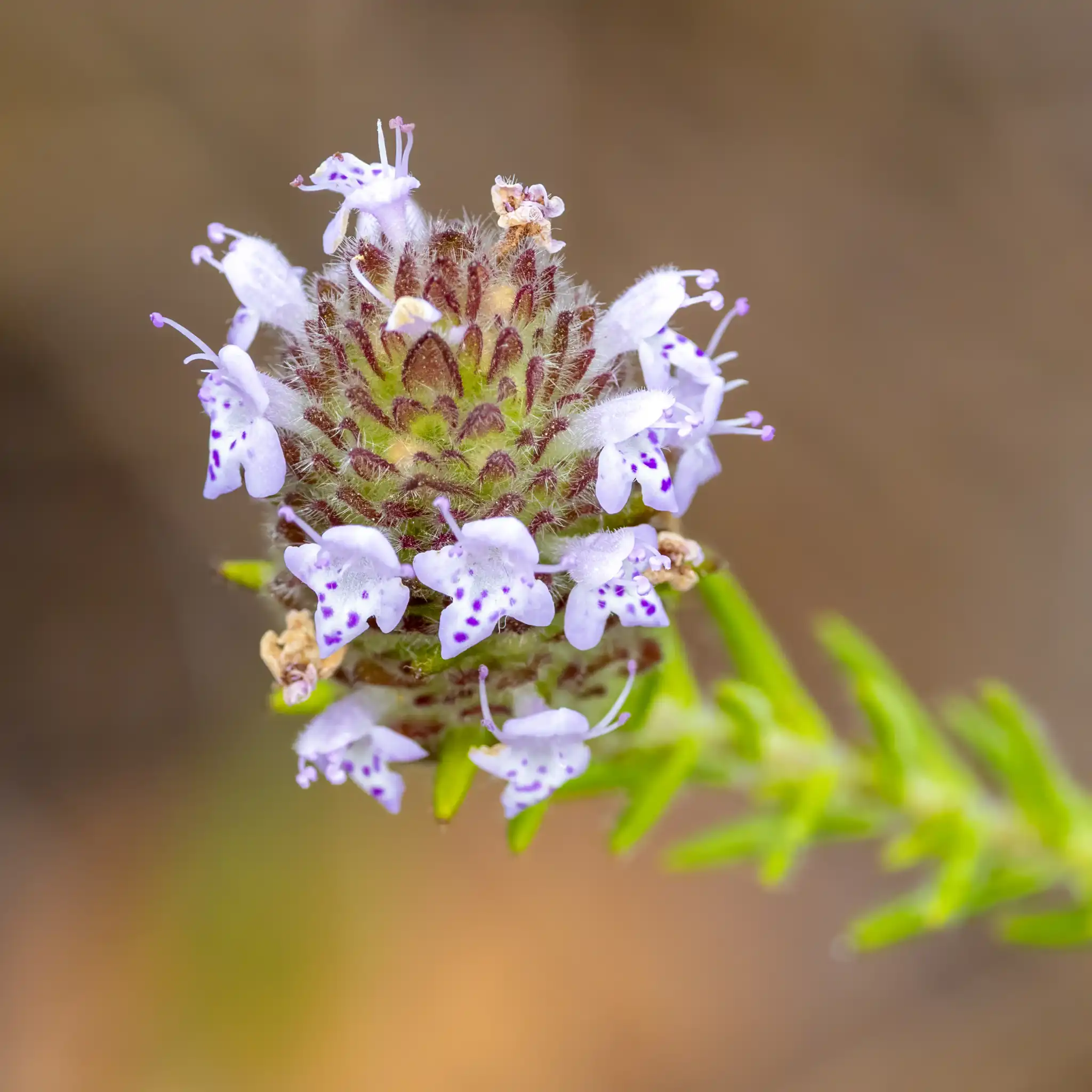
Piloblephis rigida, the wild pennyroyal, is an evergreen semi-woody shrublet from Florida scrub reaching one to two feet tall and as wide, with stiff rigid branches clothed in tiny opposite needle-like leaves that release a sharp mint-lemon oil when bruised. The bloom is a dense rounded head of small two-lipped lilac to lavender flowers with dark purple spots on the lower lip, carried at the stem tips from fall into spring.
It is the only species in its genus, not a true pennyroyal despite the common name; the genus name refers to the hairy sepal margins that fringe each flower like an eyelid. It holds in dry acid sand where little else persists, but wet soil rots the crown and established plants resent root disturbance, and its fall-to-spring nectar fills a gap when few other natives bloom.
Uses & Benefits:
Essentials
At a Glance
Plant Type
Shrub
Height
18"
Width
24"
Light
Full Sun, Partial Sun
Zones
8, 9, 10
Water
Low - dry to medium
Humidity
Unknown
Lifespan
Long-lived semi-woody perennial
Native To
Peninsular Florida, S. Georgia, N. Bahamas
Toxicity
Toxic if ingested - avoid in pregnancy
Bloom period
Fall – Spring
In flower about 9 months of the year
Planting
How to Grow
- Set in full sun in deep, dry acid sand with the crown slightly high.
- Dig only as deep as the rootball and backfill with native sand, no amendment.
- Water in once, then water sparingly until new growth shows.
- Top with a thin gravel or sand mulch, keeping mulch off the stems.
- Leave undisturbed; do not move once established.
Pro Tip
Plant high in deep acid sand in full sun and water only to establish; winter wetness kills it faster than drought.
Keep It Thriving
Care Guide
Do
- Give full sun and sharp drainage in sand.
- Pinch stem tips to keep the plant dense and bushy.
- Remove spent flower heads to prolong bloom.
- Use as a low groundcover, front-of-border plant, or pot.
Don't
- Do not plant in moist, rich, or clay soil.
- Do not cut hard into old bare wood.
- Do not transplant established plants.
- Do not overwater or fertilize to push growth.
Seasonal Care Calendar
| Task | Jan | Feb | Mar | Apr | May | Jun | Jul | Aug | Sep | Oct | Nov | Dec |
|---|---|---|---|---|---|---|---|---|---|---|---|---|
| Deadhead | ||||||||||||
| Pest Check | ||||||||||||
| Plant | ||||||||||||
| Propagate | ||||||||||||
| Prune |
Watch Out For
Pests & Diseases
Common Pests
Common Diseases
In the Garden
Landscape Uses & Companions
Landscape Uses
Multiply
Propagation Methods
Good to Know
Common Questions
Wild Pennyroyal questions
What zones can Wild Pennyroyal grow in?
Wild Pennyroyal is hardy in USDA Zones 8–10: in that range it survives winter in the ground. Colder than Zone 8, grow it in a container you can move to shelter for the winter.
When does Wild Pennyroyal bloom?
Wild Pennyroyal typically blooms from fall to spring. Exact timing shifts a week or two with your zone — Sow's bloom calendar maps it to your garden.
Does Wild Pennyroyal need full sun?
Wild Pennyroyal does best in full sun to part shade. In hot climates, afternoon shade keeps blooms fresher longer.
Is Wild Pennyroyal drought tolerant?
Yes — once established (usually after the first full season), Wild Pennyroyal handles dry spells with minimal watering. Water deeply its first year to build the root system that makes that possible.
Keep exploring
Explore the genus
Hardy in your zone?
Grow Wild Pennyroyal with confidence
See it in a design of your actual yard, get zone-matched care reminders, and track it season by season in your garden journal.