The Story
Plant Bio
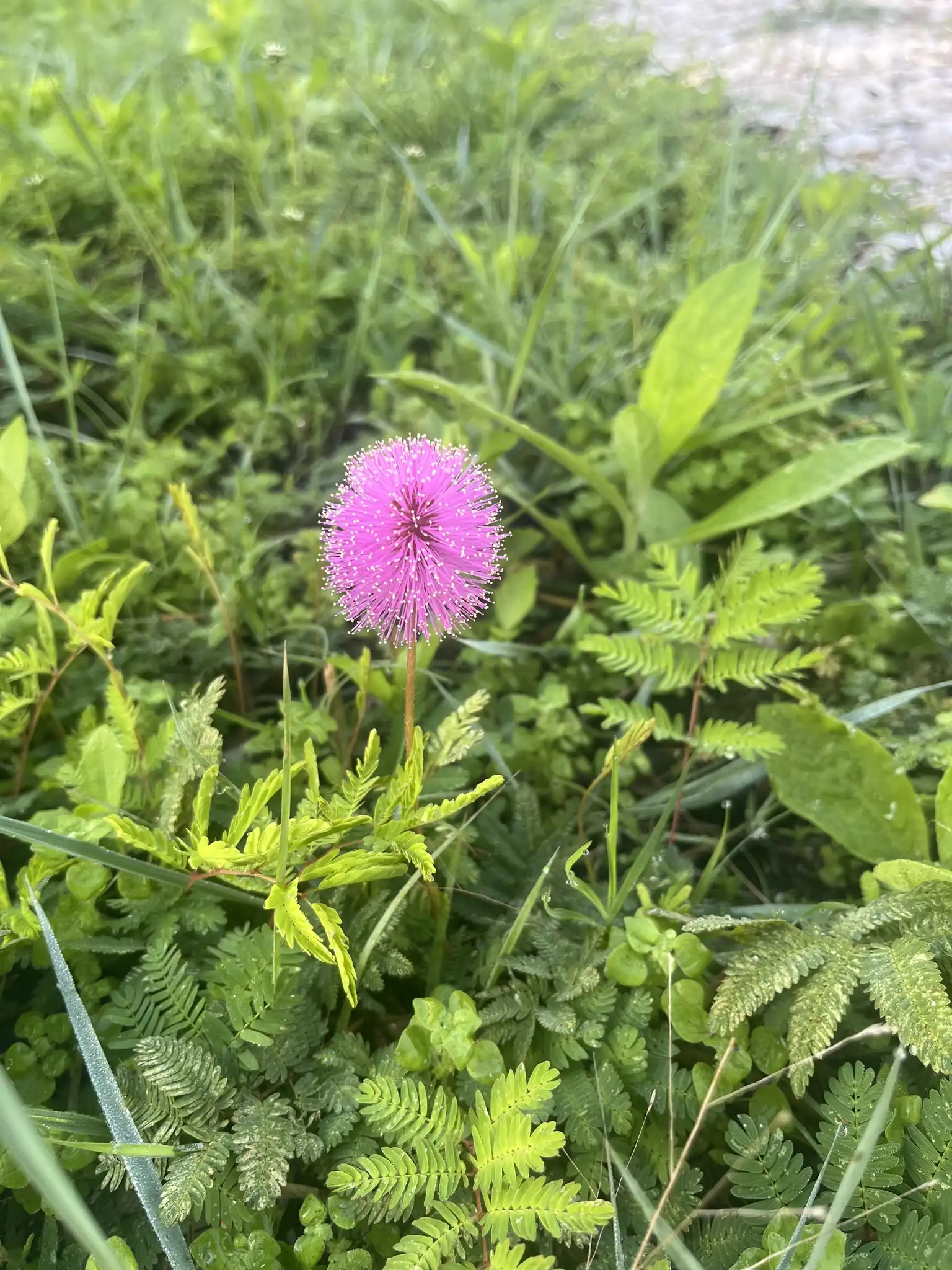
Mimosa strigillosa is a prostrate long-lived perennial that creeps by strigose stems that root at the nodes to form a turf-like mat from a woody taproot. The bright green fern-like bipinnate leaves fold closed in one to two seconds when disturbed, and the display comes from globose powderpuff heads about one inch across of pink stamens held just above the foliage.
Unlike the prickly sensitive briars it is often confused with, this species is thornless with only soft bristly hairs and forms a mowable mat only a few inches tall. Nursery plants labeled Mimosa strigulosa with one l are the same plant, correctly spelled strigillosa with two l's.
Uses & Benefits:
Essentials
At a Glance
Plant Type
Groundcover
Height
12"
Width
1200"
Light
Full Sun, Partial Sun
Zones
8, 9, 10
Water
Low
Humidity
Unknown
Lifespan
Long-lived perennial
Native To
Southeastern U.S. to Mexico and South America
Toxicity
Non-toxic
Bloom period
Spring – Fall
In flower about 9 months of the year
Planting
How to Grow
- Plant in full sun after frost in sandy or loam soil around neutral pH with sharp drainage.
- Set plugs 12 to 18 inches apart to let rooting stems knit into a mat.
- Water to establish through the first season, then cut back to deep infrequent watering.
- Install solid edging around the bed to keep runners out of neighboring turf.
- Mow high as needed to even the mat and remove spent flower heads.
Pro Tip
Contain it with solid edging from the start and withhold fertilizer and extra water once established; the mat is kept dense by mowing, not by hard cutting.
Keep It Thriving
Care Guide
Do
- Grow in full sun for densest mat and heaviest bloom.
- Edge beds to contain spreading stems that root at nodes.
- Leave bee and butterfly activity undisturbed during bloom.
Don't
- Do not overwater or plant where soil stays waterlogged.
- Do not fertilize; nitrogen fixation supplies its needs.
- Do not expect hummingbird visits; flowers are bee-pollinated powderpuffs.
Seasonal Care Calendar
| Task | Jan | Feb | Mar | Apr | May | Jun | Jul | Aug | Sep | Oct | Nov | Dec |
|---|---|---|---|---|---|---|---|---|---|---|---|---|
| Pest Check | ||||||||||||
| Plant | ||||||||||||
| Propagate | ||||||||||||
| Prune |
Watch Out For
Pests & Diseases
Common Pests
Common Diseases
In the Garden
Landscape Uses & Companions
Landscape Uses
Multiply
Propagation Methods
Good to Know
Common Questions
Sunshine Mimosa questions
What zones can Sunshine Mimosa grow in?
Sunshine Mimosa is hardy in USDA Zones 8–10: in that range it survives winter in the ground. Colder than Zone 8, grow it in a container you can move to shelter for the winter, or as an annual.
Is Sunshine Mimosa deer resistant?
Yes — Sunshine Mimosa is rated deer-resistant. Deer typically pass it over, though extreme hunger can override any plant's defenses.
When does Sunshine Mimosa bloom?
Sunshine Mimosa typically blooms from spring to fall. Exact timing shifts a week or two with your zone — Sow's bloom calendar maps it to your garden.
Does Sunshine Mimosa need full sun?
Sunshine Mimosa does best in full sun to part shade. In hot climates, afternoon shade keeps blooms fresher longer.
Is Sunshine Mimosa drought tolerant?
Yes — once established (usually after the first full season), Sunshine Mimosa handles dry spells with minimal watering. Water deeply its first year to build the root system that makes that possible.
Keep exploring
Explore the genus
Hardy in your zone?
Grow Sunshine Mimosa with confidence
See it in a design of your actual yard, get zone-matched care reminders, and track it season by season in your garden journal.