The Story
Plant Bio
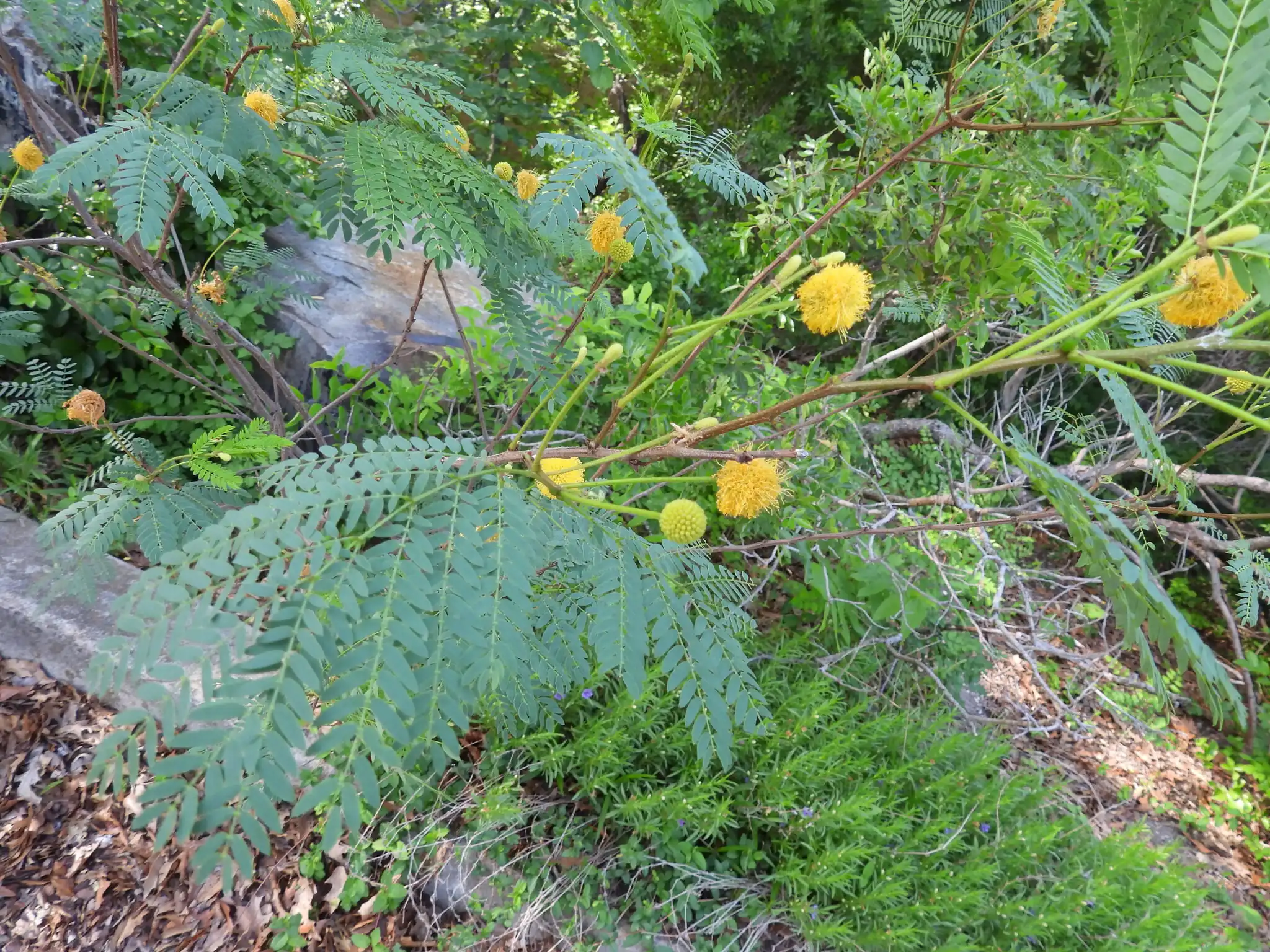
Leucaena retusa is a thornless deciduous shrub to small multi-stemmed tree from limestone canyons of Texas, New Mexico and northeastern Mexico, reaching twelve to fifteen feet with a broad vase-shaped crown. The leaves are airy bipinnate blue-green with small oblong leaflets, carried on brittle unarmed stems with flaky cinnamon bark.
Unlike the weedy white-flowered Leucaena leucocephala, it carries fragrant golden-yellow puffball heads about an inch across on stalks two to three inches long, opening from spring through fall after rain. The crown stays open and spreading, and the flat brown pods that follow hold seed that germinates readily when fresh.
Uses & Benefits:
Essentials
At a Glance
Plant Type
Tree
Height
180"
Width
240"
Light
Full Sun, Partial Sun
Zones
7, 8, 9
Water
Low
Humidity
Unknown
Lifespan
Woody perennial
Native To
Texas, New Mexico, northeastern Mexico
Toxicity
Toxic if ingested
Bloom period
Spring – Fall
In flower about 9 months of the year
Planting
How to Grow
- Plant in full sun to part shade in dry, well-drained rocky or caliche soil with lime.
- Water deeply at planting, then water sparingly once established, allowing soil to dry between waterings.
- Stake young multi-stemmed plants only until anchored, keeping ties loose to avoid breaking brittle wood.
- Leave spent heads to form pods if you want seed, or remove pods to reduce self-sowing.
Pro Tip
Give it heat, lime and sharp drainage on rock or caliche and expect the heaviest bloom after summer rains; site it out of high wind where brittle limbs will not snap.
Keep It Thriving
Care Guide
Do
- Do plant on a slope or raised mound where water drains fast.
- Do allow full heat and sun for best flowering.
- Do protect young plants from deer browse.
Don't
- Don't plant in wet ground or heavy irrigated lawns.
- Don't cut hard back into old bare wood.
- Don't feed heavily or overwater to force growth.
Seasonal Care Calendar
| Task | Jan | Feb | Mar | Apr | May | Jun | Jul | Aug | Sep | Oct | Nov | Dec |
|---|---|---|---|---|---|---|---|---|---|---|---|---|
| Mulch | ||||||||||||
| Pest Check | ||||||||||||
| Plant | ||||||||||||
| Propagate | ||||||||||||
| Prune |
Watch Out For
Pests & Diseases
Common Pests
Common Diseases
In the Garden
Landscape Uses & Companions
Landscape Uses
Multiply
Propagation Methods
Good to Know
Common Questions
Goldenball Leadtree questions
What zones can Goldenball Leadtree grow in?
Goldenball Leadtree is hardy in USDA Zones 7–9: in that range it survives winter in the ground. Colder than Zone 7, winters are too cold for it to survive outdoors. Warmer than Zone 9, winter isn't the problem: it prefers colder winters, and summer heat can shorten its life.
Is Goldenball Leadtree deer resistant?
Not reliably. Deer may browse Goldenball Leadtree, especially tender spring growth — plan on repellents or fencing where pressure is high.
When does Goldenball Leadtree bloom?
Goldenball Leadtree typically blooms from spring to fall. Exact timing shifts a week or two with your zone — Sow's bloom calendar maps it to your garden.
Does Goldenball Leadtree need full sun?
Goldenball Leadtree does best in full sun to part shade. In hot climates, afternoon shade keeps blooms fresher longer.
Is Goldenball Leadtree drought tolerant?
Yes — once established (usually after the first full season), Goldenball Leadtree handles dry spells with minimal watering. Water deeply its first year to build the root system that makes that possible.
Keep exploring
Explore the genus
Hardy in your zone?
Grow Goldenball Leadtree with confidence
See it in a design of your actual yard, get zone-matched care reminders, and track it season by season in your garden journal.