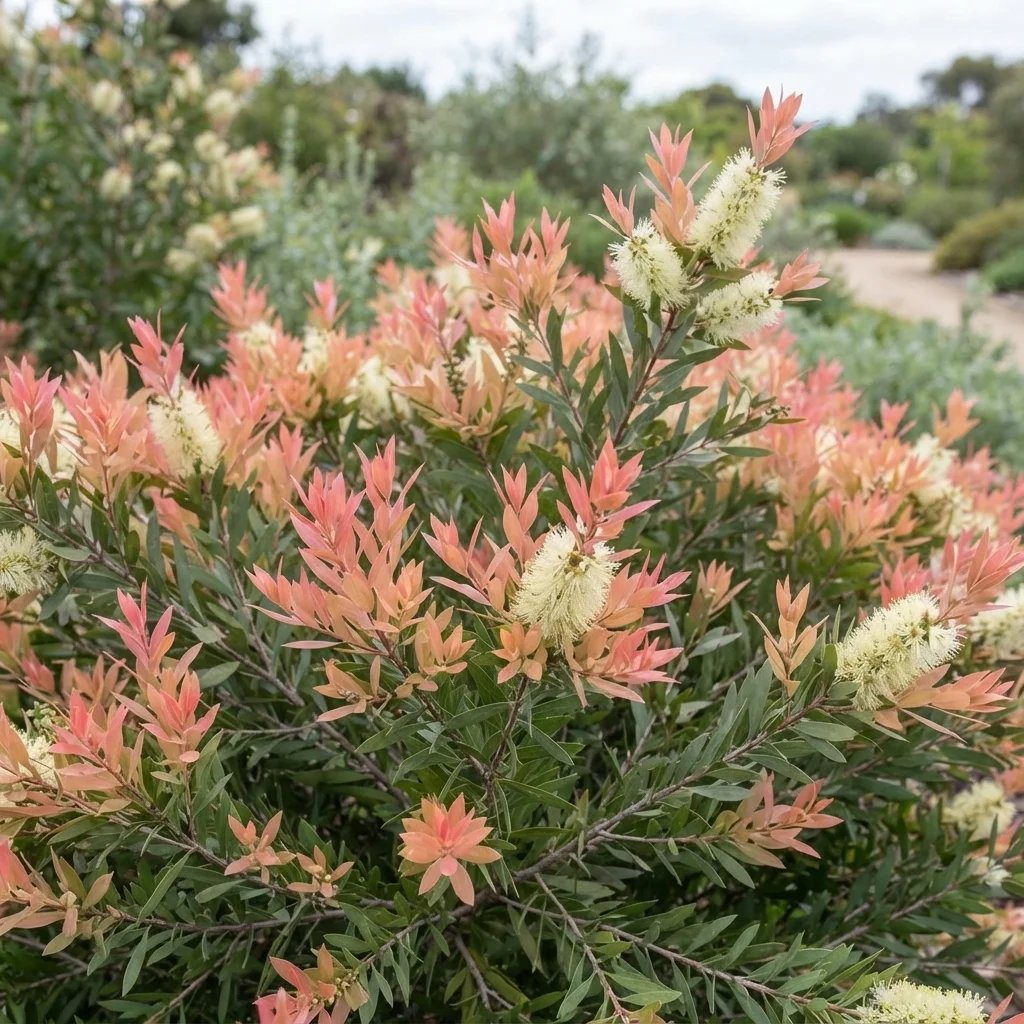
Species
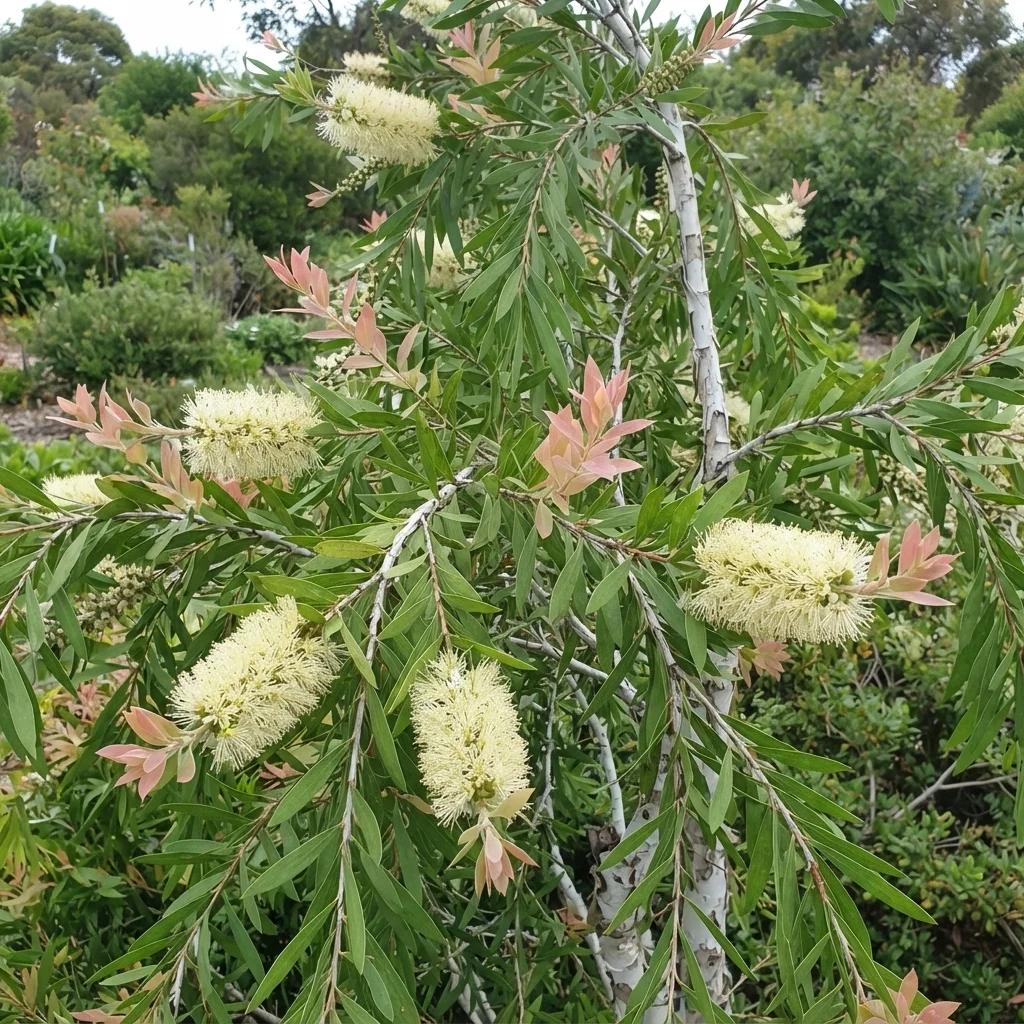 Callistemon salignusWillow Bottlebrush
1 other cultivar

The Story
Plant Bio
Callistemon salignus, the willow bottlebrush, is an evergreen Australian shrub or small tree native to moist river flats and creek banks. The species features narrow, lance-shaped leaves and produces cylindrical spikes of creamy-white flowers on weeping branches.
'Great Balls of Fire' is a compact, naturally rounded cultivar grown primarily for its intense pink and fiery red new foliage flushes. It rarely produces flowers, instead forming a dense, bun-shaped shrub that maintains its tight habit with regular pruning.
Uses & Benefits:
Essentials
At a Glance
Plant Type
Shrub
Height
69"
Width
59"
Light
Full Sun, Partial Sun
Zones
8, 9, 10
Water
Low to moderate
Humidity
High
Lifespan
Long-lived
Native To
Australia
Toxicity
Non-toxic
Bloom period
Late spring – Summer
In flower about 4 months of the year
Planting
How to Grow
- Select a planting site in full sun to maximize the intensity of the red and pink foliage flushes.
- Dig a hole twice as wide as the root ball and of equal depth, backfilling with native soil without adding organic amendments.
- Water deeply at the base immediately after planting and maintain consistent moisture until the root system establishes.
- Apply a light layer of organic mulch around the root zone, keeping it clear of the main stem to prevent rot.
Pro Tip
Prune the outer canopy lightly two to four times a year to stimulate the colorful new foliage flushes; cutting back into old, leafless wood prevents dormant buds from regenerating.
Keep It Thriving
Care Guide
Do
- Prune lightly several times a year to encourage fresh, colorful growth.
- Grow in full sun to achieve the brightest red and pink foliage.
- Use a low-phosphorus fertilizer if feeding is necessary.
Don't
- Do not cut back into old, leafless wood as it fails to regenerate cleanly.
- Do not overwater established plants in poorly drained container setups.
- Do not plant in deep shade, which causes leggy growth and dull green foliage.
Seasonal Care Calendar
| Task | Jan | Feb | Mar | Apr | May | Jun | Jul | Aug | Sep | Oct | Nov | Dec |
|---|---|---|---|---|---|---|---|---|---|---|---|---|
| Fertilize | ||||||||||||
| Pest Check | ||||||||||||
| Prune | ||||||||||||
| Winter Prep |
Watch Out For
Pests & Diseases
Common Pests
Common Diseases
In the Garden
Landscape Uses & Companions
Landscape Uses
Multiply
Propagation Methods
Good to Know
Common Questions
Great Balls of Fire Bottlebrush questions
What zones can Great Balls of Fire Bottlebrush grow in?
Great Balls of Fire Bottlebrush is hardy in USDA Zones 8–10. Inside that range it survives winter in the ground; outside it, grow it as an annual or a container plant you protect.
When does Great Balls of Fire Bottlebrush bloom?
Great Balls of Fire Bottlebrush typically blooms in late spring through summer. Exact timing shifts a week or two with your zone — Sow's bloom calendar maps it to your garden.
Does Great Balls of Fire Bottlebrush need full sun?
Great Balls of Fire Bottlebrush does best in full sun to part shade. In hot climates, afternoon shade keeps blooms fresher longer.
Is Great Balls of Fire Bottlebrush drought tolerant?
Yes — once established (usually after the first full season), Great Balls of Fire Bottlebrush handles dry spells with minimal watering. Water deeply its first year to build the root system that makes that possible.
More Callistemon to compare
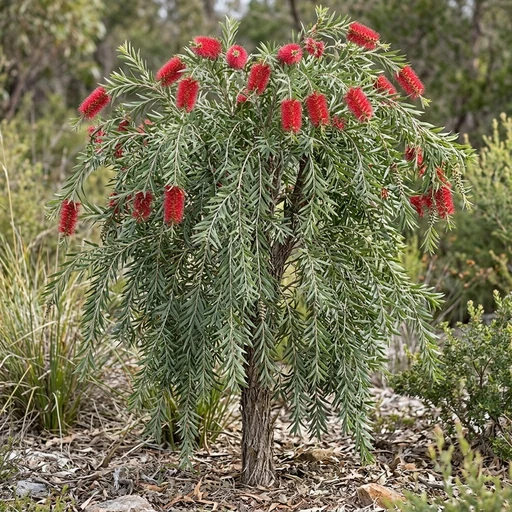
Weeping Bottlebrush
Callistemon viminalis
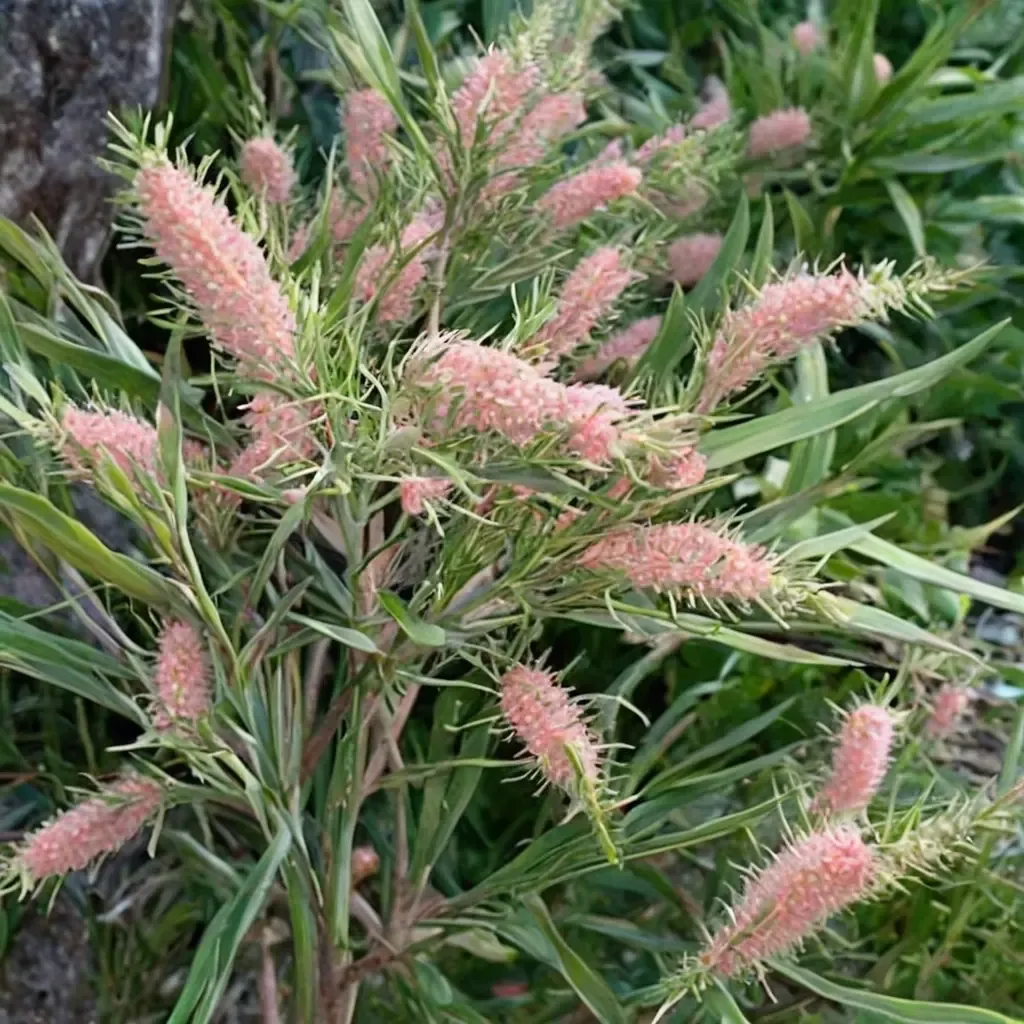
Cane's Hybrid Bottlebrush
Callistemon citrinus 'Cane's Hybrid'
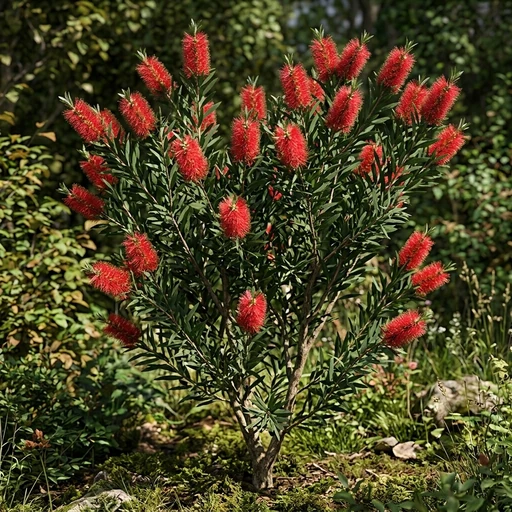
Woodlander's Hardy Bottlebrush
Callistemon x hybrida 'Woodlander'S Hardy'
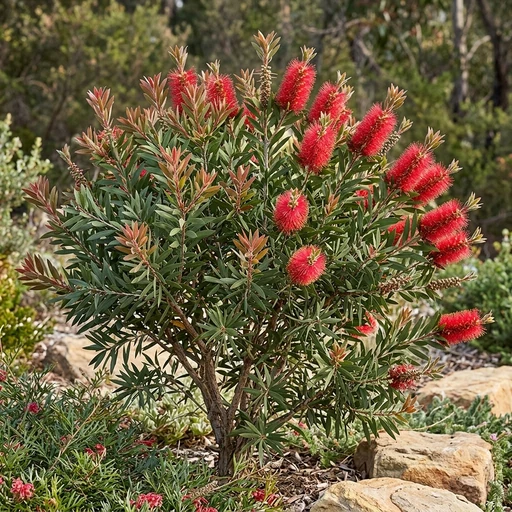
Little John Dwarf Bottlebrush
Callistemon citrinus 'Little John'
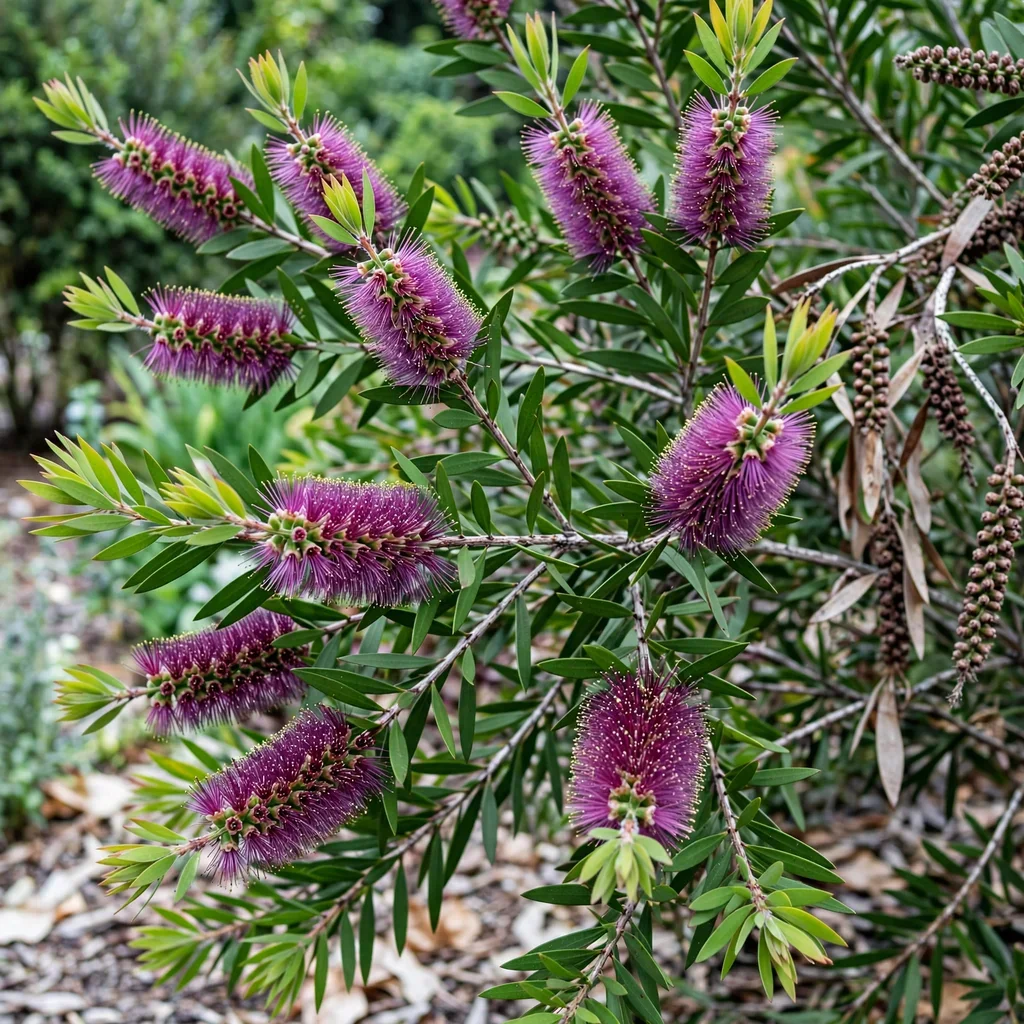
Violet Bottlebrush
Callistemon x hybrida 'Violaceus'
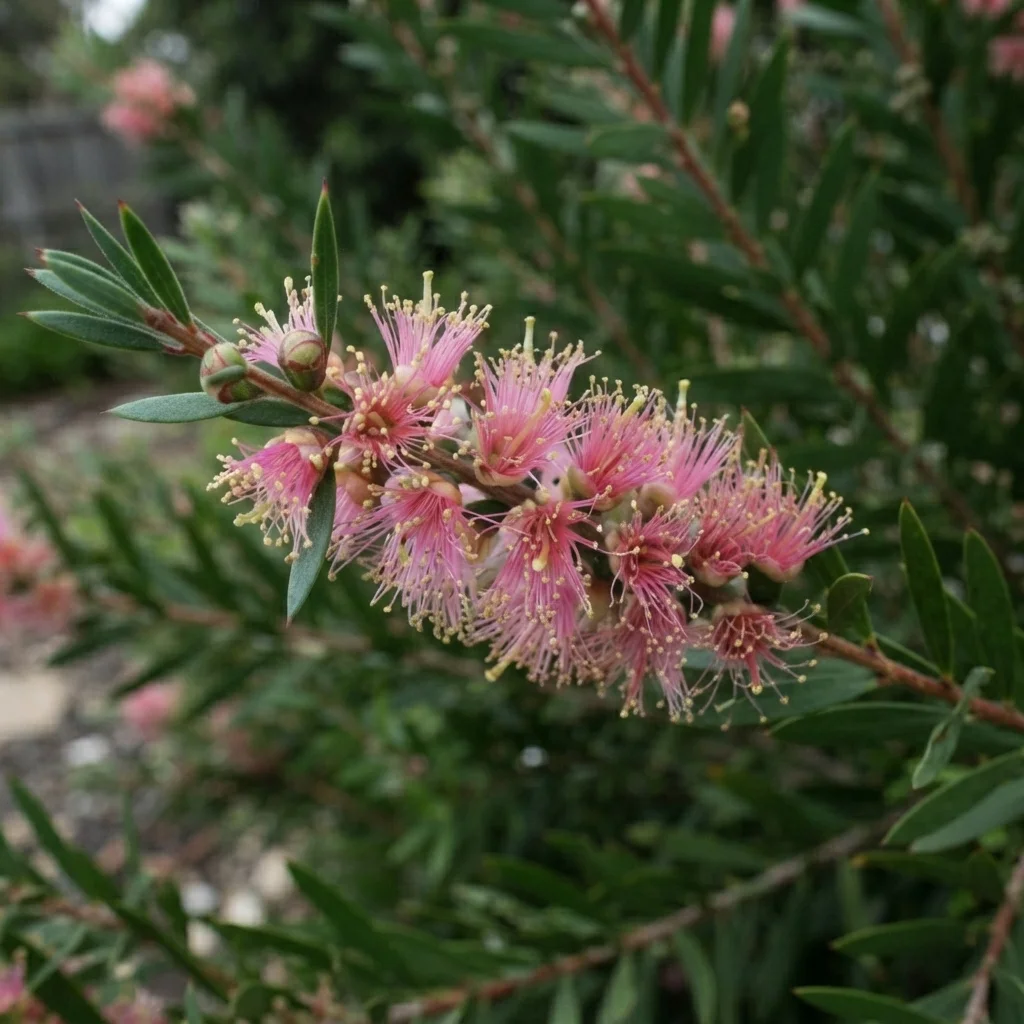
River Bottlebrush
Callistemon sieberi
Keep exploring
Explore the genus
Hardy in your zone?
Grow Great Balls of Fire Bottlebrush with confidence
See it in a design of your actual yard, get zone-matched care reminders, and track it season by season in your garden journal.