The Story
Plant Bio
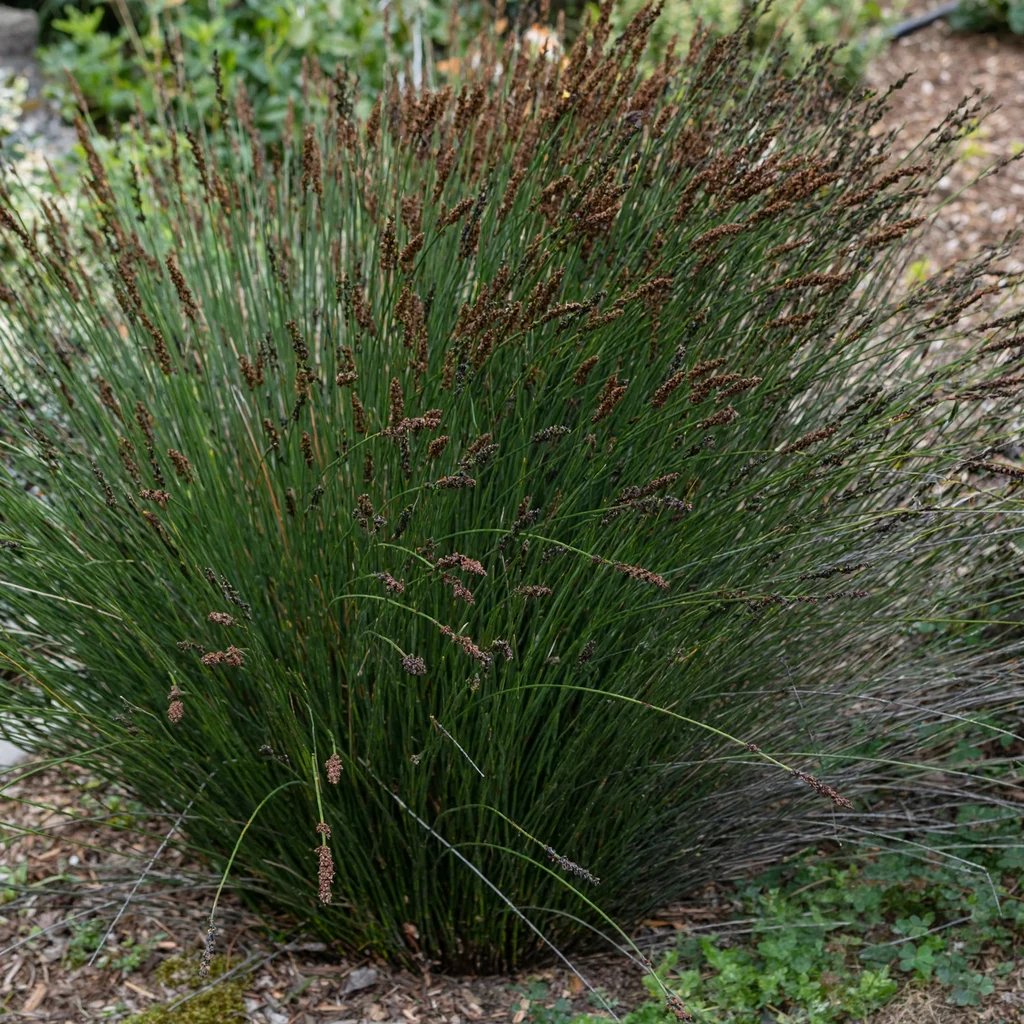
Chondropetalum tectorum, now Elegia tectorum, the cape rush, is a tufted evergreen restio from marshes and seeps on deep sand from Clanwilliam to Port Elizabeth, forming a dense clump of erect unbranched jointed stems. True leaves are reduced to deciduous sheaths, so the mid to dark green culms carry out photosynthesis and provide the year-round texture.
This is the true dwarf thatching reed, holding 2 to 3 feet high and wide in gardens from short rhizomes, not the 4- to 6-foot plant often sold under the same name. Male and female flowers grow on separate plants as small brown spikelets with golden-brown bracts at the stem tips, wind-pollinated and inconspicuous except for color and texture.
Uses & Benefits:
Essentials
At a Glance
Plant Type
Perennial
Height
36"
Width
36"
Light
Full Sun, Partial Sun
Zones
8, 9, 10
Water
Low to moderate
Humidity
Tolerates wet
Lifespan
Perennial
Native To
South Africa - Western Cape to Eastern Cape
Toxicity
Non-toxic
Bloom period
Late spring – Summer
In flower about 4 months of the year
Planting
How to Grow
- Plant in full sun to part shade in moist, well-draining sandy soil after last frost.
- Set the crown level with the soil surface and water deeply to settle.
- Water regularly through the first season, then drop to low to moderate once rooted.
- Withhold high-phosphorus fertilizer; feed rarely if at all.
- Remove spent stems at the base and divide congested clumps in early spring.
Pro Tip
Do not shear it hard like a Lomandra; cut or pull only dead stems at the base and divide the clump every 2 to 3 years in early spring.
Keep It Thriving
Care Guide
Do
- Water deeply the first season to establish roots
- Grow in full sun with good air flow
- Use low-phosphorus feed rarely if at all
Don't
- Do not cut back hard into old leafless stems
- Do not keep the crown waterlogged
- Do not confuse it with the 4- to 6-foot Elegia elephantina
Seasonal Care Calendar
| Task | Jan | Feb | Mar | Apr | May | Jun | Jul | Aug | Sep | Oct | Nov | Dec |
|---|---|---|---|---|---|---|---|---|---|---|---|---|
| Divide | ||||||||||||
| Mulch | ||||||||||||
| Pest Check | ||||||||||||
| Plant | ||||||||||||
| Spring Cleanup |
Watch Out For
Pests & Diseases
Common Pests
Common Diseases
In the Garden
Landscape Uses & Companions
Landscape Uses
Multiply
Propagation Methods
Good to Know
Common Questions
Cape Rush questions
What zones can Cape Rush grow in?
Cape Rush is hardy in USDA Zones 8–10: in that range it survives winter in the ground. Colder than Zone 8, grow it in a container you can move to shelter for the winter, or as an annual.
Is Cape Rush deer resistant?
Yes — Cape Rush is rated deer-resistant. Deer typically pass it over, though extreme hunger can override any plant's defenses.
When does Cape Rush bloom?
Cape Rush typically blooms from late spring to late summer. Exact timing shifts a week or two with your zone — Sow's bloom calendar maps it to your garden.
Does Cape Rush need full sun?
Cape Rush does best in full sun to part shade. In hot climates, afternoon shade keeps blooms fresher longer.
Is Cape Rush drought tolerant?
Yes — once established (usually after the first full season), Cape Rush handles dry spells with minimal watering. Water deeply its first year to build the root system that makes that possible.
Keep exploring
Explore the genus
Hardy in your zone?
Grow Cape Rush with confidence
See it in a design of your actual yard, get zone-matched care reminders, and track it season by season in your garden journal.