The Story
Plant Bio
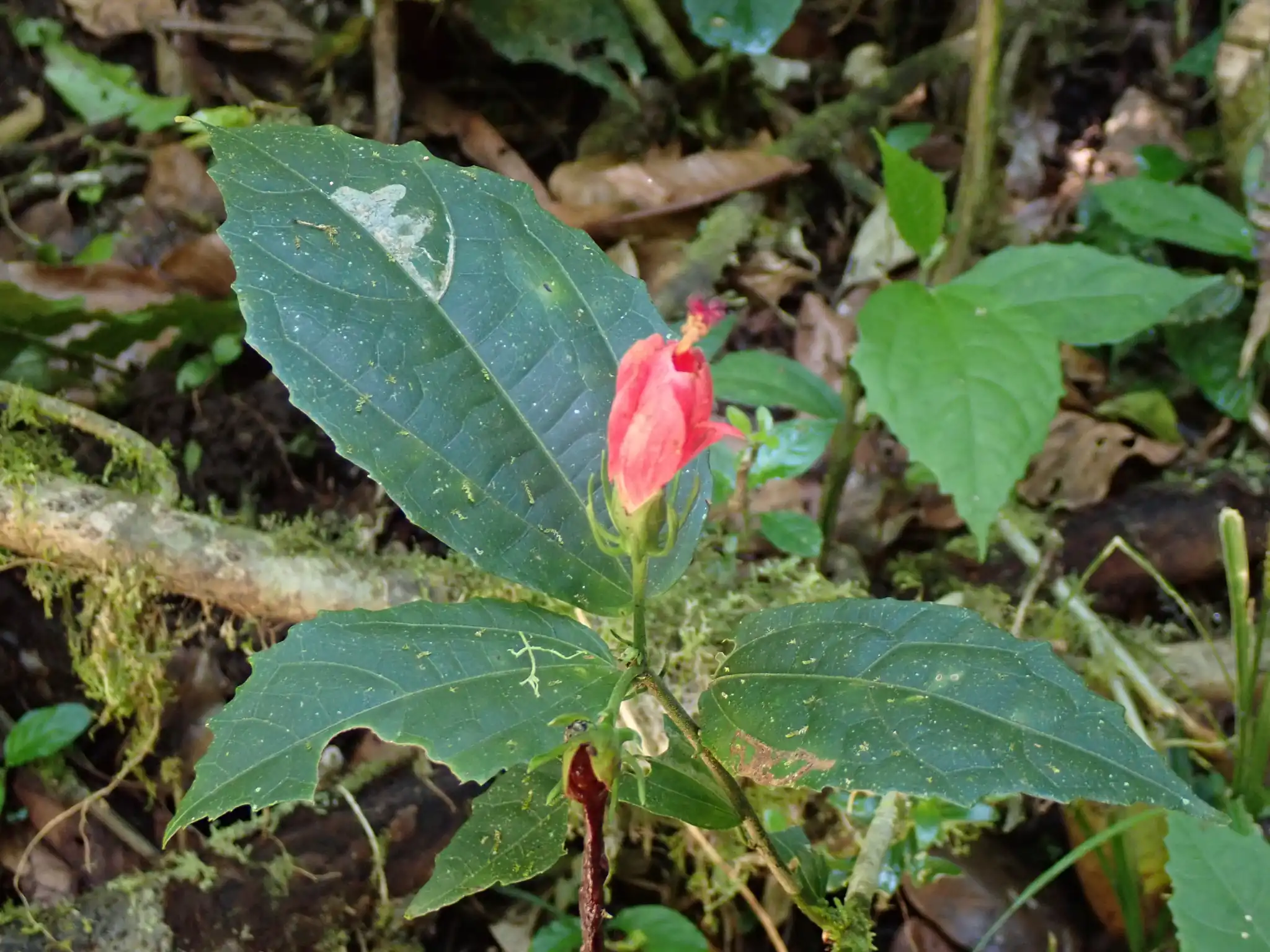
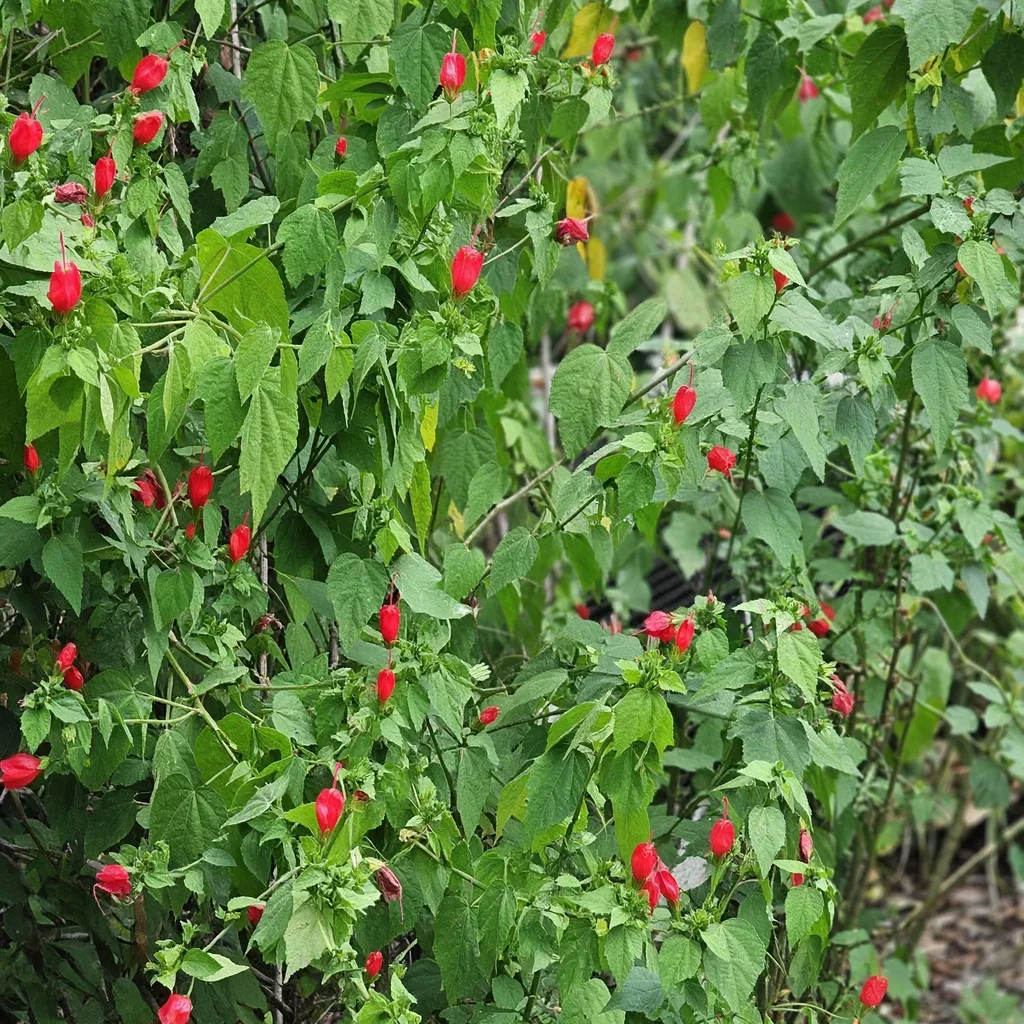
Malvaviscus penduliflorus is a fast, vigorous evergreen shrub reaching eight to twelve feet tall and wide, with upright-spreading stems clothed in lanceolate-ovate green leaves four to ten centimeters long with toothed margins. The pendant tubular red flowers hang nodding from the leaf axils and never fully open, each two-and-a-half-inch tube surrounding a long column of exserted stamens.
It is distinguished from Malvaviscus arboreus by larger nodding flowers on drooping stalks rather than smaller upright blooms, and by hairless leaves rather than leaves hairy beneath. It forms a non-colonial clump that rarely sets fruit and never suckers, so it stays where planted and does not spread by seed or runners.
Uses & Benefits:
Essentials
At a Glance
Plant Type
Shrub
Height
120"
Width
108"
Light
Full Sun, Partial Sun, Shade
Zones
8, 9, 10
Water
Low once established
Humidity
Average
Lifespan
Long-lived shrub
Native To
Texas to Peru
Toxicity
Non-toxic
Bloom period
Summer – Fall
In flower about 6 months of the year
Planting
How to Grow
- Plant in partial shade in moist, well-drained soil after the last frost.
- Water deeply at planting and through the first summer, then water only in extended drought once established.
- Mulch the root zone to hold moisture and to protect the crown where freezes occur.
- Prune in spring to shape and to remove freeze-damaged wood.
Pro Tip
Prune in spring removing up to half of last year's growth to hold it at six to eight feet; cutting to the ground every year is not needed and reduces bloom.
Keep It Thriving
Care Guide
Do
- Plant in partial shade with afternoon protection in hot areas.
- Mulch in Zone 8 to protect the crown through freeze.
- Leave the base intact to regrow after die-back.
Don't
- Do not plant in salty coastal exposure.
- Do not cut to the ground annually; remove only half of last year's growth.
- Do not overwater or plant in soggy soil.
Seasonal Care Calendar
| Task | Jan | Feb | Mar | Apr | May | Jun | Jul | Aug | Sep | Oct | Nov | Dec |
|---|---|---|---|---|---|---|---|---|---|---|---|---|
| Mulch | ||||||||||||
| Pest Check | ||||||||||||
| Plant | ||||||||||||
| Prune | ||||||||||||
| Winter Prep |
Watch Out For
Pests & Diseases
Common Pests
In the Garden
Landscape Uses & Companions
Landscape Uses
Companion Plants
Good to Know
Common Questions
Turk's Cap questions
What zones can Turk's Cap grow in?
Turk's Cap is hardy in USDA Zones 8–10: in that range it survives winter in the ground. Colder than Zone 8, grow it in a container you can move to shelter for the winter.
When does Turk's Cap bloom?
Turk's Cap typically blooms from summer to fall. Exact timing shifts a week or two with your zone — Sow's bloom calendar maps it to your garden.
Does Turk's Cap need full sun?
Turk's Cap does best in full sun to part shade. In hot climates, afternoon shade keeps blooms fresher longer.
Is Turk's Cap drought tolerant?
Yes — once established (usually after the first full season), Turk's Cap handles dry spells with minimal watering. Water deeply its first year to build the root system that makes that possible.
More Malvaviscus to compare
Keep exploring
Explore the genus
Hardy in your zone?
Grow Turk's Cap with confidence
See it in a design of your actual yard, get zone-matched care reminders, and track it season by season in your garden journal.