The Story
Plant Bio
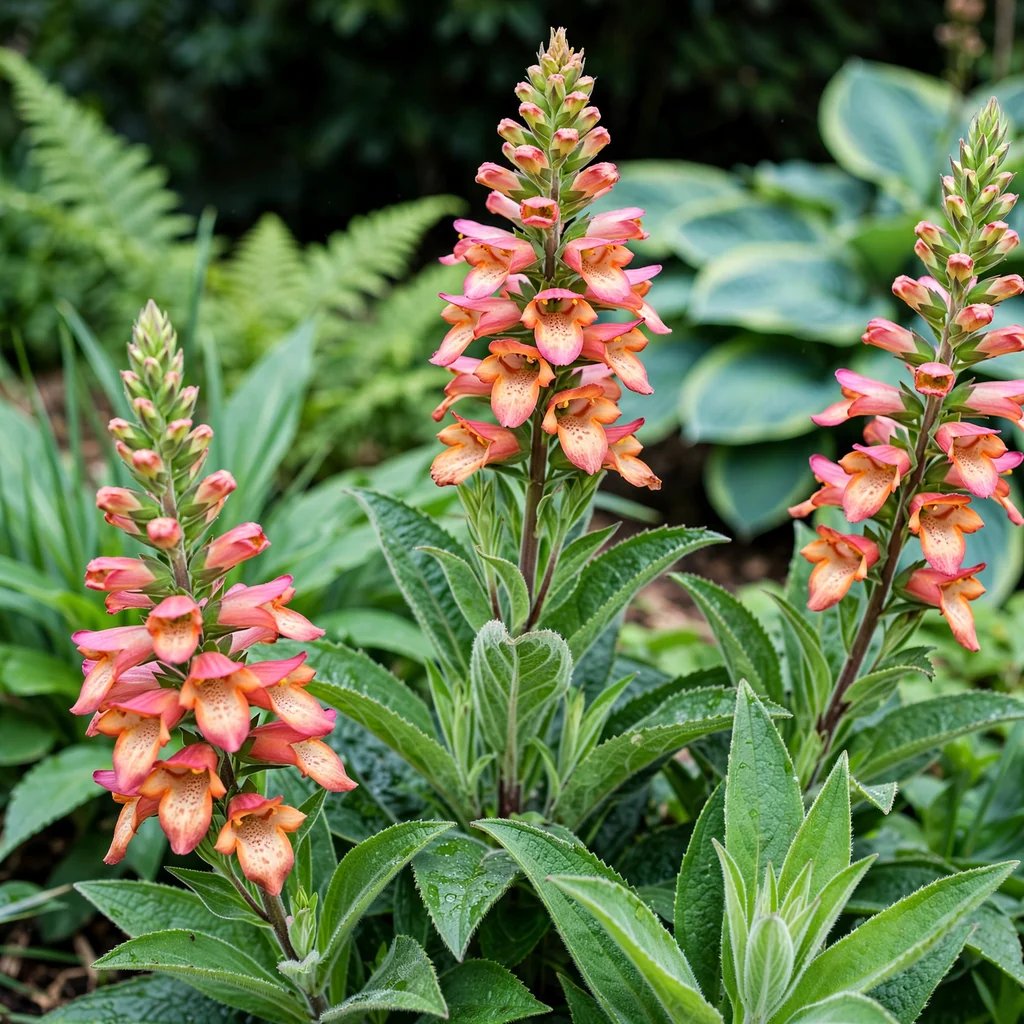
Digitalis x valinii is a man-made hybrid between the European common foxglove and the Canary Island foxglove, with no wild range. It forms an upright, bushy, virtually evergreen clump 2 to 3 feet tall with downy green foxglove leaves and tall one-sided racemes of 2-inch tubular bells with spotted throats.
Unlike biennial foxglove it is sterile and sets no viable seed, so it keeps producing new spikes from late spring to first hard frost when deadheaded. Flower color is fixed by cultivar, from flame-orange-pink and apricot to bright pink and pink-yellow bicolours, and plants are tender perennials hardy only in zones 8 to 11.
Uses & Benefits:
Essentials
At a Glance
Plant Type
Perennial
Height
36"
Width
24"
Light
Full Sun, Partial Sun
Zones
8, 9, 10
Water
Medium - keep evenly moist
Humidity
Average
Lifespan
Tender perennial, grown as annual in cold zones
Native To
Garden hybrid - no wild range
Toxicity
Highly toxic if ingested
Bloom period
Late spring – Fall
In flower about 7 months of the year
Planting
How to Grow
- Set out after last frost in full sun to part shade, with afternoon shade where summers are hot.
- Plant at the same depth as the pot in moist, high-organic, well-drained soil.
- Water to keep soil evenly moist and mulch to hold moisture without burying the crown.
- Deadhead each spike to a side bud and feed containers lightly with balanced fertilizer through bloom.
- Treat as an annual where winter freezes or move pots under cover before hard frost.
Pro Tip
Deadhead each spike to a side bud as it fades and never let the rootball dry out or sit soggy; both drought stress and root rot shut down flowering.
Keep It Thriving
Care Guide
Do
- Keep soil evenly moist through bloom and mulch to hold moisture.
- Deadhead spent spikes regularly to keep new buds coming.
- Give full sun with afternoon shade in heat and open air flow.
Don't
- Do not let plants dry out or sit waterlogged; both stop flowering.
- Do not save seed; flowers are sterile and set no viable seed.
- Do not expect winter survival below zone 8 without cover.
Seasonal Care Calendar
| Task | Jan | Feb | Mar | Apr | May | Jun | Jul | Aug | Sep | Oct | Nov | Dec |
|---|---|---|---|---|---|---|---|---|---|---|---|---|
| Deadhead | ||||||||||||
| Fertilize | ||||||||||||
| Pest Check | ||||||||||||
| Plant | ||||||||||||
| Winter Prep |
Watch Out For
Pests & Diseases
Common Pests
Common Diseases
In the Garden
Landscape Uses & Companions
Landscape Uses
Companion Plants
Multiply
Propagation Methods
Good to Know
Common Questions
Digiplexis questions
What zones can Digiplexis grow in?
Digiplexis is hardy in USDA Zones 8–10: in that range it survives winter in the ground. Colder than Zone 8, grow it in a container you can move to shelter for the winter, or as an annual.
Is Digiplexis deer resistant?
Yes — Digiplexis is rated deer-resistant. Deer typically pass it over, though extreme hunger can override any plant's defenses.
When does Digiplexis bloom?
Digiplexis typically blooms from late spring to late fall. Exact timing shifts a week or two with your zone — Sow's bloom calendar maps it to your garden.
Does Digiplexis need full sun?
Digiplexis does best in full sun to part shade. In hot climates, afternoon shade keeps blooms fresher longer.
Keep exploring
Explore the genus
Hardy in your zone?
Grow Digiplexis with confidence
See it in a design of your actual yard, get zone-matched care reminders, and track it season by season in your garden journal.