The Story
Plant Bio
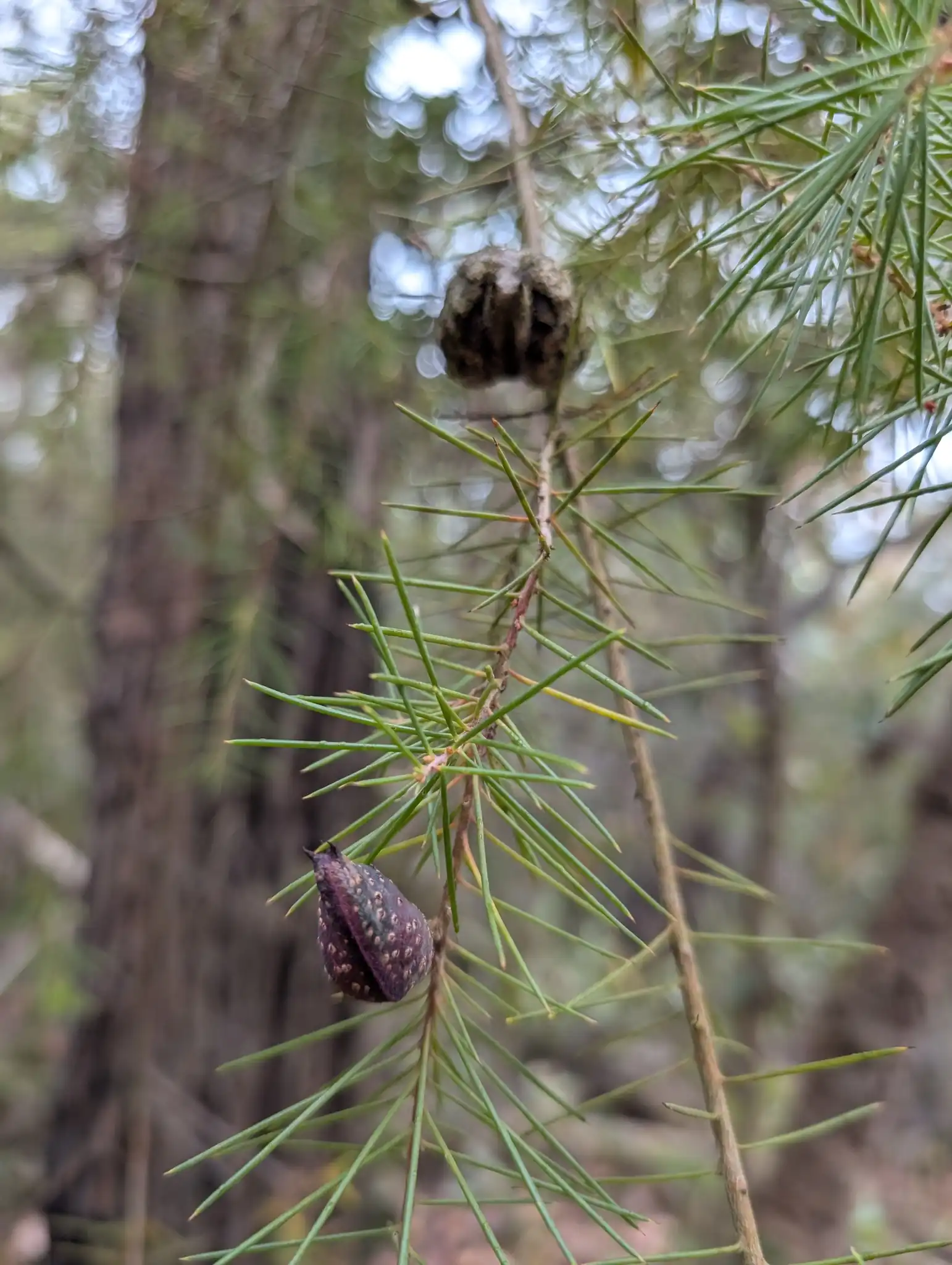
Hakea sericea is an upright, densely branched evergreen shrub native to southeastern Australia, characterized by its stiff, needle-like foliage and conifer-like habit. The rigid, sharply pointed leaves emerge with a silvery-silky coating before maturing to a deep green, which often takes on bronze or purplish tones during the winter months.
In winter and spring, clusters of small, white to pale pink flowers open from pinkish buds directly along the older woody stems. The axillary flower clusters feature prominent, protruding styles and crowd the older stems in dense, creamy-white displays.
Uses & Benefits:
Essentials
At a Glance
Plant Type
Shrub
Height
196"
Width
118"
Light
Full Sun, Partial Sun
Zones
8, 9, 10
Water
Low
Humidity
Moderate
Lifespan
Moderate
Native To
Southeastern Australia
Toxicity
Non-toxic (mechanical hazard only)
Bloom period
Winter – Spring
In flower about 6 months of the year
Planting
How to Grow
- Select a site in full sun with highly permeable, sandy or gravelly soil to prevent waterlogging.
- Dig a planting hole twice the width of the root ball but no deeper, ensuring the crown sits level with the surrounding soil.
- Water deeply immediately after planting to settle the soil, then reduce watering once the root system establishes.
- Avoid applying any fertilizer unless it is a specialized, low-phosphorus formulation designed for Proteaceae.
Pro Tip
Never apply standard garden fertilizers containing phosphorus, as this rapidly kills the specialized root system through nutrient toxicity.
Keep It Thriving
Care Guide
Do
- Plant in exceptionally well-drained, low-nutrient soils.
- Prune lightly immediately after flowering to maintain a compact shape.
- Use only specialized low-phosphorus fertilizers if feeding is necessary.
Don't
- Do not plant near walkways, pathways, or children's play areas due to the sharp, needle-like foliage.
- Do not cut back hard into old, leafless wood, as it will fail to regenerate.
- Do not overwater or plant in heavy clay soils that retain moisture.
Seasonal Care Calendar
| Task | Jan | Feb | Mar | Apr | May | Jun | Jul | Aug | Sep | Oct | Nov | Dec |
|---|---|---|---|---|---|---|---|---|---|---|---|---|
| Fertilize | ||||||||||||
| Pest Check | ||||||||||||
| Plant | ||||||||||||
| Prune | ||||||||||||
| Spring Cleanup |
Watch Out For
Pests & Diseases
Common Pests
Common Diseases
In the Garden
Landscape Uses & Companions
Landscape Uses
Companion Plants
Multiply
Propagation Methods
Good to Know
Common Questions
Silky Hakea questions
What zones can Silky Hakea grow in?
Silky Hakea is hardy in USDA Zones 8–10. Inside that range it survives winter in the ground; outside it, grow it as an annual or a container plant you protect.
Is Silky Hakea deer resistant?
Yes — Silky Hakea is rated deer-resistant. Deer typically pass it over, though extreme hunger can override any plant's defenses.
When does Silky Hakea bloom?
Silky Hakea typically blooms in winter through spring. Exact timing shifts a week or two with your zone — Sow's bloom calendar maps it to your garden.
Does Silky Hakea need full sun?
Silky Hakea does best in full sun to part shade. In hot climates, afternoon shade keeps blooms fresher longer.
Is Silky Hakea drought tolerant?
Yes — once established (usually after the first full season), Silky Hakea handles dry spells with minimal watering. Water deeply its first year to build the root system that makes that possible.
More Hakea to compare
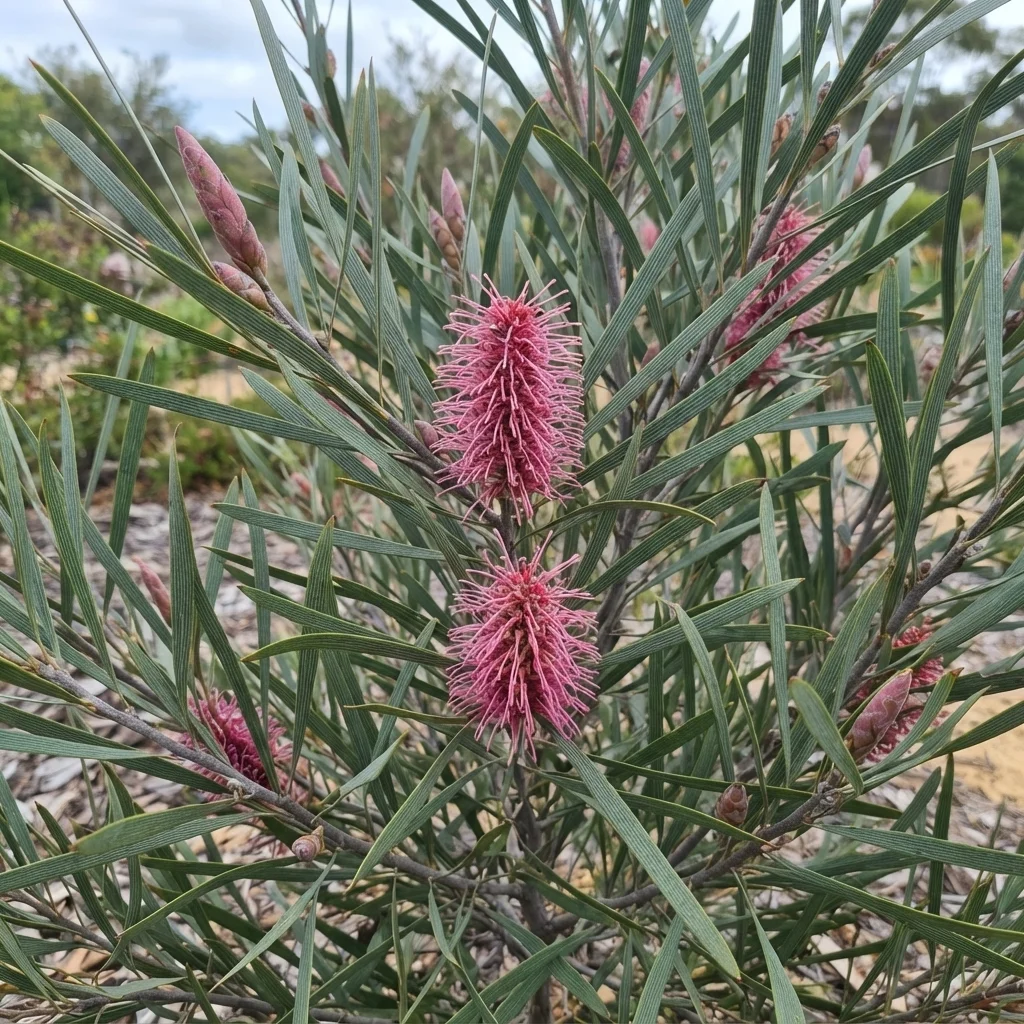
Grass-Leaf Hakea
Hakea francisiana
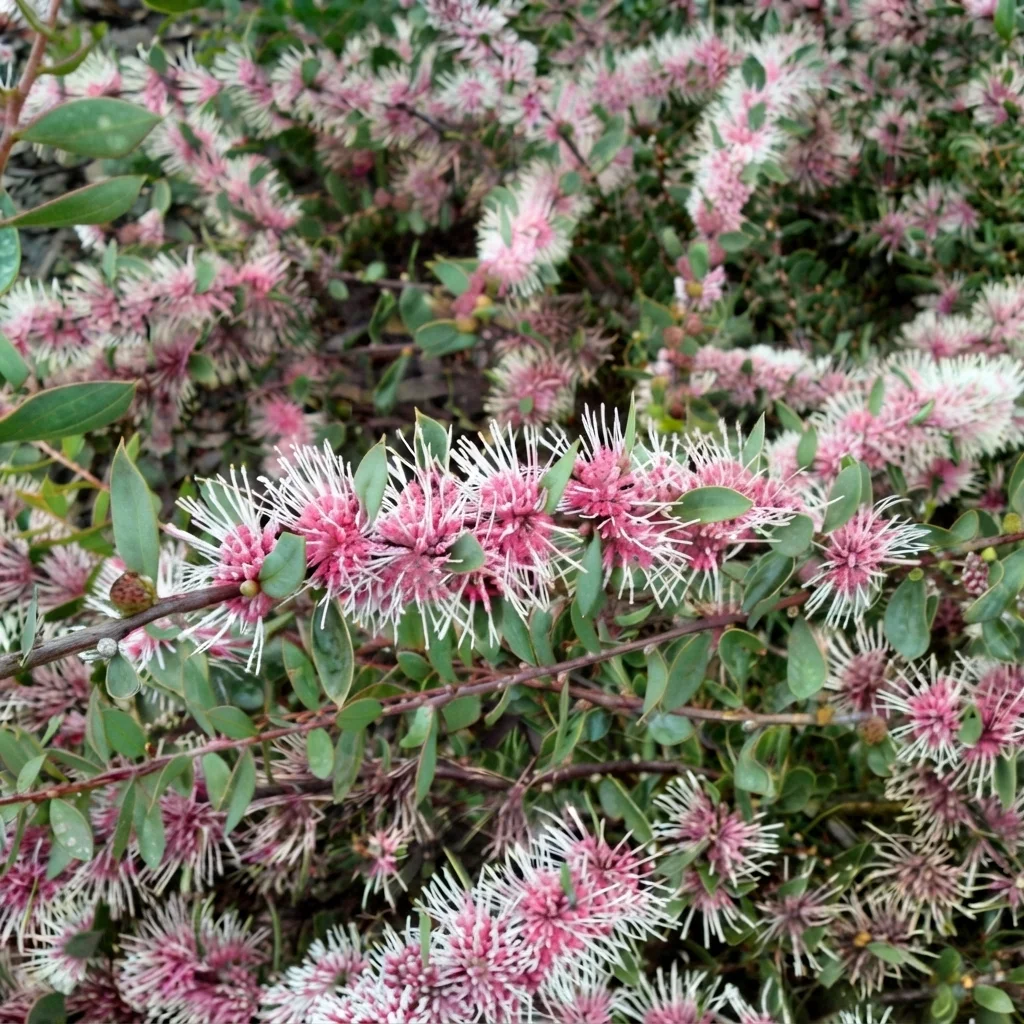
Burrendong Beauty
Hakea x hybrida 'Burrendong Beauty'
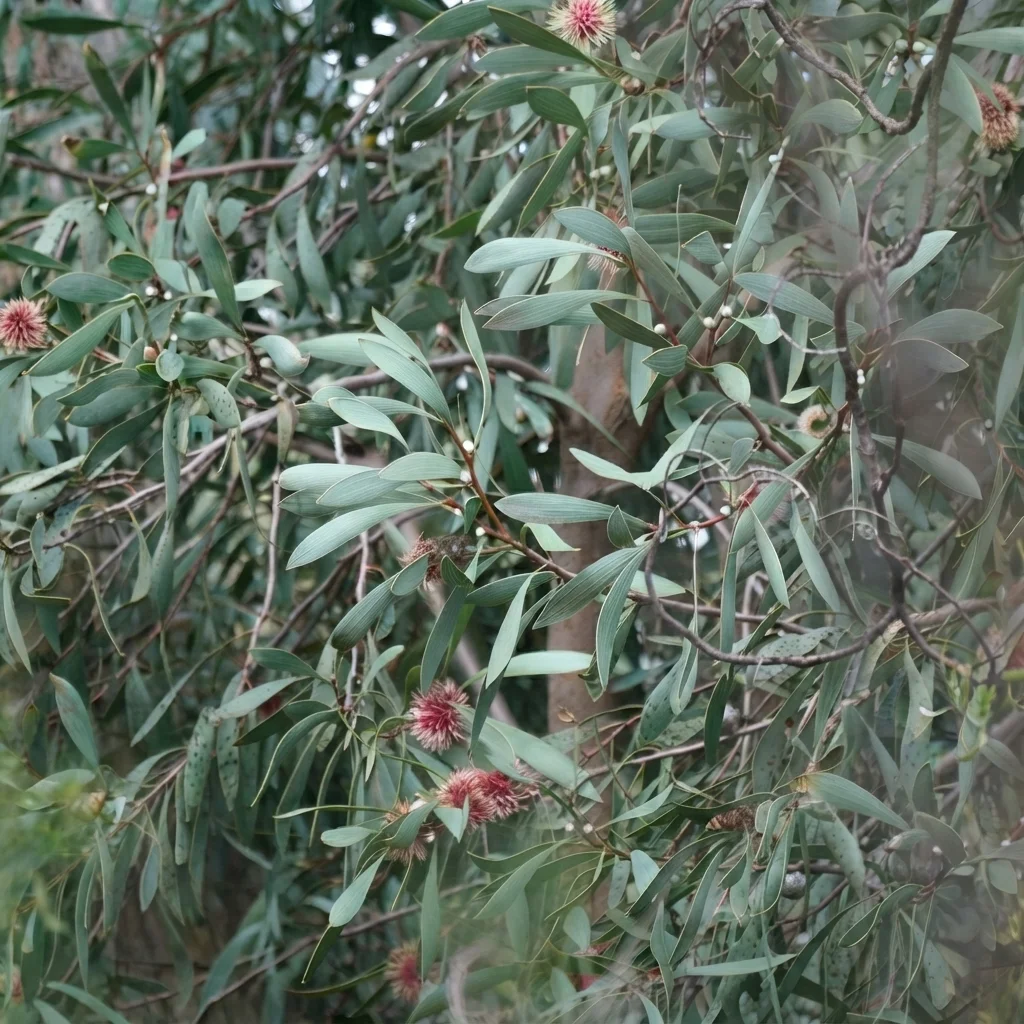
Pincushion Hakea
Hakea laurina
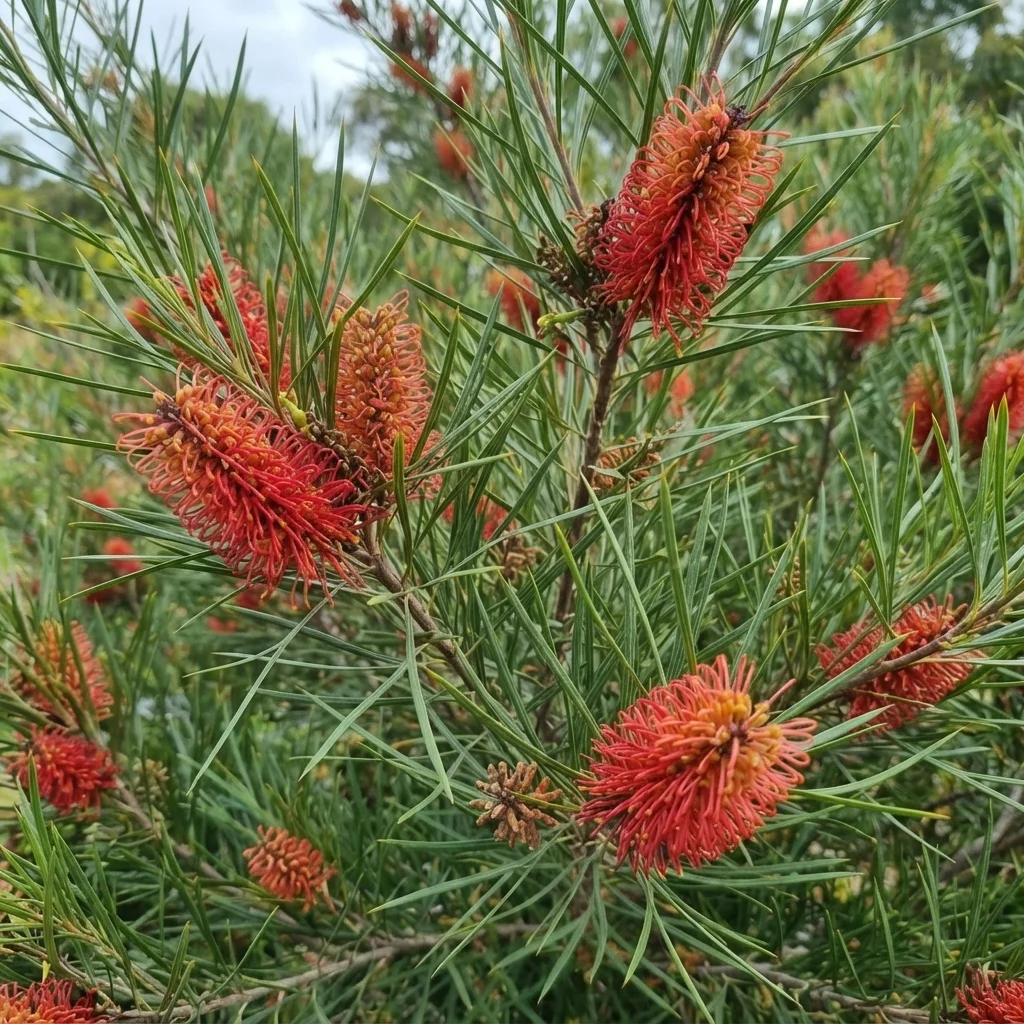
Red Pokers
Hakea bucculenta
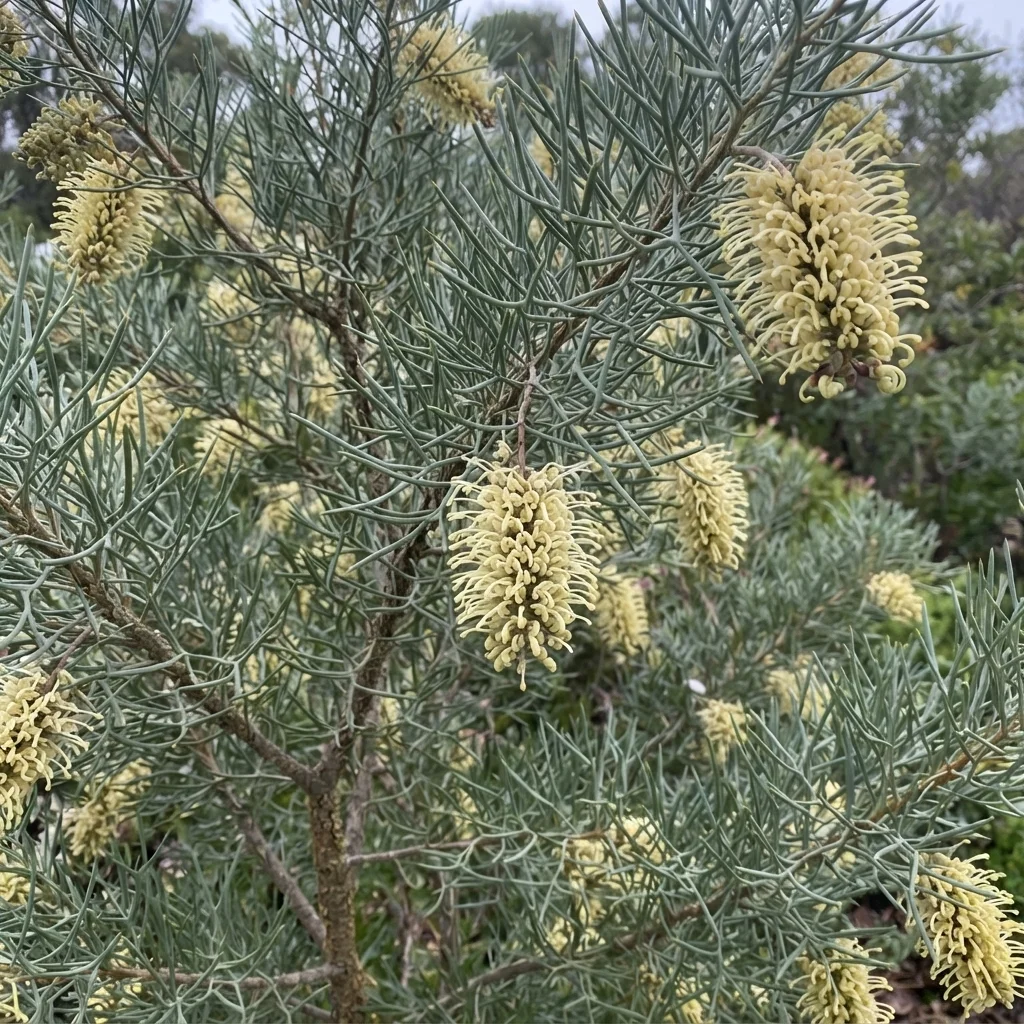
Needlewood
Hakea divaricata
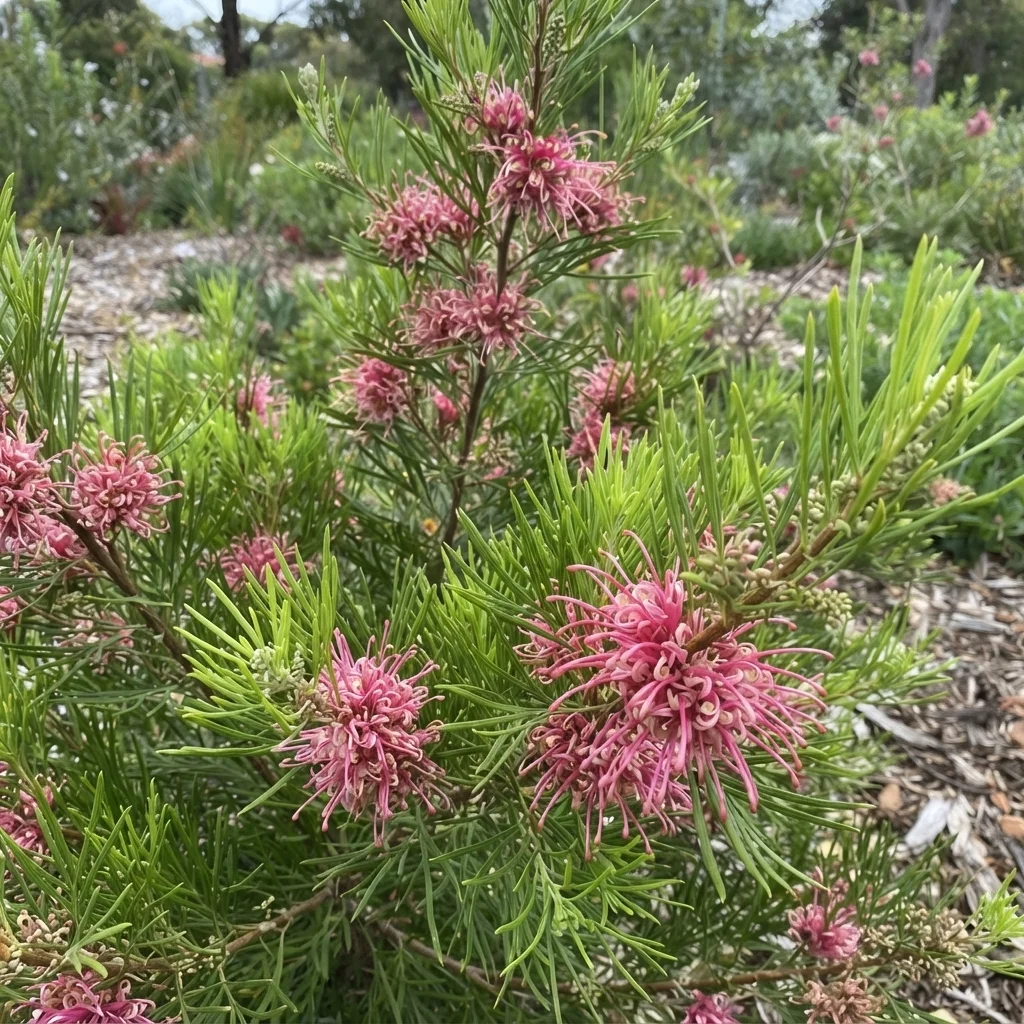
Baker's Hakea
Hakea bakeriana
Keep exploring
Explore the genus
Hardy in your zone?
Grow Silky Hakea with confidence
See it in a design of your actual yard, get zone-matched care reminders, and track it season by season in your garden journal.