The Story
Plant Bio
Passiflora are fast-growing evergreen vines that climb by coiling tendrils and anchor to shrubs, trees, fences and trellises. They carry alternate lobed leaves and large complex flowers with a crown of coronal filaments around the central stamens and pistil.
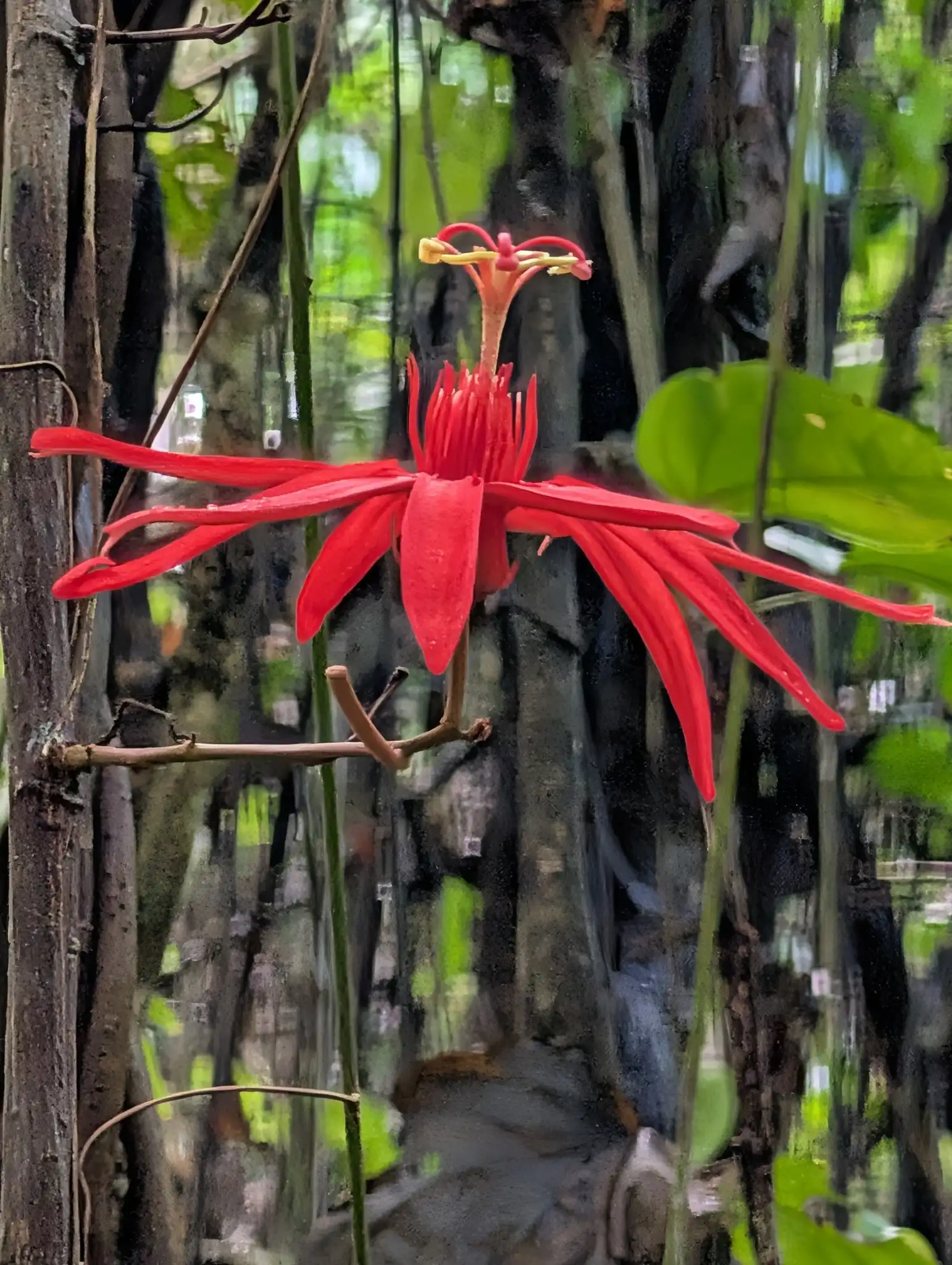
Passiflora vitifolia carries large grape-like lobed leaves on red-brown hairy young stems and bears solitary scarlet-red to reddish-orange stars 4 to 5 inches across with a white eye and banded inner filaments. The lightly scented blooms open from spring to fall and form edible red fruit where heat and a long frost-free season allow.
Uses & Benefits:
Essentials
At a Glance
Plant Type
Vine
Height
240"
Width
96"
Light
Full Sun, Partial Sun
Zones
9, 10
Water
Medium
Humidity
Average
Lifespan
Perennial vine
Native To
Southern Central America to northwestern South America
Toxicity
No known hazards
Bloom period
Spring – Fall
In flower about 9 months of the year
Planting
How to Grow
- Plant in spring after frost in full sun with shelter from harsh afternoon heat, in fertile moist but well-drained loam or sand.
- Set a sturdy trellis, arbor or fence at planting time and tie young stems until the tendrils grip.
- Water to keep soil evenly moist in summer, never soggy, and mulch to hold moisture.
- Prune in early spring to train and to control 6- to 10-foot coverage on support.
- Where winter drops below 28F, grow in a container and move inside before hard frost.
Pro Tip
Leave chewed foliage alone; ragged leaves mean Gulf Fritillary and Heliconius caterpillars are using the vine as a larval host, not that the plant is failing.
Keep It Thriving
Care Guide
Do
- Give full sun, heat and a strong support to climb.
- Keep soil moist and well-drained with good airflow around the leaves.
- Check leaf undersides in dry heat and under glass for aphids, mites and whiteflies.
Don't
- Do not plant in deep shade or cold soggy soil.
- Do not spray caterpillars; this vine is a butterfly host plant.
- Do not leave it outside to freeze; it is frost-tender.
Seasonal Care Calendar
| Task | Jan | Feb | Mar | Apr | May | Jun | Jul | Aug | Sep | Oct | Nov | Dec |
|---|---|---|---|---|---|---|---|---|---|---|---|---|
| Fertilize | ||||||||||||
| Pest Check | ||||||||||||
| Plant | ||||||||||||
| Prune | ||||||||||||
| Winter Prep |
Watch Out For
Pests & Diseases
Common Pests
Common Diseases
In the Garden
Landscape Uses & Companions
Landscape Uses
Multiply
Propagation Methods
Good to Know
Common Questions
Crimson Passion Flower questions
What zones can Crimson Passion Flower grow in?
Crimson Passion Flower is hardy in USDA Zones 9–10: in that range it survives winter in the ground. Colder than Zone 9, grow it in a container you can move to shelter for the winter, or as an annual.
When does Crimson Passion Flower bloom?
Crimson Passion Flower typically blooms from spring to fall. Exact timing shifts a week or two with your zone — Sow's bloom calendar maps it to your garden.
Does Crimson Passion Flower need full sun?
Crimson Passion Flower does best in full sun to part shade. In hot climates, afternoon shade keeps blooms fresher longer.
More Passiflora to compare
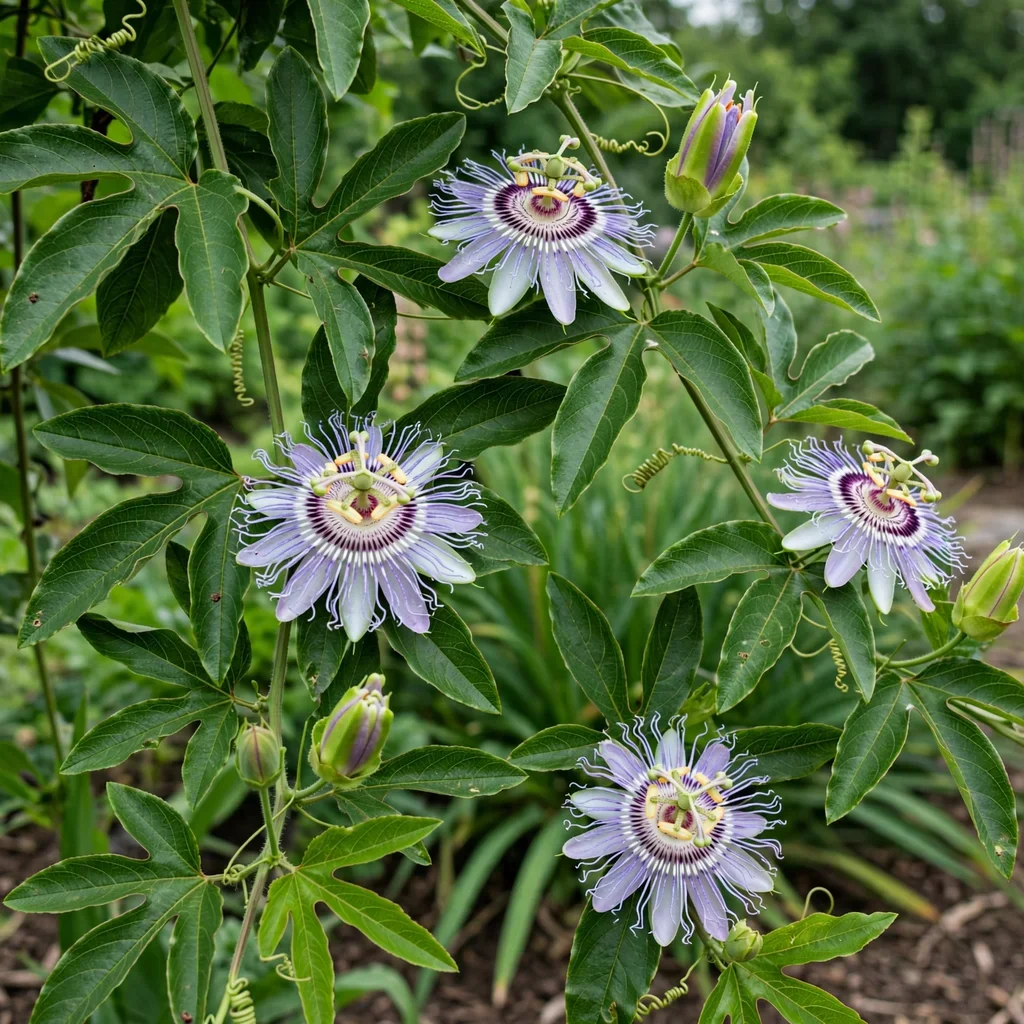
Purple Passionflower
Passiflora incarnata
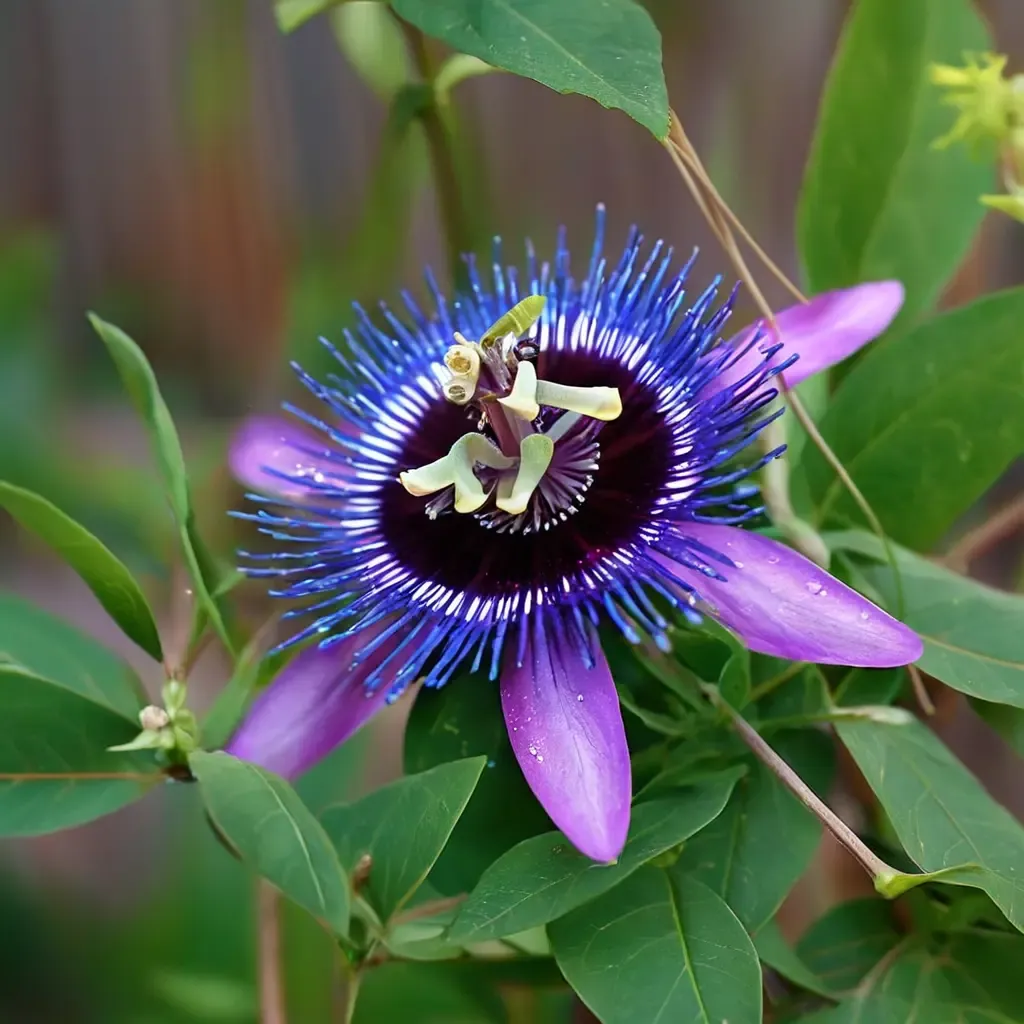
Blue Passionflower
Passiflora loefgrenii
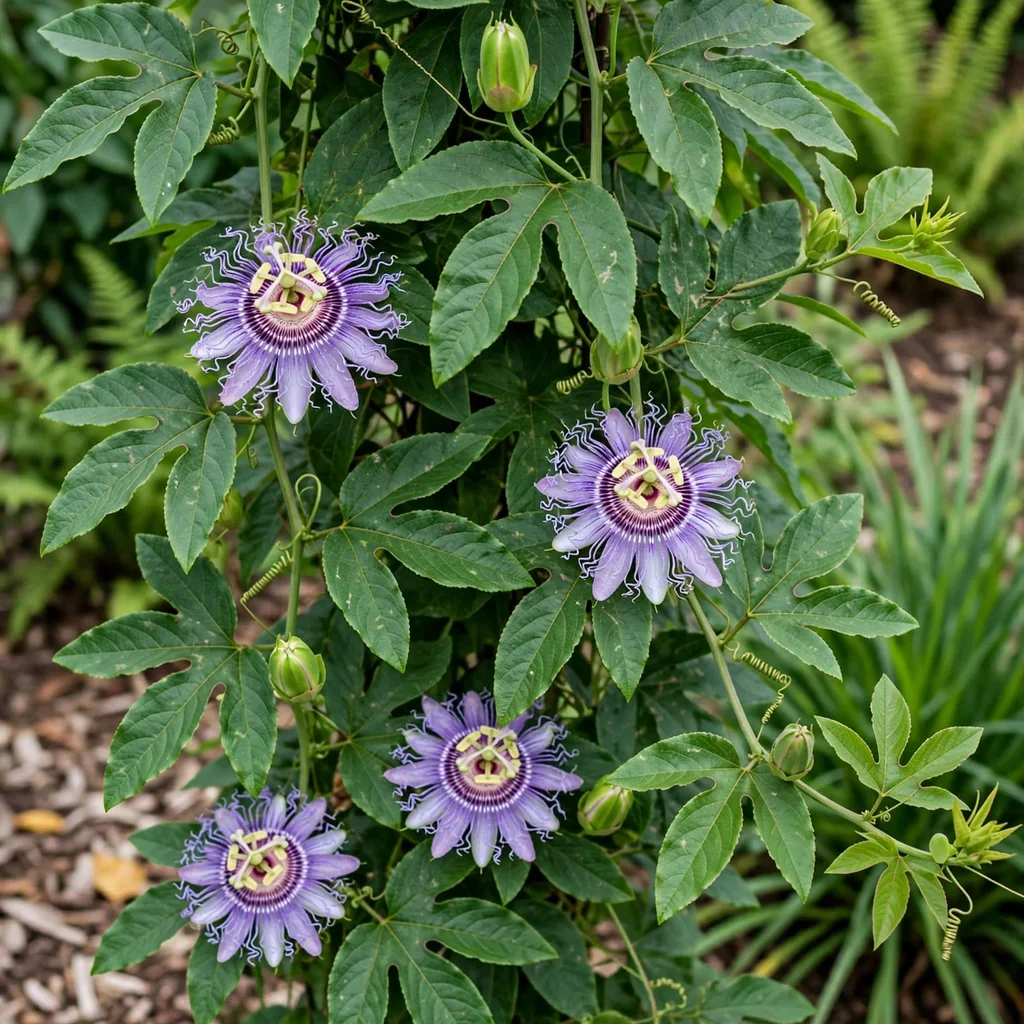
Butterfly Flower Purple Passionflower
Passiflora incarnata 'Butterfly Flower'
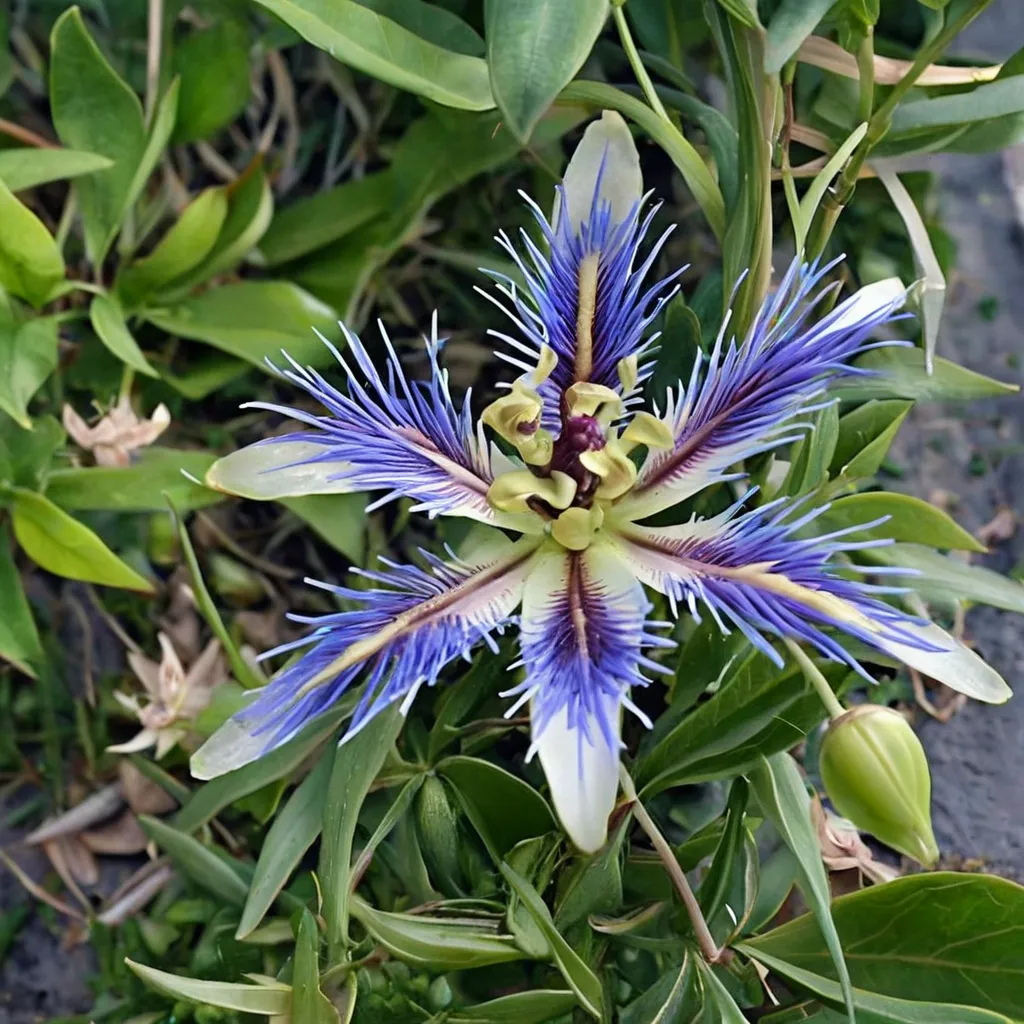
Waterloo Blue Passionflower
Passiflora caerulea 'Waterloo Blue'
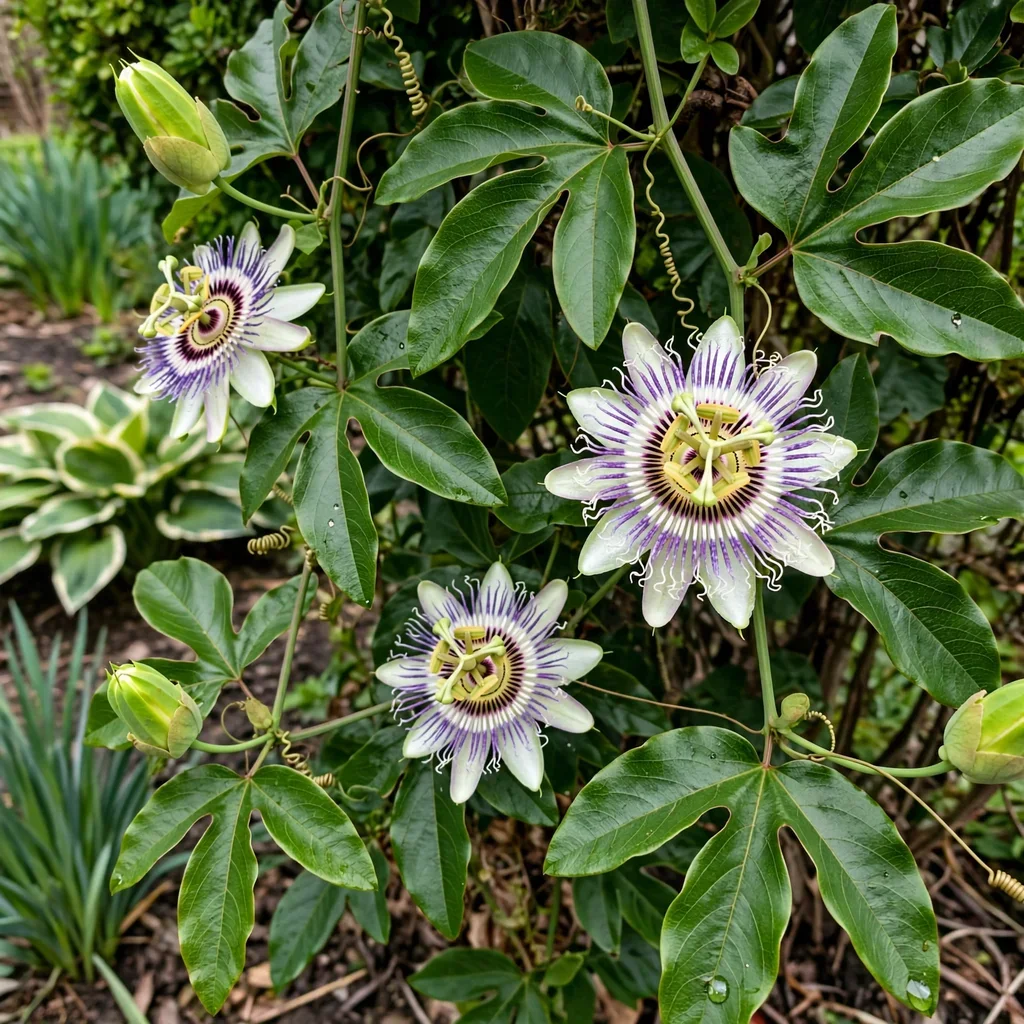
Sea Anemone Passion Flower
Passiflora actinia
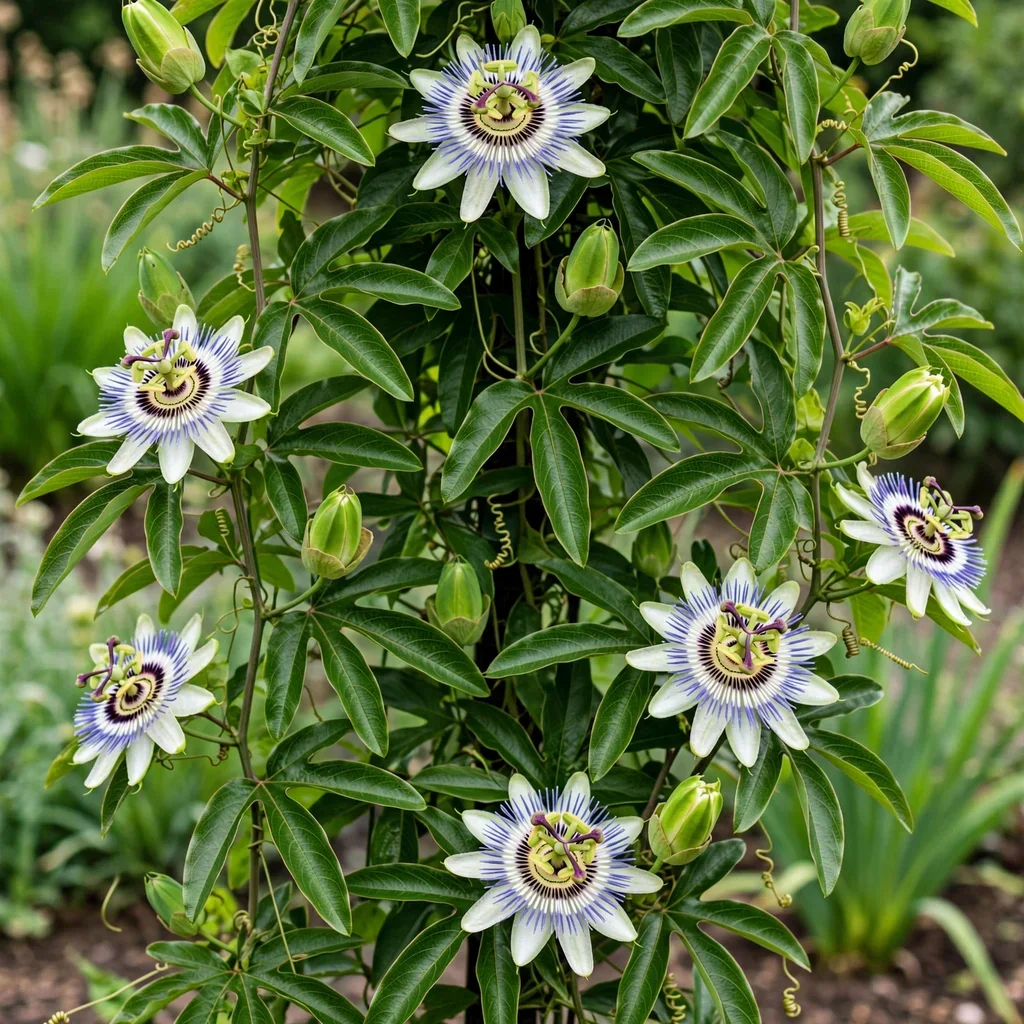
White Passionflower
Passiflora alba 'Blue Horizon'
Keep exploring
Explore the genus
Hardy in your zone?
Grow Crimson Passion Flower with confidence
See it in a design of your actual yard, get zone-matched care reminders, and track it season by season in your garden journal.