The Story
Plant Bio
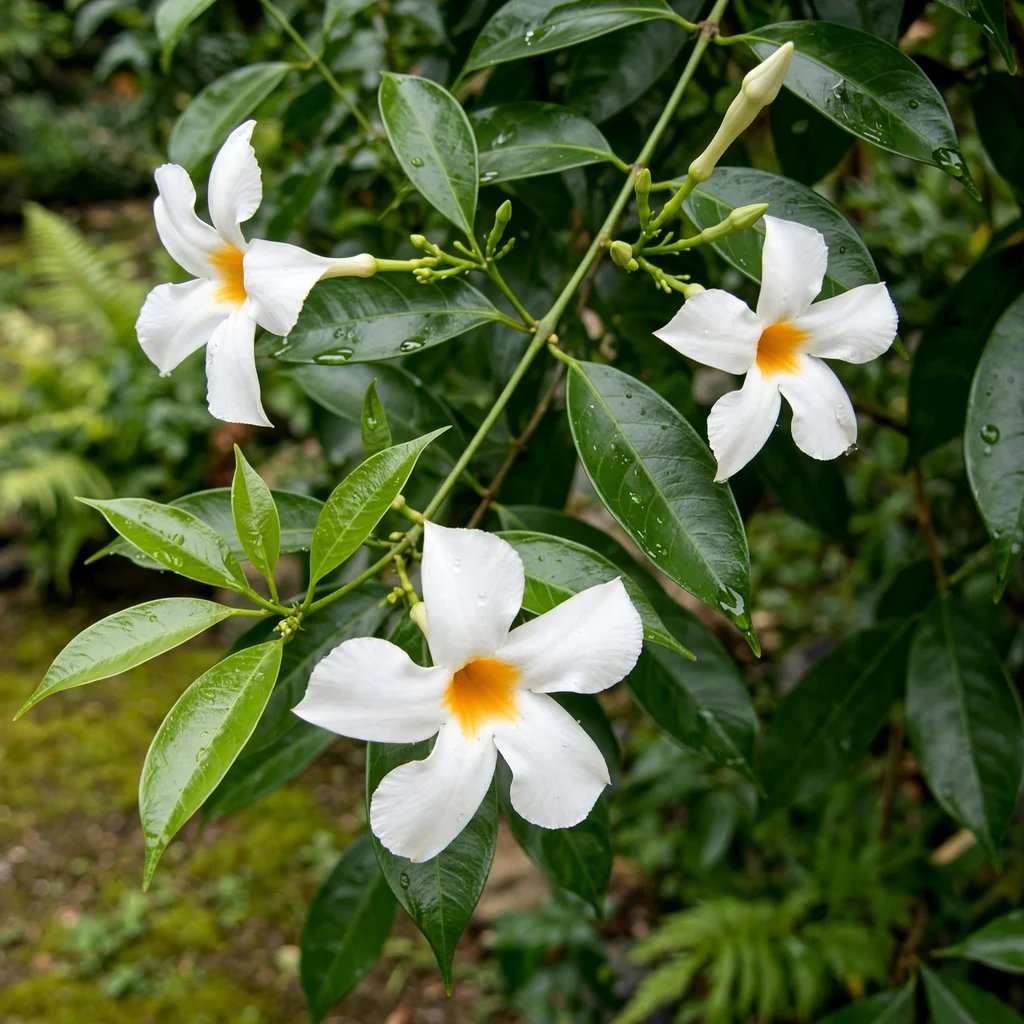
Mandevilla boliviensis is an evergreen twining vine from moist forests of South and Central America, climbing by woody stems that reach 3 to 10 feet in one season with support. The foliage is glossy green and hairless, with blades tapered at the base carried along scrambling young stems.
Sold as white dipladenia, this species is distinguished by white funnel-shaped flowers with a yellow throat and openly spaced petals. Bloom is heaviest in summer with sporadic flowers afterward, continuing year-round only where winters stay warm and frost-free.
Uses & Benefits:
Essentials
At a Glance
Plant Type
Vine
Height
120"
Width
72"
Light
Full Sun, Partial Sun
Zones
10
Water
Medium
Humidity
Average
Lifespan
Tender perennial grown as annual
Native To
South America
Toxicity
Toxic if ingested
Bloom period
Summer – Autumn
In flower about 6 months of the year
Planting
How to Grow
- Plant after frost in full sun to part shade, with afternoon shade in hot climates, in rich sandy potting mix that drains freely.
- Set with a trellis, obelisk, or basket support and water to keep the mix evenly moist through summer, drier in winter.
- Feed every two weeks in the growing season with balanced liquid fertilizer or 10-20-10, plus slow-release in spring.
- Pinch shoot tips for branching and prune in early spring before buds to shape, removing no more than one-third at once.
Pro Tip
Bring it indoors before nights drop below 50F; outside zones 10-11 cold checks growth and wet winter soil rots the roots.
Keep It Thriving
Care Guide
Do
- Grow in full sun to part shade with a sturdy support for the twining stems
- Keep potting mix evenly moist in summer and drier in winter with sharp drainage
- Feed every two weeks in the growing season and move frost-free before fall cold
Don't
- Do not leave outdoors where winter falls below 30-32F
- Do not overwater or use heavy poorly drained soil
- Do not hard-prune every year when light shaping will do
Seasonal Care Calendar
| Task | Jan | Feb | Mar | Apr | May | Jun | Jul | Aug | Sep | Oct | Nov | Dec |
|---|---|---|---|---|---|---|---|---|---|---|---|---|
| Fertilize | ||||||||||||
| Pest Check | ||||||||||||
| Pinch | ||||||||||||
| Prune | ||||||||||||
| Winter Prep |
Watch Out For
Pests & Diseases
Common Pests
Common Diseases
In the Garden
Landscape Uses & Companions
Landscape Uses
Good to Know
Common Questions
White Dipladenia questions
What zones can White Dipladenia grow in?
White Dipladenia is hardy in USDA Zone 10: in that range it survives winter in the ground. Colder than Zone 10, grow it in a container you can move to shelter for the winter, or as an annual.
When does White Dipladenia bloom?
White Dipladenia typically blooms from summer to fall. Exact timing shifts a week or two with your zone — Sow's bloom calendar maps it to your garden.
Does White Dipladenia need full sun?
White Dipladenia does best in full sun to part shade. In hot climates, afternoon shade keeps blooms fresher longer.
Keep exploring
Explore the genus
Hardy in your zone?
Grow White Dipladenia with confidence
See it in a design of your actual yard, get zone-matched care reminders, and track it season by season in your garden journal.