The Story
Plant Bio
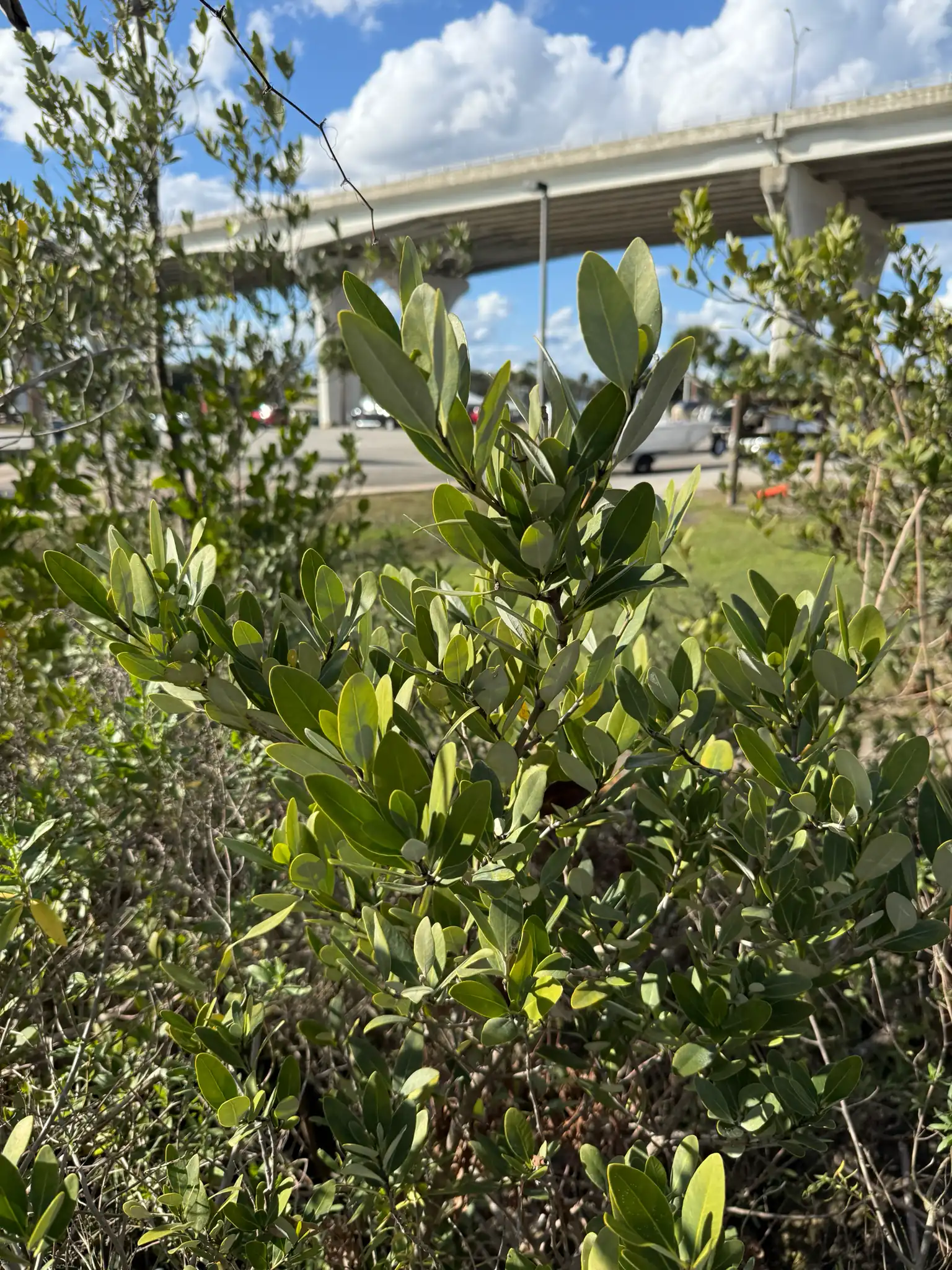
Avicennia germinans, the black mangrove, is an evergreen shrub to small tree reaching 20 to 30 feet in cultivation, with opposite leathery leaves that excrete salt through glands on the undersides. The root system sends up pencil-like pneumatophores from waterlogged mud to take in oxygen where the soil holds none.
It is the Atlantic black mangrove of the Southeast coast, tropical America and West Africa, set apart by small fragrant white flowers with a yellow center borne in congested spikes at the branchlet tips. Seedlings germinate on the parent into fleshy green propagules that float for months and root where tides strand them.
Uses & Benefits:
Essentials
At a Glance
Plant Type
Tree
Height
360"
Width
360"
Light
Full Sun
Zones
8, 9, 10
Water
High
Humidity
High
Lifespan
Long-lived
Native To
Southeastern U.S., tropical America, West Africa
Toxicity
Toxic if ingested
Bloom period
Summer
In flower about 3 months of the year
Planting
How to Grow
- Plant in full sun at the intertidal edge where tides flood and drain daily, in sand, mud, or clay with pH 4.5 to 8.0.
- Set the root crown at mud level with pneumatophores exposed to air; do not bury them under fill or mulch.
- Allow brackish to full-strength salt water to cover roots on tides; do not irrigate with fresh water to keep it small.
- Protect from hard frost below 28F; top growth dies back and resprouts only where winters stay mild.
- Leave established plants undisturbed; no fertilizer or routine pruning is needed for restoration use.
Pro Tip
Give it tidal salt water over the roots and open pneumatophores to air; planted inland like a garden shrub it starves for oxygen and dies below 28F.
Keep It Thriving
Care Guide
Do
- Plant in full sun on tidal mud or sand that floods and drains
- Leave pneumatophores exposed to air
- Source nursery-grown stock and follow local mangrove protection rules
Don't
- Do not plant inland as a garden shrub away from tides
- Do not cut into protected wild stands without permits
- Do not eat seeds or leaves; cotyledons hold toxic compounds unless specially prepared
Seasonal Care Calendar
| Task | Jan | Feb | Mar | Apr | May | Jun | Jul | Aug | Sep | Oct | Nov | Dec |
|---|---|---|---|---|---|---|---|---|---|---|---|---|
| Pest Check | ||||||||||||
| Plant | ||||||||||||
| Propagate | ||||||||||||
| Winter Prep |
Watch Out For
Pests & Diseases
Common Pests
Common Diseases
In the Garden
Landscape Uses & Companions
Landscape Uses
Companion Plants
Multiply
Propagation Methods
Good to Know
Common Questions
Black Mangrove questions
What zones can Black Mangrove grow in?
Black Mangrove is hardy in USDA Zones 8–10: in that range it survives winter in the ground. Colder than Zone 8, winters are too cold for it to survive outdoors.
When does Black Mangrove bloom?
Black Mangrove typically blooms in summer. Exact timing shifts a week or two with your zone — Sow's bloom calendar maps it to your garden.
Does Black Mangrove need full sun?
Black Mangrove does best in full sun (6+ hours).
Keep exploring
Explore the genus
Hardy in your zone?
Grow Black Mangrove with confidence
See it in a design of your actual yard, get zone-matched care reminders, and track it season by season in your garden journal.