The Story
Plant Bio
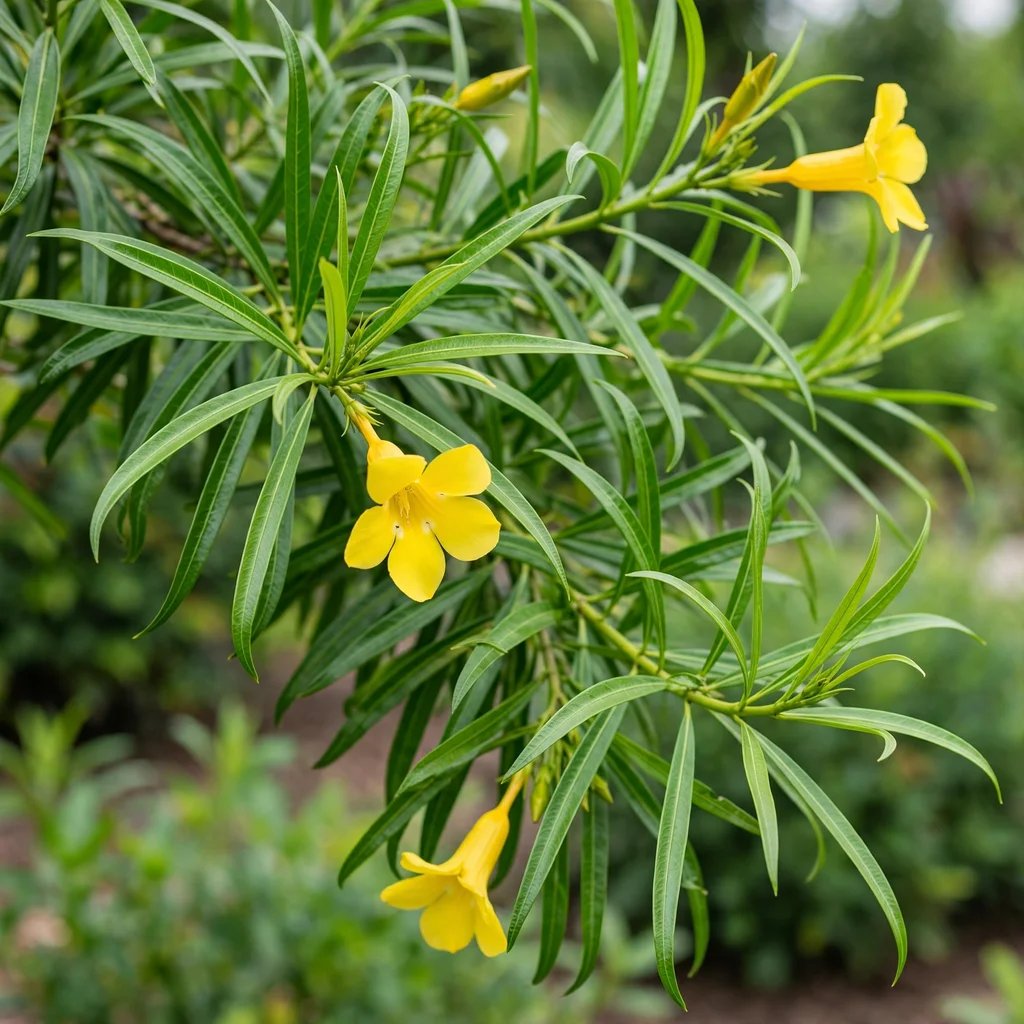
Cascabela thevetia, still sold as Thevetia peruviana, is an evergreen shrub or small tree reaching 8 to 15 feet in gardens with a rounded bushy upright habit and narrow willow-like leaves that are lanceolate-linear, glossy bright green and waxy with rolled-under edges. Flowers are fragrant yellow to peach-apricot and orange-salmon trumpets borne in showy terminal clusters from summer into fall.
All parts, especially seeds, kernels and roots, contain cardiac glycosides including thevetin, thevetoxin, peruvoside and neriifolin that slow the heart and can be fatal if chewed, and cut stems exude milky sap. It is tender to frost, tolerant of heat, drought once established and salt, sprawls if left unattended, and naturalizes in south Florida pinelands, roadsides and the Keys where it is not recommended for planting.
Uses & Benefits:
Essentials
At a Glance
Plant Type
Shrub
Height
144"
Width
96"
Light
Full Sun, Partial Sun
Zones
9, 10
Water
Low to moderate, drought tolerant once established
Humidity
Tolerant of heat and coastal exposure
Lifespan
Long-lived evergreen shrub
Native To
Mexico and Central America
Toxicity
Highly toxic if ingested
Bloom period
Summer – Fall
In flower about 6 months of the year
Planting
How to Grow
- Plant after all frost danger in full sun with some afternoon shade tolerated, in well-drained soil.
- Set the rootball level with the soil surface and water in deeply to settle soil around roots.
- Water regularly through the first summer, then cut back to deep occasional watering once established.
- Tip-prune after the summer flush to maintain a bushy crown and remove sprawling shoots.
Pro Tip
Tip-prune after flowering to keep it compact; wear gloves and keep all clippings away from children and pets.
Keep It Thriving
Care Guide
Do
- Grow in full sun in well-drained soil
- Wear gloves when pruning and wash sap off skin
- Overwinter containers indoors where frost occurs
Don't
- Do not ingest any part, especially seeds
- Do not plant in south Florida pinelands or near natural areas
- Do not leave unattended to sprawl and seed
Seasonal Care Calendar
| Task | Jan | Feb | Mar | Apr | May | Jun | Jul | Aug | Sep | Oct | Nov | Dec |
|---|---|---|---|---|---|---|---|---|---|---|---|---|
| Mulch | ||||||||||||
| Pest Check | ||||||||||||
| Prune | ||||||||||||
| Winter Prep |
Watch Out For
Pests & Diseases
Common Pests
In the Garden
Landscape Uses & Companions
Landscape Uses
Multiply
Propagation Methods
Good to Know
Common Questions
Yellow Oleander questions
What zones can Yellow Oleander grow in?
Yellow Oleander is hardy in USDA Zones 9–10: in that range it survives winter in the ground. Colder than Zone 9, grow it in a container you can move to shelter for the winter.
When does Yellow Oleander bloom?
Yellow Oleander typically blooms from summer to fall. Exact timing shifts a week or two with your zone — Sow's bloom calendar maps it to your garden.
Does Yellow Oleander need full sun?
Yellow Oleander does best in full sun to part shade. In hot climates, afternoon shade keeps blooms fresher longer.
Is Yellow Oleander drought tolerant?
Yes — once established (usually after the first full season), Yellow Oleander handles dry spells with minimal watering. Water deeply its first year to build the root system that makes that possible.
Keep exploring
Explore the genus
Hardy in your zone?
Grow Yellow Oleander with confidence
See it in a design of your actual yard, get zone-matched care reminders, and track it season by season in your garden journal.