The Story
Plant Bio
Pachystegia insignis is a robust, low-growing evergreen shrub native to rocky coastal cliffs of New Zealand, reaching three to six feet in height with stout, spreading branches. Solitary daisy-like flower heads up to three inches wide feature bright white ray florets around yellow center discs, borne on long felted stems throughout summer.
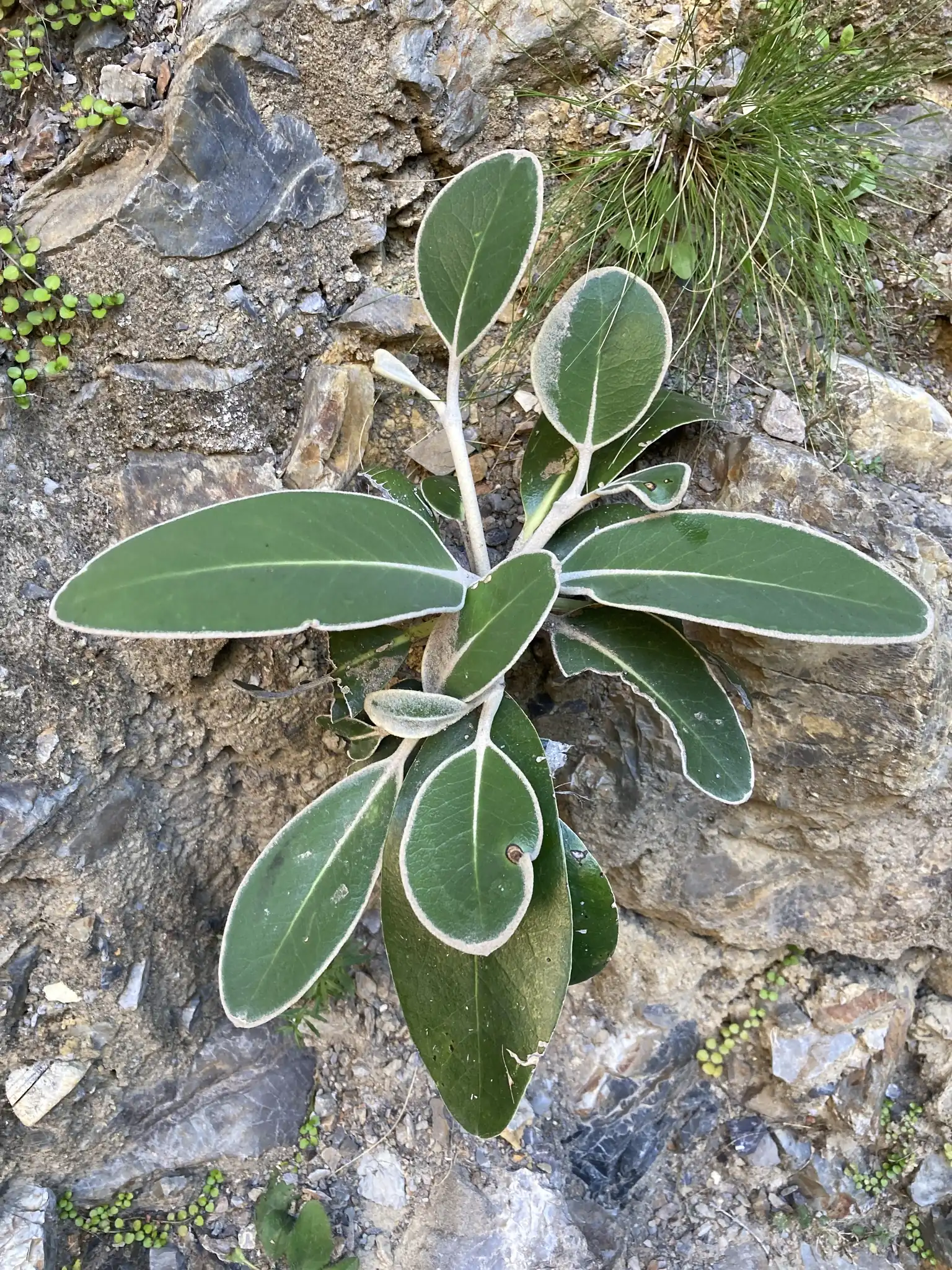
The leaves are exceptionally thick, leathery, and succulent-like, creating a sharp contrast between glossy dark olive-green uppers and dense white felted undersides. Woolly, globe-shaped buds form in late spring before opening into prominent white daisy blooms.
Uses & Benefits:
Essentials
At a Glance
Plant Type
Shrub
Height
71"
Width
59"
Light
Full Sun, Partial Sun
Zones
8, 9, 10
Water
Low
Humidity
Low
Lifespan
Perennial
Native To
New Zealand
Toxicity
Non-toxic
Bloom period
Summer
In flower about 3 months of the year
Planting
How to Grow
- Select a planting site in full sun with lean, gritty soil such as coarse sand, fine gravel, or broken limestone.
- Set the plant into the ground with the root crown slightly elevated above the surrounding soil line to ensure water drains away immediately.
- Water sparingly until established, letting the top several inches of soil dry out completely between waterings.
- Avoid applying rich organic mulches around the stem base and preserve clear air circulation around the crown year-round.
Pro Tip
Treat this shrub like a cliff-dwelling succulent by providing maximum sun, sharp mineral drainage, and strong air movement; organic soil or persistent crown wetness in winter triggers fatal root rot.
Keep It Thriving
Care Guide
Do
- Provide sharp, gritty mineral drainage with excellent aeration
- Position in full sun with strong, unobstructed air movement
- Trim back spent flower stalks lightly in early spring
Don't
- Do not prune into old, leafless woody stems that lack latent buds
- Do not plant in heavy clay, moisture-retentive, or waterlogged soils
- Do not over-water or apply high-nitrogen organic fertilizers
Seasonal Care Calendar
| Task | Jan | Feb | Mar | Apr | May | Jun | Jul | Aug | Sep | Oct | Nov | Dec |
|---|---|---|---|---|---|---|---|---|---|---|---|---|
| Fertilize | ||||||||||||
| Pest Check | ||||||||||||
| Prune | ||||||||||||
| Winter Prep |
Watch Out For
Pests & Diseases
Common Pests
Common Diseases
In the Garden
Landscape Uses & Companions
Landscape Uses
Companion Plants
Multiply
Propagation Methods
Good to Know
Common Questions
Marlborough Rock Daisy questions
What zones can Marlborough Rock Daisy grow in?
Marlborough Rock Daisy is hardy in USDA Zones 8–10: in that range it survives winter in the ground. Colder than Zone 8, grow it in a container you can move to shelter for the winter.
Is Marlborough Rock Daisy deer resistant?
Yes — Marlborough Rock Daisy is rated deer-resistant. Deer typically pass it over, though extreme hunger can override any plant's defenses.
When does Marlborough Rock Daisy bloom?
Marlborough Rock Daisy typically blooms in summer. Exact timing shifts a week or two with your zone — Sow's bloom calendar maps it to your garden.
Does Marlborough Rock Daisy need full sun?
Marlborough Rock Daisy does best in full sun to part shade. In hot climates, afternoon shade keeps blooms fresher longer.
Is Marlborough Rock Daisy drought tolerant?
Yes — once established (usually after the first full season), Marlborough Rock Daisy handles dry spells with minimal watering. Water deeply its first year to build the root system that makes that possible.
Keep exploring
Explore the genus
Hardy in your zone?
Grow Marlborough Rock Daisy with confidence
See it in a design of your actual yard, get zone-matched care reminders, and track it season by season in your garden journal.